
Confucius Biography Quotes 66 Report mistakes
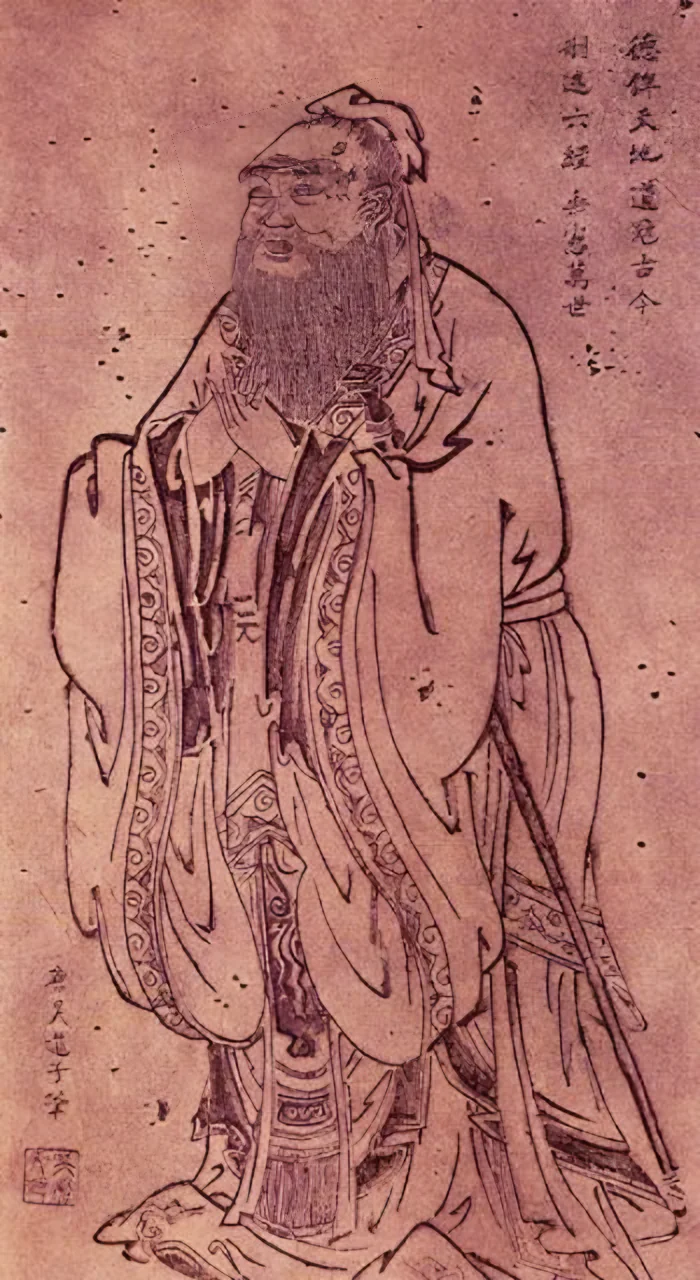
| 66 Quotes | |
| Born as | Kong Qiu |
| Occup. | Philosopher |
| From | China |
| Born | 551 BC Qufu, China |
| Died | 479 BC QuFu, China |
| Cause | Natural Causes |
| Cite | |
Citation Formats
APA Style (7th ed.)
Confucius biography, facts and quotes. (2026, February 11). FixQuotes. https://fixquotes.com/authors/confucius/
Chicago Style
"Confucius biography, facts and quotes." FixQuotes. February 11, 2026. https://fixquotes.com/authors/confucius/.
MLA Style (9th ed.)
"Confucius biography, facts and quotes." FixQuotes, 11 Feb. 2026, https://fixquotes.com/authors/confucius/. Accessed 25 Mar. 2026.
Early Life and Background
Kong Qiu, later honored as Kong Fuzi (Latinized as Confucius), was born around 551 BCE in Zou, in the state of Lu (in today's Shandong), during the Eastern Zhou dynasty's Spring and Autumn period. China was not a unified empire but a patchwork of competing states, where hereditary rank, ritual precedent, and military power jostled uneasily. The old Zhou ideal of a moral king ruling through virtue had faded into factional governance, private armies, and court intrigue - conditions that made questions of order, legitimacy, and ethical leadership urgently practical rather than abstract.Later tradition casts his family as the fallen gentry: a lineage with claims of distinction but modest means. Whatever the precise details, the contours of his early life suggest a youth shaped by social insecurity and a hunger for recognized standing. That tension - between reverence for ancient forms and the vulnerability of a man who had to earn his place - became central to his inner life: an intense seriousness about self-cultivation, a belief that dignity could be rebuilt through conduct, and an impatience with rulers who treated office as entitlement rather than responsibility.
Education and Formative Influences
Confucius came of age among specialists in ritual, music, archery, and record-keeping, and he absorbed the Zhou cultural repertoire that later generations called the "Six Arts". He studied historical precedent, ceremonial etiquette (li), and the moral vocabulary of antiquity, looking back to exemplary figures such as the Duke of Zhou as proof that politics could be ethical. His formation was not scholastic in the later, text-centered sense; it was practical and performative, trained on how a person stands, speaks, mourns, yields, governs, and corrects themselves. By midlife he was teaching students from varied backgrounds, advancing a radical premise for his time: that moral refinement and administrative competence could be cultivated beyond narrow aristocratic birth.Career, Major Works, and Turning Points
Confucius sought office in Lu and is traditionally associated with roles in local administration and justice, advocating reforms that would strengthen public trust by aligning law with ritual propriety and personal example. Court politics repeatedly thwarted him; the struggle between ruling houses and powerful clans made sustained reform fragile. Around his fifties he left Lu and traveled among states - including Wei, Song, Chen, and Cai - offering counsel to rulers, enduring poverty and danger, and testing his ideals against hard power. Disappointed yet undeterred, he returned to Lu in his later years to teach, edit and transmit cultural materials later linked to his name (such as the Book of Songs and Book of Documents in the classical tradition), and shape the community of disciples through whom his sayings were eventually compiled as the Analects (Lunyu), the chief source for his voice and temperament.Philosophy, Style, and Themes
Confucius' philosophy begins with the conviction that social order is personal before it is institutional: a ruler's character radiates outward, setting norms for ministers, families, and villages. He treated the home as the first school of the state, where filial piety and everyday trust become the muscles of public integrity. The later formula “The strength of a nation derives from the integrity of the home”. captures that moral psychology: he feared that when family bonds corrode, politics becomes mere coercion. His key virtues - ren (humaneness), yi (rightness), li (ritual propriety), and zhi (practical wisdom) - were not inward feelings alone but disciplined habits, visible in speech, restraint, and the courage to remonstrate.His style in the Analects is compressed, dialogic, and often wary of system-building; he teaches by correction, paradox, and example, assuming that moral knowledge grows through apprenticeship. He stresses the balanced mind: study without reflection becomes empty accumulation, but reflection without study drifts into vanity. “Learning without thought is labor lost; thought without learning is perilous”. That sentence reads like self-portrait: a man anxious about delusion, policing both credulity and cleverness, pushing disciples to fuse memory with judgment. His ethics are also emotional training. Anger, in particular, is a threat to relationship and reputation, and his counsel - “When anger rises, think of the consequences”. - treats impulse as a political problem, not merely a private flaw, because one hot moment can rupture a household, a friendship, or a court.
Legacy and Influence
Confucius died around 479 BCE, but his project outlived the fractured world that produced it. Over the following centuries, disciples and later interpreters (notably Mencius and Xunzi) expanded his teachings into a durable tradition; in the Han dynasty it became statecraft, schooling, and social aspiration, and in the Song it was renewed through Neo-Confucian metaphysics. His influence shaped East Asian governance, education, family ethics, and literary culture for more than two millennia, inspiring both devotion and critique - admired as the architect of humane order, challenged as the patron of hierarchy. Yet his enduring power lies in the human scale of his ambition: to make politics answerable to character, and to make character something a person can build, one ritual, one act of honesty, and one hard-won correction at a time.Our collection contains 66 quotes written by Confucius, under the main topics: Motivational - Ethics & Morality - Truth - Wisdom - Never Give Up.
Other people related to Confucius: Mencius (Philosopher)
Confucius Famous Works
- -372 Mencius (Book)
- -479 The Doctrine of the Mean (Book)
- -479 Analects (Book)
- -500 The Great Learning (Book)
Source / external links