
Connie Chung Biography Quotes 17 Report mistakes
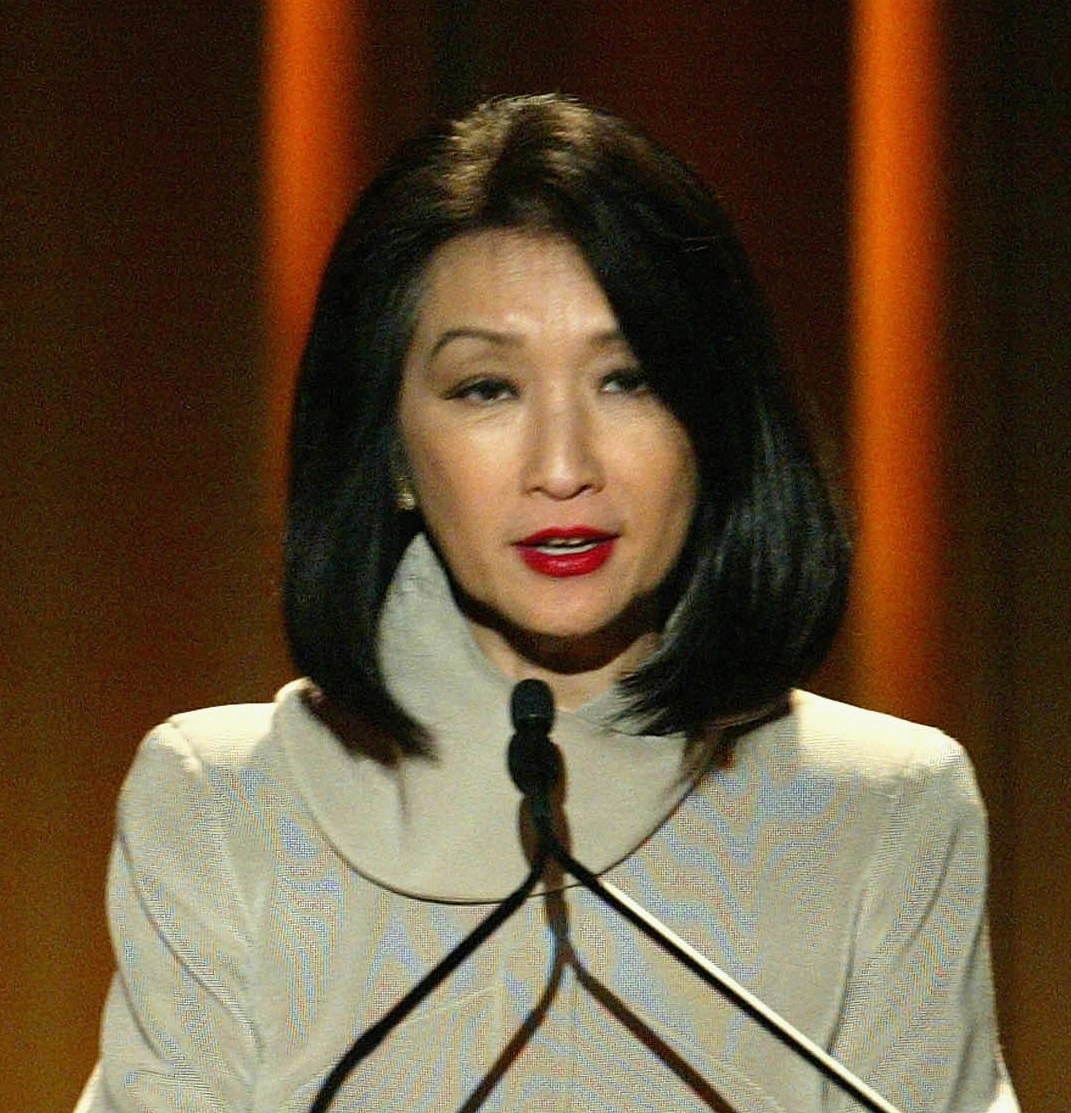
| 17 Quotes | |
| Born as | Constance Yu-Hwa Chung |
| Occup. | Journalist |
| From | USA |
| Born | August 20, 1946 Washington, D.C., U.S. |
| Age | 79 years |
| Cite | |
Citation Formats
APA Style (7th ed.)
Connie chung biography, facts and quotes. (2026, February 11). FixQuotes. https://fixquotes.com/authors/connie-chung/
Chicago Style
"Connie Chung biography, facts and quotes." FixQuotes. February 11, 2026. https://fixquotes.com/authors/connie-chung/.
MLA Style (9th ed.)
"Connie Chung biography, facts and quotes." FixQuotes, 11 Feb. 2026, https://fixquotes.com/authors/connie-chung/. Accessed 5 Mar. 2026.
Early Life and Background
Constance Yu-Hwa Chung was born on August 20, 1946, in Washington, D.C., into a Chinese immigrant family whose trajectory carried the pressures and possibilities of mid-century America. Her parents had fled war-torn China; the household retained the cadences of diaspora life while being shaped by the capital city's proximity to power and news. She grew up with a keen awareness of how public events ripple into private lives - a sensibility that would later animate her interviews, which often sought the human motive behind the headline.Chung came of age as television became the dominant national hearth and as the civil rights movement, the Vietnam War, and Watergate rewired American expectations of accountability. For an Asian American woman entering public-facing media in the 1960s and 1970s, visibility came with scrutiny: accent, appearance, and authority were all contested terrain. That early friction helped form her blend of polish and insistence - an on-air presence that could sound disarmingly calm while pressing for specificity.
Education and Formative Influences
She attended the University of Maryland, College Park, graduating in 1969 with a degree in journalism, training at a time when broadcast news was professionalizing rapidly and when women were still being steered toward "soft" beats. The discipline of reporting in the Washington orbit - where institutions speak in euphemism and the real story often hides in procedure - shaped her instinct to treat every prepared statement as a starting point rather than an answer.Career, Major Works, and Turning Points
Chung began at CBS News in Washington as a copywriter and researcher, then rose into reporting and anchoring roles that made her one of the most prominent Asian American journalists in national television. She worked at local stations and then at major networks, becoming a familiar face on NBC, CBS, and ABC, including co-anchoring the CBS Evening News in the early 1990s - a high-visibility appointment that also exposed her to the era's gendered judgments about tone, likability, and "gravitas". Her later work included prime-time interview programs and contributions across broadcast and cable, navigating a marketplace where news was increasingly packaged as personality while still trying to preserve the interview as a tool of record.Philosophy, Style, and Themes
Chung's style was built on the tension between composure and confrontation. She often used a steady, almost conversational cadence to lower a subject's defenses, then followed with pointed, tightly framed questions designed to limit escape routes. The deeper theme in her work is the performance of power - how politicians, executives, and celebrities rehearse their own narratives - and her interviews repeatedly tested whether that performance could withstand plain, persistent inquiry. Her craft matured in an arms race of speed and saturation, where exclusivity was harder to secure and verification had to compete with spectacle.At the same time, Chung spoke openly about the unequal standards applied to women in public life, a critique that doubles as a key to her psychology as an on-air figure: “I think men are allowed to be fat and bald and ugly and women aren't. And it's just not - there is no equality there”. That awareness sharpened her focus on competence and precision, as if facts could out-argue prejudice. She also framed career moves through the lens of editorial purpose and audience trust, especially in cable news: “Today, especially, when there are so many stations for viewers to choose from, if they want news, they always come to CNN and that's where I wanted to be”. Underneath the professional calculus sat an insistence on reclaiming the core product - reporting - amid the industry's churn: “We're going to develop - what we want to do is to provide the viewers with what they want from CNN and that is the news. So when people tune in, they'll get the latest news, but they'll also get the biggest story of the day in depth, as CNN does so well”. Taken together, these remarks reveal a journalist trying to balance ambition with legitimacy, and visibility with control, in a medium that rewards both intimacy and spectacle.
Legacy and Influence
Connie Chung's enduring significance lies in how she expanded the imaginable roles for Asian American women in broadcast journalism while exposing the industry's double standards from the inside. Her career tracks the transformation of American TV news from institution-centered evening broadcasts to fragmented, competitive, personality-driven formats, and her best work preserves the older ideal that an interview can be a form of public auditing. For later anchors and correspondents, she remains a case study in how to maintain authority under scrutiny, how to interrogate power without theatricality, and how to keep reporting central when the business incentives pull in other directions.Our collection contains 17 quotes written by Connie, under the main topics: Writing - Parenting - Equality - Work - Father.
Other people related to Connie: Maury Povich (Celebrity)
Connie Chung Famous Works
- 1993 Eye to Eye with Connie Chung (Non-fiction)
Source / external links