
Constantin Brancusi Biography Quotes 11 Report mistakes
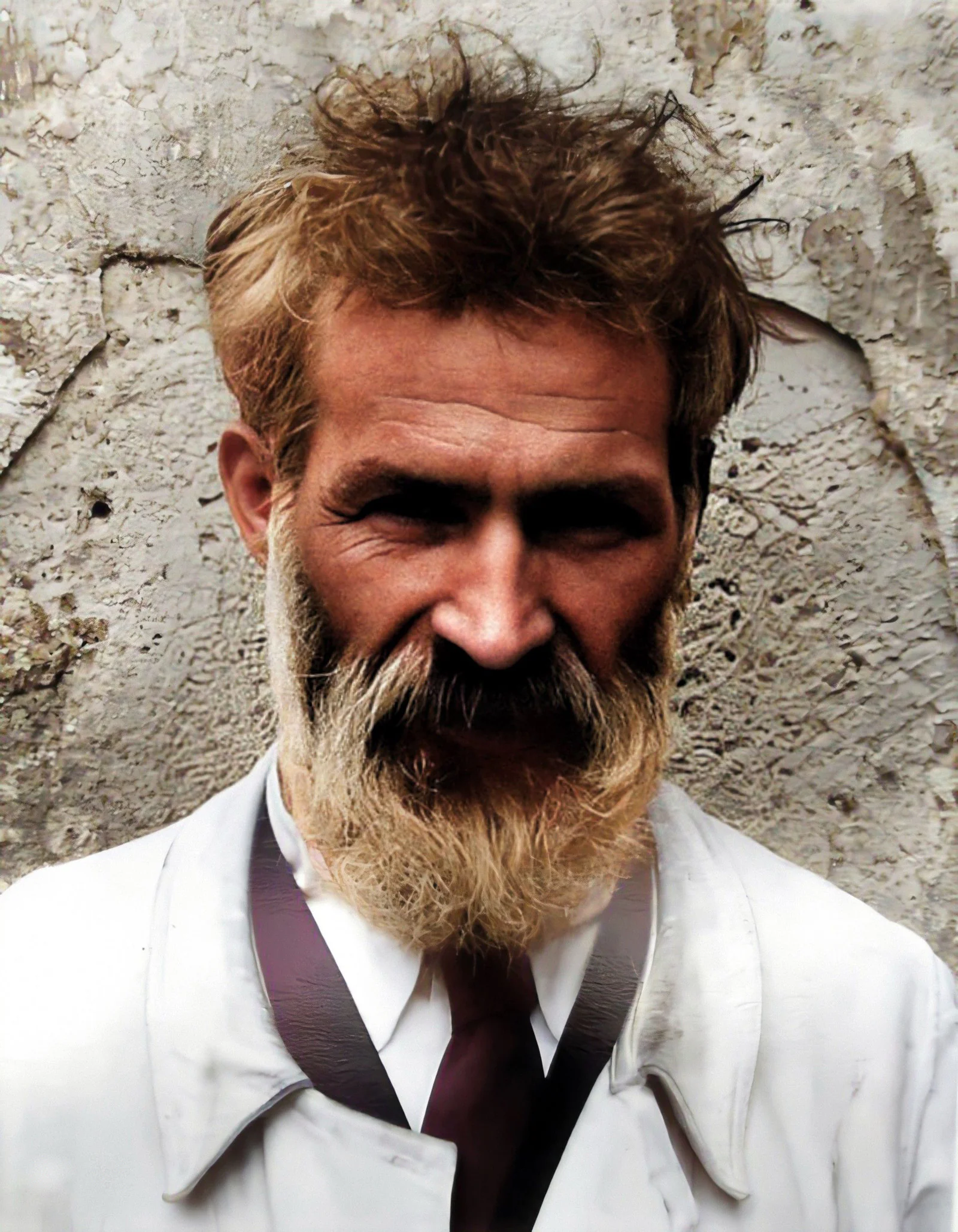
Attr: Attr.: Edward Steichen
| 11 Quotes | |
| Born as | Constantin Brâncuşi |
| Occup. | Sculptor |
| From | Romania |
| Born | February 19, 1876 Hobita, Romania |
| Died | March 16, 1957 Paris, France |
| Cause | Heart failure |
| Aged | 81 years |
| Cite | |
Citation Formats
APA Style (7th ed.)
Constantin brancusi biography, facts and quotes. (2026, February 11). FixQuotes. https://fixquotes.com/authors/constantin-brancusi/
Chicago Style
"Constantin Brancusi biography, facts and quotes." FixQuotes. February 11, 2026. https://fixquotes.com/authors/constantin-brancusi/.
MLA Style (9th ed.)
"Constantin Brancusi biography, facts and quotes." FixQuotes, 11 Feb. 2026, https://fixquotes.com/authors/constantin-brancusi/. Accessed 5 Mar. 2026.
Early Life and Background
Constantin Brancusi (Constantin Brancusi), born 1876-02-19 in Hobita, Gorj County, Romania, grew up at the edge of the Carpathians in a world of shepherding, timber, and village craft. His early life was marked by poverty and friction at home, and he learned self-reliance early, leaving for nearby towns while still young. The rural visual grammar of posts, gates, tools, and grave markers - carved, pared, and made to last - gave him a first vocabulary of form long before he encountered academic sculpture.By adolescence he was working in Craiova, taking jobs that trained both hand and temperament: practical, patient, and proud of workmanship. Romanian folk carving and Orthodox ritual objects taught him that a form could be plain yet charged - a lesson he later translated into modern sculpture without treating the village as a quaint museum. His later insistence on direct carving and on the dignity of materials can be traced to these early years, when making was not a style but a necessity.
Education and Formative Influences
Brancusi entered the Craiova School of Arts and Crafts (1894-1898), then studied at the National School of Fine Arts in Bucharest (1898-1902), mastering traditional modeling while quietly resisting its theatrical naturalism. In 1904 he left Romania for Paris, famously traveling much of the way on foot, arriving in 1905 and enrolling at the Ecole des Beaux-Arts under Antonin MerciE. In Paris he absorbed the shock of modernism - Rodin, Symbolism, early Cubist fracture, African and Oceanic sculpture, and the avant-garde debate about what a form should do - but he also learned what he did not want: sculpture that remained an anecdote in plaster.Career, Major Works, and Turning Points
A brief stint in Rodin's studio in 1907 ended quickly, consistent with his need to avoid a dominating shadow; soon after, works like "The Kiss" (first version 1907-1908) and "The Prayer" signaled his pivot toward essentialized volumes and direct carving. Over the next decades in Paris he developed serial motifs - "Sleeping Muse" (from 1910), "Maiastra" (from 1910s), "The Newborn" (1915), and the evolving "Bird in Space" (1920s) - refining them through subtle changes in proportion, polish, and base, until the base became part of the sculpture's metaphysics. His international profile grew through key exhibitions and patrons, and a public turning point came with the 1926-1928 US customs case over "Bird in Space", which challenged whether an abstract form could be legally recognized as art. In 1937-1938 he returned to Romania to realize the Targu Jiu ensemble - "Table of Silence", "Gate of the Kiss", and the soaring "Endless Column" - a civic memorial that fused archaic clarity with modern ambition. He died in Paris on 1957-03-16, leaving his studio and its carefully staged constellations to the French state.Philosophy, Style, and Themes
Brancusi's inner life was disciplined, stubborn, and oddly tender: a man who distrusted explanations yet pursued an exacting spiritual clarity. He believed sculpture should not imitate appearances but concentrate being, insisting, “What is real is not the external form, but the essence of things... it is impossible for anyone to express anything essentially real by imitating its exterior surface”. That conviction clarifies why his heads close their eyes, why birds become thrust and lift, and why an egglike ovoid can feel more alive than a portrait - he pursued the pulse behind the skin.His studio practice was both ascetic and theatrical: endless reworking, testing how light moved across bronze, how a pedestal changed the figure's meaning, how the room itself became an instrument. The difficulty, for him, was not technique alone but the artist's readiness: “Things are not difficult to make; what is difficult is putting ourselves in the state of mind to make them”. The famous fish-and-bird logic in his work is less abstraction than liberation from dead description, and it culminates in his credo of kinetic spirit: “I want just the flash of its spirit”. Through repetition and refinement he sought a simplicity earned, not performed, where polish could become a metaphor for perception - an ethics of seeing as much as a method of making.
Legacy and Influence
Brancusi helped redraw the boundary of what sculpture could be: not a frozen story but a concentrated event of form, material, and light. His serial approach anticipated minimalism and conceptual rigor, while his reverence for craft and the charged object shaped generations from Henry Moore and Barbara Hepworth to Isamu Noguchi and later sculptors who treat the pedestal, room, and viewer as part of the work. The Targu Jiu ensemble remains a landmark of modern public art, proving that abstraction can carry communal memory without illustration. His influence endures because his reductions never feel empty: they feel like negotiations between ancient symbol and modern speed, between the peasant's tool and the metropolis' glare, asking viewers not merely to look but to learn how to see.Our collection contains 11 quotes written by Constantin, under the main topics: Wisdom - Art - Work Ethic - Vision & Strategy.
Other people related to Constantin: Auguste Rodin (Sculptor), Henry Moore (Sculptor), Marcel Duchamp (Artist), Jacques Lipchitz (Sculptor), Dan Flavin (Sculptor), Isamu Noguchi (Sculptor)
Frequently Asked Questions
- Constantin Brancusi was heavily influenced by: Folk art traditions of Romania and African art, as well as his philosophical interests.
- Constantin Brancusi biography: Brancusi was a Romanian sculptor known for his innovative and abstract works. He was born in 1876 and moved to Paris in 1904, where he became a leading figure in modern sculpture.
- Brancusi is known today as the great patriarch of modern sculpture: For his pioneering use of abstraction and emphasis on simplified forms.
- Where was Constantin Brancusi born: Hobiţa, Romania
- who studied with brancusi? Isamu Noguchi, a prominent Japanese-American artist and landscape architect.
- Constantin Brancusi Bird in Space: A series of sculptures representing the essence of flight, abstract and elongated.
- Brancusi cause of death: Heart failure
- How old was Constantin Brancusi? He became 81 years old
Source / external links