
Corazon Aquino Biography Quotes 22 Report mistakes
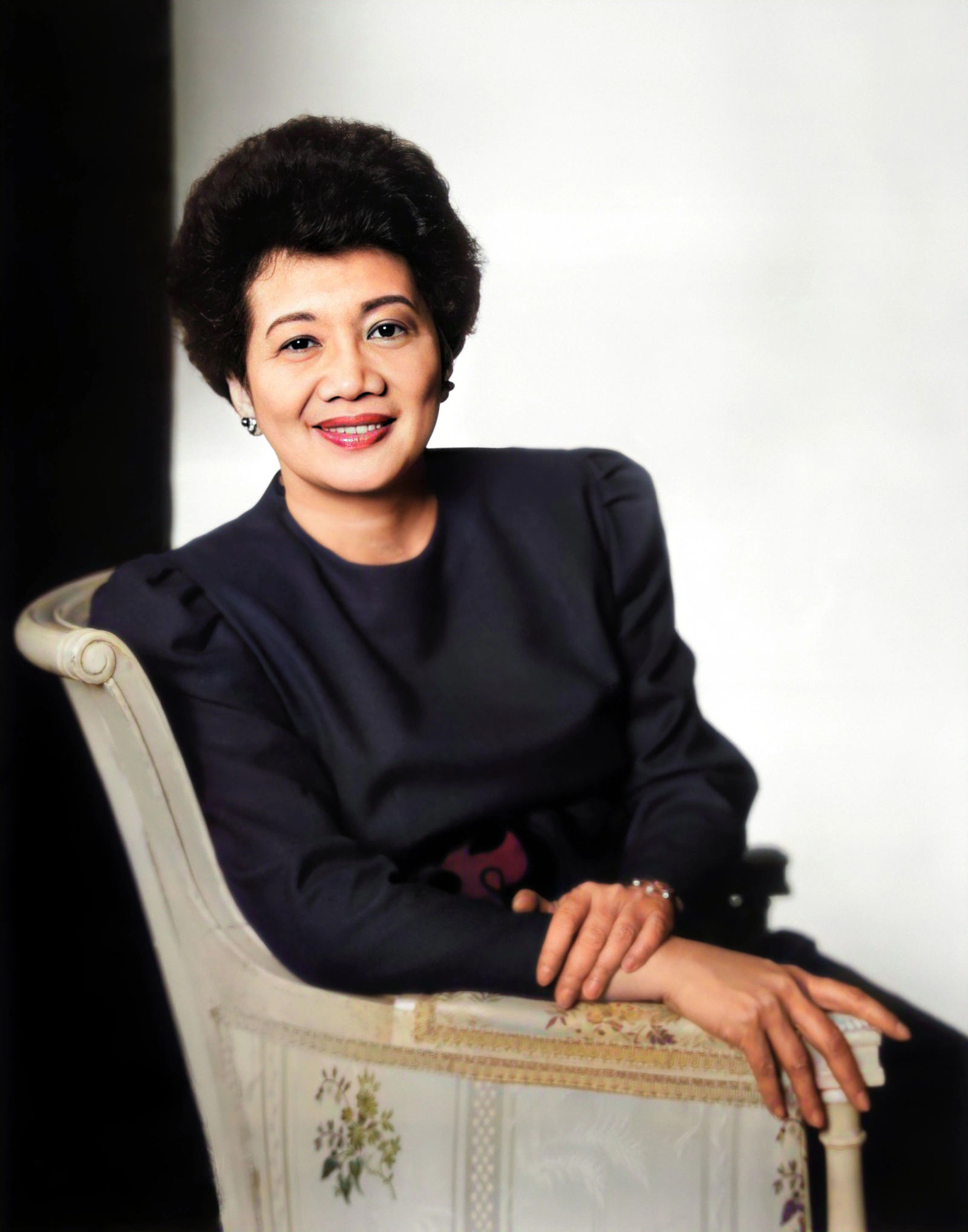
| 22 Quotes | |
| Born as | Maria Corazon Sumulong Cojuangco |
| Known as | Cory Aquino |
| Occup. | President |
| From | Philippines |
| Spouse | Benigno Aquino Jr. |
| Born | January 25, 1933 Paniqui, Tarlac, Philippines |
| Died | August 1, 2009 Manila, Philippines |
| Cause | Cardiac arrest |
| Aged | 76 years |
| Cite | |
Citation Formats
APA Style (7th ed.)
Corazon aquino biography, facts and quotes. (2026, February 11). FixQuotes. https://fixquotes.com/authors/corazon-aquino/
Chicago Style
"Corazon Aquino biography, facts and quotes." FixQuotes. February 11, 2026. https://fixquotes.com/authors/corazon-aquino/.
MLA Style (9th ed.)
"Corazon Aquino biography, facts and quotes." FixQuotes, 11 Feb. 2026, https://fixquotes.com/authors/corazon-aquino/. Accessed 12 Feb. 2026.
Early Life and Background
Maria Corazon Sumulong Cojuangco was born on January 25, 1933, in Paniqui, Tarlac, into two old, politically connected Catholic families: the Cojuangcos, prominent landowners and entrepreneurs, and the Sumulongs, long active in public life. Shy, disciplined, and deeply religious, she grew up amid the privileges and obligations of provincial elite society, where patronage, clan reputation, and faith shaped what "service" looked like long before she imagined national office.Her early adulthood was defined less by ambition than by relationship. In 1954 she married Benigno "Ninoy" Aquino Jr., a brilliant, fast-rising journalist-turned-politician whose charisma and risk appetite contrasted with her private temperament. Their family life - eventually five children - was periodically uprooted by Philippine turbulence: Ferdinand Marcos's ascent, the tightening of state power, and the polarization of a society where dissent increasingly carried personal cost.
Education and Formative Influences
Aquino studied in Manila and then in the United States, attending the College of Mount St. Vincent in New York and later finishing at St. Scholastica's College in Manila. Her schooling reinforced a devotional, duty-centered worldview: faith as daily practice rather than public slogan, and politics as moral consequence rather than career. The era's Cold War alignments, the Philippine tradition of elite democracy, and Catholic social teaching all formed a background score to her adult life, but her most formative "education" came from watching Ninoy's confrontation with authoritarianism transform private suffering into public responsibility.Career, Major Works, and Turning Points
After Marcos declared martial law in 1972 and imprisoned Ninoy, Aquino became the family's steady center through years of visits, surveillance, and uncertainty; the 1980 exile to the United States briefly widened her distance from Philippine politics. The decisive rupture came on August 21, 1983, when Ninoy was assassinated upon returning to Manila, an event that catalyzed mass opposition and pushed Aquino from mourning into leadership. She became the moral face of the democratic movement, and when Marcos called a snap election in February 1986, she ran for president against him. The disputed results triggered the People Power uprising (EDSA), supported by defecting military leaders and the Catholic hierarchy, forcing Marcos into exile. Aquino assumed the presidency (1986-1992), governed through a revolutionary mandate and then the 1987 Constitution, restored Congress and civil liberties, faced repeated coup attempts, pursued land reform through the Comprehensive Agrarian Reform Program, and navigated a debt-burdened economy while reorienting the Philippines toward democratic legitimacy at home and abroad.Philosophy, Style, and Themes
Aquino's inner life was anchored in a paradox: a temperament wary of power paired with a conviction that power could be redeemed by restraint. Her leadership style leaned toward persuasion, symbolism, and conscience rather than command, a choice partly psychological - she distrusted the hard edges of politics - and partly strategic in a post-dictatorship society craving limits. She framed democratic renewal as a collective recovery from shame, insisting that dignity could be rebuilt only if citizens acted as protagonists. "All the world wondered as they witnessed... a people lift themselves from humiliation to the greatest pride". In that sentence is her signature move: turning personal grief and national trauma into a narrative of moral ascent, where legitimacy arises from ordinary courage.Her Catholicism was not ornamental; it functioned as emotional infrastructure. Under pressure - coups, factionalism, the weight of expectation - she interpreted endurance as vocation, and community as the antidote to fear. "I guess my religious faith sustained me more than anything else. Family is also very important. If I didn't have children, it would have been too difficult. Even if you are strong, you still need people who would support you all the way". The admission reveals a leader who did not mythologize herself as solitary hero, and whose political ethic rested on fidelity and accompaniment. It also explains her aversion to vengeance: she sought reconciliation, but resisted the temptation to convert revolutionary victory into permanent domination. "As I came to power peacefully, so shall I keep it". The line doubles as pledge and self-discipline - a refusal to become what she overthrew, even when threatened.
Legacy and Influence
Aquino left office in 1992 after backing a constitutional transfer of power, a rare act in a region where post-crisis leaders often cling to office; she then served as civic conscience, defending democratic institutions and joining protests when she believed successors endangered them. Diagnosed with cancer late in life, she died on August 1, 2009, in Makati, and her funeral drew massive crowds that prefigured another democratic mobilization, helping propel her son Benigno "Noynoy" Aquino III to the presidency in 2010. Historically, her record is debated - especially on inequality, land reform, and the limits of elite-led transition - but her enduring influence lies in making nonviolent mass action, constitutionalism, and moral witness central to the Philippine democratic imagination, proving that gentleness could be politically consequential without ceasing to be gentle.Our collection contains 22 quotes written by Corazon, under the main topics: Justice - Leadership - Freedom - Meaning of Life - Peace.
Other people related to Corazon: Imelda Marcos (Celebrity), George Schultz (Public Servant)
Source / external links