
Corrine Brown Biography Quotes 26 Report mistakes
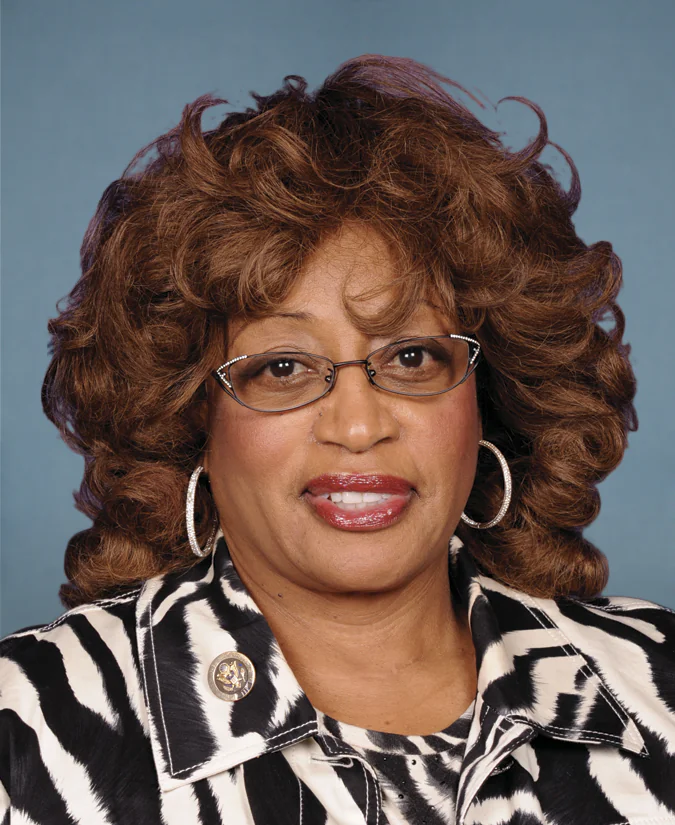
| 26 Quotes | |
| Occup. | Politician |
| From | USA |
| Born | November 11, 1946 USA |
| Age | 79 years |
| Cite | |
Citation Formats
APA Style (7th ed.)
Corrine brown biography, facts and quotes. (2026, February 3). FixQuotes. https://fixquotes.com/authors/corrine-brown/
Chicago Style
"Corrine Brown biography, facts and quotes." FixQuotes. February 3, 2026. https://fixquotes.com/authors/corrine-brown/.
MLA Style (9th ed.)
"Corrine Brown biography, facts and quotes." FixQuotes, 3 Feb. 2026, https://fixquotes.com/authors/corrine-brown/. Accessed 12 Feb. 2026.
Early Life and Background
Corrine Brown was born on November 11, 1946, in Jacksonville, Florida, into the long shadow of Jim Crow and the early stirrings of the modern civil rights era. Jacksonville was both a military city and a segregated one, shaped by shipyards, port commerce, and the steady presence of nearby bases. Brown grew up watching how public decisions about roads, schools, and jobs could either widen or narrow the distance between neighborhoods - a practical education in power that never felt abstract.That early environment also formed her instincts about representation. In a South where Black political influence had been systematically constrained, she absorbed the lesson that incremental gains - a committee vote, a budget line, a bus route restored - mattered because they altered the daily texture of life. Later supporters would frame her as a relentless advocate for her district; critics would argue that her style blurred the line between hard-nosed politics and ethical risk. Both impressions trace back to a formative belief that communities like hers could not afford timid leadership.
Education and Formative Influences
Brown attended Florida A and M University, earning a degree that connected her to one of the most important historically Black public institutions in the South, then completed graduate study in education at the University of Florida. The combination was telling: FAMU offered a tradition of civic purpose and professional uplift, while UF represented access to the wider levers of state power. Before Congress, she worked as an educator and administrator, experience that grounded her in the everyday mechanics of public systems - budgets, staffing, compliance, and the politics of scarce resources - and taught her to speak in concrete outcomes rather than ideological abstractions.Career, Major Works, and Turning Points
Brown entered electoral politics in Florida, serving in the Florida House of Representatives (1982-1992) and Florida Senate (1992-1993), then won election to the U.S. House in 1992 from a majority-Black district anchored in Jacksonville and stretching along parts of North and Central Florida. In Congress (1993-2017) she became closely identified with transportation and infrastructure policy, using committee work and appropriations fights to steer attention toward ports, highways, transit, and passenger rail - the less glamorous plumbing of economic life. Her career's defining arc combined durable electoral strength with mounting controversy: after years of investigations and allegations, she was convicted in federal court on multiple corruption-related counts in 2017, a verdict that ended her House tenure and reshaped how her public record would be read - as a story of both vigorous advocacy and catastrophic judgment.Philosophy, Style, and Themes
Brown's governing philosophy was intensely transactional in the best and worst senses: she believed government is most legitimate when it delivers tangible improvements, and she measured political success by what a district can point to - safer intersections, expanded clinics, jobs tied to construction and logistics. "States get to improve transportation infrastructure; that creates economic development, puts people back to work and, most important, enhances safety and improves local communities". The sentence is revealing not only as policy but as psychology: she framed progress as visible motion - people back to work, communities improved - suggesting a lawmaker who trusted concrete projects more than elegant theory. It also explains her affinity for the committee-and-grant world, where influence is expressed through line items, formulas, and who gets heard in the room.Her rhetorical style, sharpened by years of partisan trench warfare, often blended moral urgency with fiscal and procedural argument. She could sound protective and intimate on social insurance, as in: "You know, for most seniors Medicare is their only form of health care". That appeal to vulnerability - "only form" - shows how she tried to turn policy into a narrative of obligation, asking colleagues to picture a specific person rather than a spreadsheet. She also framed transportation as a neglected public promise, arguing, "We continue to subsidize highways and aviation, but when it comes to our passenger rail system, we refuse to provide the money Amtrak needs to survive". Read alongside her later downfall, these lines highlight a central tension: her deep conviction that government must choose winners in public investment, and her equally strong belief that political power is earned by extracting benefits - a mindset that can energize representation yet tempt a leader toward patronage and entitlement.
Legacy and Influence
Brown's legacy is inseparable from both her pioneering role and her conviction. For decades she was one of Florida's most prominent Black elected officials, a durable voice for Jacksonville-area constituents, and a congresswoman who treated infrastructure, health access, and district-level investment as civil rights issues by other means. At the same time, her federal conviction became the defining endpoint of her biography, a cautionary tale about how a representative's closeness to donors and favors can corrode public trust and eclipse legitimate accomplishments. Her enduring influence therefore lives in a divided register: proof of the power of hard-won representation in the post-civil-rights South, and a stark reminder that the ethics of advocacy determine whether political results are remembered as service or scandal.Our collection contains 26 quotes written by Corrine, under the main topics: Justice - Freedom - Equality - Health - Military & Soldier.
Source / external links