
Craig Kelly Biography Quotes 6 Report mistakes
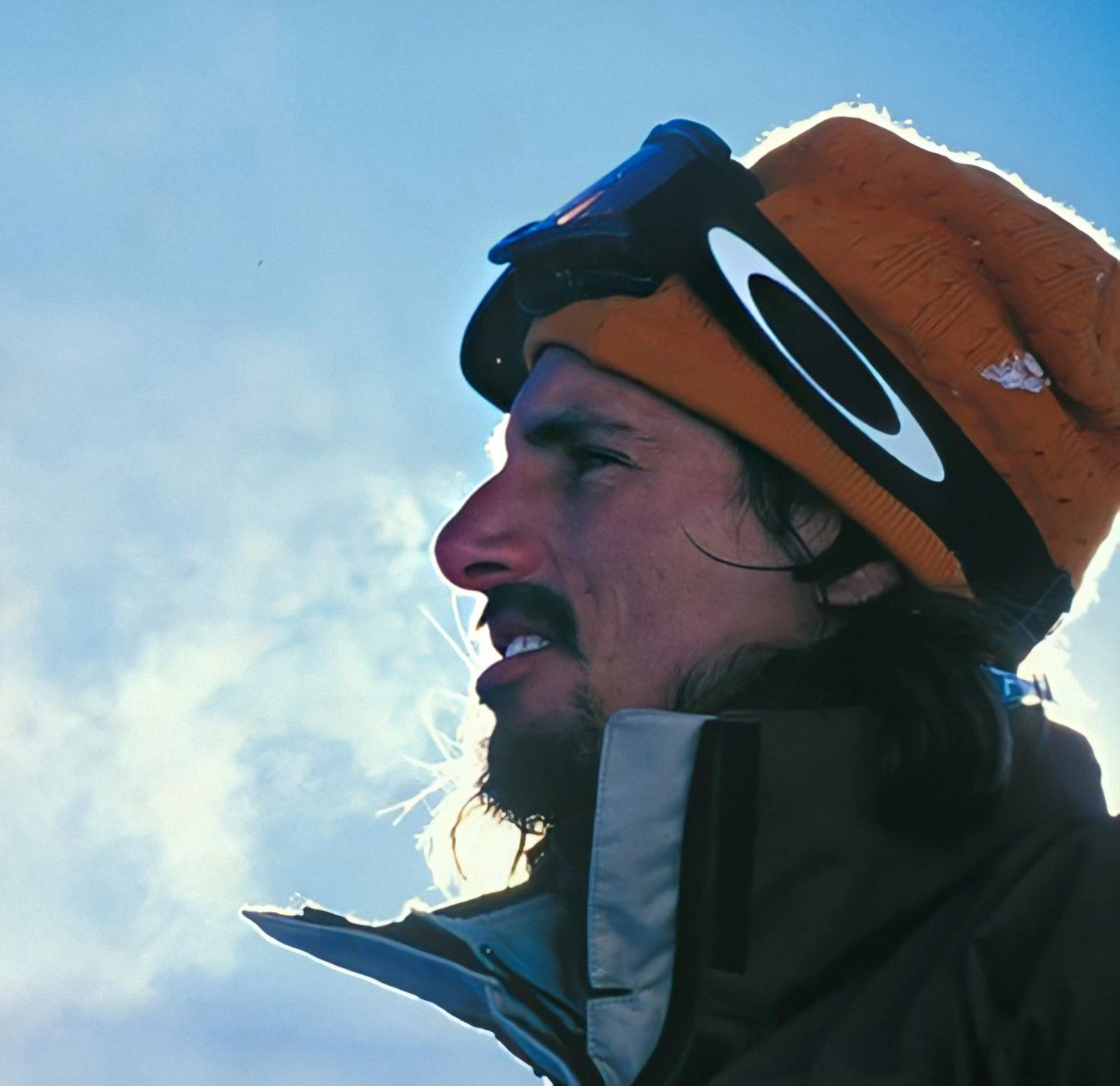
| 6 Quotes | |
| Occup. | Athlete |
| From | USA |
| Born | April 1, 1966 USA |
| Died | January 20, 2003 USA |
| Aged | 36 years |
| Cite | |
Citation Formats
APA Style (7th ed.)
Craig kelly biography, facts and quotes. (2026, February 11). FixQuotes. https://fixquotes.com/authors/craig-kelly/
Chicago Style
"Craig Kelly biography, facts and quotes." FixQuotes. February 11, 2026. https://fixquotes.com/authors/craig-kelly/.
MLA Style (9th ed.)
"Craig Kelly biography, facts and quotes." FixQuotes, 11 Feb. 2026, https://fixquotes.com/authors/craig-kelly/. Accessed 6 Mar. 2026.
Overview
Craig Kelly (1966, 2003) was an American snowboarder whose career traced the sport's evolution from fringe pastime to global culture. A dominant competitor in the late 1980s and early 1990s and later a pioneering freerider, he helped define how a snowboard could be ridden, how boards should be designed, and how the mountains themselves could be approached. He is often remembered as a rider's rider: technically exacting, quietly charismatic, and committed to finding a deeper relationship with snow, terrain, and risk. His life connected athletes, designers, filmmakers, and guides into a web of influence that continues to shape snowboarding.Early Life and Path Into Snowboarding
Raised in the U.S. Pacific Northwest, Kelly grew up with the mountains and coastal weather as a constant backdrop. Skateboarding and the do-it-yourself mentality of West Coast boardsports informed his style early on. By the time snowboarding began to gain traction at a handful of resorts, he had both the balance and the creative instincts to excel. When he began traveling to ride more consistently, the sport was small enough that the most committed participants recognized one another, and Kelly quickly entered that inner circle.As companies formed to make better boards and push access to ski areas, he connected with Burton Snowboards and its founder, Jake Burton Carpenter. That relationship placed him at the center of product evolution and competition just as snowboarding was transitioning from a novelty into an organized sport. Burton's resources and global reach gave Kelly the platform to test his ideas in real time, on real mountains, in front of a growing audience.
Rise to Competitive Prominence
Kelly quickly became one of the sport's first true professionals, traveling the world to race gates, ride halfpipes, and appear in magazines and early films. He won repeatedly and across disciplines, a rare feat then and now. His race technique was crisp and calm, while his pipe and freestyle riding had a fluidity that suggested possibilities for the snowboard beyond the contest format. His presence on podiums helped legitimize events and inspired resorts to invest in pipes and park features.During these years he was surrounded by team managers, technicians, and fellow riders who were themselves forming the culture's first durable institutions. Jake Burton Carpenter was a constant touchpoint and collaborator, while peers and rivals from other brands fueled an arms race in innovation. Kelly became a reference for what was possible, and the media seized on his image and results as evidence that snowboarding was not a fad.
Design Collaboration and Technical Influence
Working closely with Burton's engineers and shapers, Kelly translated feel into function. He did not treat boards as mere equipment; he treated them as instruments that could be tuned for a particular line, a particular snowpack, or a particular speed. His feedback informed sidecuts, flex patterns, and stances that worked in powder, on ice, and in variable conditions. Signature models bearing his name became benchmarks for all-mountain performance, distinct from pure race boards or park-specific shapes.This collaboration extended beyond hardware. Kelly's approach to boot support, binding response, and even outerwear emphasized precision and simplicity. The aesthetic that emerged, unflashy, purpose-driven, and confident, stood in contrast to more theatrical styles of the era and influenced how many riders and brands presented themselves.
From Contests to Freeriding
At the height of his competitive success, Kelly made a choice that surprised much of the industry: he stepped back from contest circuits to dedicate himself to freeriding and the backcountry. He prioritized mountain travel, route finding, snowpack evaluation, and the kind of riding that cannot be fully judged from a panel or a finish line. The decision was both philosophical and practical; he believed that the deepest expression of snowboarding lived in complex terrain under changing weather, not only under stadium lights.Filmmakers recognized the power of what he was doing. Crews like Standard Films, led by Mike Hatchett and collaborators, helped broadcast his lines and method to a generation craving authenticity. The segments emphasized cadence and control rather than spectacle alone. Through these projects, a global audience saw what freeriding could be: not simply steep turns, but meaningful choices layered over risk management and reading the mountain in three dimensions.
Mentorship and Community
Kelly's influence extended well beyond his own turns. Younger riders gravitated toward his balance of humility and mastery. He mentored informally, in lift lines, on hikes, and during brand camps, emphasizing that style is not just how something looks but how it is done. He championed patience, snow safety, and the idea that the best days are earned, not given.Within the industry, he remained a valued voice. Product teams sought his input, marketing teams trusted his judgment, and event organizers listened when he advocated for formats that highlighted riding quality over spectacle. Iconic peers and successors, including standout freeriders and contest champions alike, have cited him as a touchstone. Figures such as Jake Burton Carpenter publicly acknowledged Kelly's role in shaping both the company's product trajectory and the sport's identity, while filmmakers and photographers credited him with elevating the way backcountry snowboarding was portrayed.
Approach to Risk and Mountain Education
Committed to understanding the mountains, Kelly invested in avalanche education and guide training. He studied snow science, practiced companion rescue, and worked with experienced guides to improve route selection and group decision-making. He treated this learning with the same intensity he brought to world-class competition, recognizing that freeriding's beauty cannot be separated from its hazards.His emphasis on education spread through his circles. Riders he traveled with carried shovels, probes, and transceivers as a given, discussed layers and facets, and sought local knowledge wherever they went. He proved that professionalism in snowboarding included a responsibility to the people you ride with and the terrain you move through.
Tragedy in the Mountains
In January 2003, while traveling in British Columbia's interior ranges, Kelly was caught and killed in a large avalanche. The loss reverberated immediately through the snow-sport world. Athletes, engineers, filmmakers, and friends confronted the paradox that the same mountains that had given him purpose could take him away. Tributes poured in from across the community: former competitors, Burton colleagues led by Jake Burton Carpenter, and riders who had grown up studying his parts and emulating his lines.The tragedy renewed conversations about avalanche awareness, group management, and the limits of experience in the face of complex snowpacks. It also underlined what Kelly had been advocating for years: humility before the mountain and continued education, no matter one's skill.
Legacy
Kelly's legacy is both visible and intangible. It lives in board shapes that balance carve and float, in the ethic of preparation many freeriders follow, and in the quiet confidence found in clean, functional style. His signature boards and the product innovations he helped inspire remain reference points for designers. His decision to leave contests at his peak reframed career possibilities for riders who wanted their arcs to include exploration, film work, and guiding.Culturally, he broadened the meaning of progression. For Kelly, progression was not only a higher wall or a riskier spin; it was choosing a more elegant line, matching speed to terrain, or backing off when conditions did not align. That sensibility influenced filmmakers like Mike Hatchett, who continued to document riding that prizes judgment as much as bravado, and it influenced athletes who followed, including world champions and backcountry specialists who studied his cadence and clarity.
Character and Remembrance
Those who knew Kelly often describe a calm presence and a disarming directness. He was as comfortable talking with engineers about torsional flex as he was encouraging a new rider on a storm day. He preferred doing the work to talking about it, and he chose depth over breadth in his commitments. Beyond public accomplishments, that character, focused, generous with knowledge, and steady under pressure, may be the most durable reason he is still cited as a model.In memorials, gatherings, and informal shrines at mountains he loved, Kelly is remembered not only for lines etched down faces or podiums stacked with medals, but for the way he aligned values with action. He helped turn a young sport into a culture with a center of gravity: respect for the mountain, respect for one another, and respect for the craft of riding. That center holds each winter as new riders clip in, point downhill, and trace their own arcs, following a path he helped draw.
Our collection contains 6 quotes written by Craig, under the main topics: Sports - Marketing - Mountain - Winter - Son.
Other people related to Craig: Charlie Hunnam (Actor)
Source / external links