
Creighton W. Abrams, Jr. Biography Quotes 3 Report mistakes
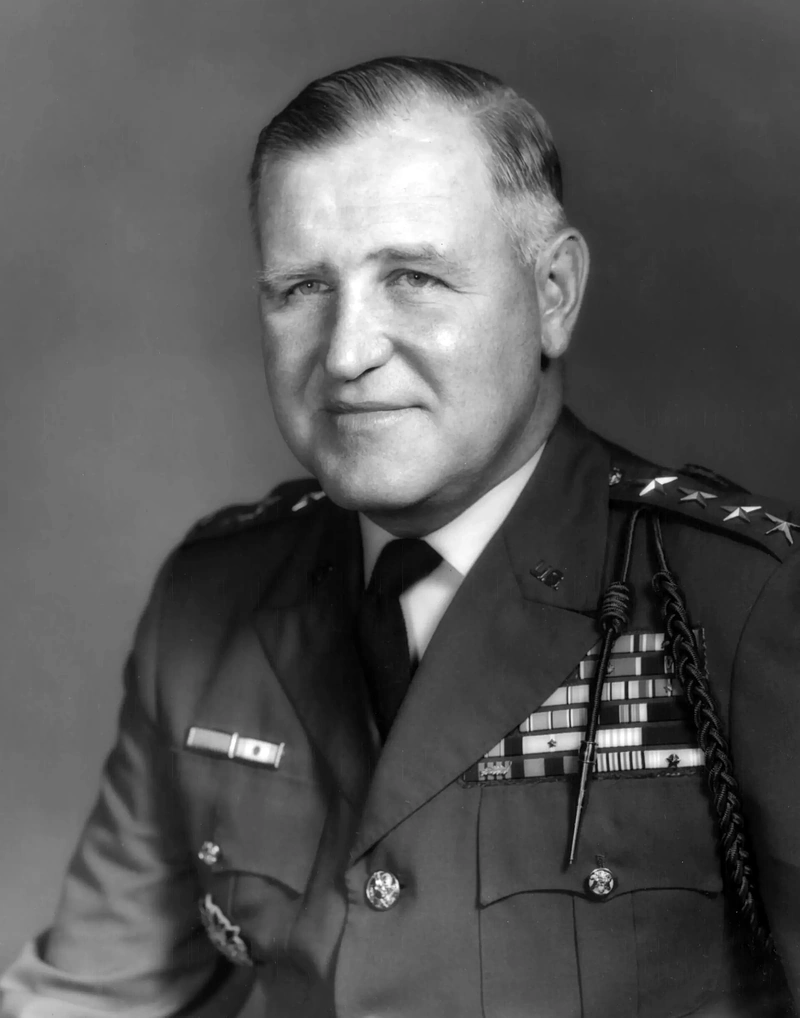
| 3 Quotes | |
| Born as | Creighton Williams Abrams Jr. |
| Known as | Creighton Abrams |
| Occup. | Soldier |
| From | USA |
| Born | September 14, 1914 Springfield, Massachusetts, USA |
| Died | September 4, 1974 Walter Reed Army Medical Center, Washington, D.C., USA |
| Cause | Complications from surgery |
| Aged | 59 years |
| Cite | |
Citation Formats
APA Style (7th ed.)
Creighton w. abrams, jr. biography, facts and quotes. (2026, February 11). FixQuotes. https://fixquotes.com/authors/creighton-w-abrams-jr/
Chicago Style
"Creighton W. Abrams, Jr. biography, facts and quotes." FixQuotes. February 11, 2026. https://fixquotes.com/authors/creighton-w-abrams-jr/.
MLA Style (9th ed.)
"Creighton W. Abrams, Jr. biography, facts and quotes." FixQuotes, 11 Feb. 2026, https://fixquotes.com/authors/creighton-w-abrams-jr/. Accessed 26 Mar. 2026.
Early Life and Background
Creighton Williams Abrams Jr. was born on September 14, 1914, in Springfield, Massachusetts, a factory-and-rail city shaped by New England discipline and the shadow of nearby armories that symbolized the nation-state at war and at work. He grew up in a Catholic, working-to-middle-class milieu where duty was not an abstraction but a daily practice, and where the Depression years sharpened the contrast between private ambition and public service. From the start Abrams was small in stature, intense, and famously unromantic about hardship - traits that later turned into a command presence defined less by ceremony than by stamina and refusal to be flustered.That temperament matured in an era when the US Army still carried the memory of World War I and the institutional caution of interwar budgets. Abrams came of age amid drill halls, paper-strength forces, and a professional culture that prized competence under constraint. The long view of his life is the arc of a citizen-soldier turned high commander: a man who learned early that modern war is industrial, political, and brutally personal, and that character - not rhetoric - is what holds formations together when plans dissolve.
Education and Formative Influences
Abrams entered the US Military Academy at West Point and graduated in 1936, absorbing a curriculum that fused engineering discipline with a code of responsibility. He became a cavalry officer as the Army edged toward mechanization, finding his element in armored warfare as tanks replaced horses and speed replaced pageantry. He married Julia Harvey and built a family life that had to coexist with constant deployments, the sort of private anchor many career officers relied on as the institution demanded mobility and emotional restraint.Career, Major Works, and Turning Points
Commissioned into the cavalry, Abrams rose through armor as World War II forced rapid adaptation; he became a standout commander in the 4th Armored Division under George S. Patton, leading aggressive thrusts in France and Germany and helping spearhead the relief of Bastogne during the Battle of the Bulge. His reputation was forged in forward command, close to the lead elements, where he insisted on tempo and presence rather than distant control. After the war he held key posts in a changing Army, culminating in service as commander of US Military Assistance Command, Vietnam (MACV) from 1968 to 1972, where he inherited a grinding war after Tet and pursued "Vietnamization" while managing the simultaneous realities of combat operations, political limits, and the erosion of American consensus. In 1972 he became Chief of Staff of the US Army, wrestling with post-Vietnam reconstruction, the transition to the all-volunteer force, and the ethical and organizational aftershocks of a divisive conflict, until his death on September 4, 1974.Philosophy, Style, and Themes
Abrams's inner life, as glimpsed through recollections and the texture of his decisions, suggests a commander who distrusted theatrical bravery and preferred moral seriousness paired with practical aggression. The famous dark humor attributed to him in armored combat - “They've got us surrounded again, the poor bastards”. - is not merely a quip but a window into his psychology: pressure turned into clarity, fear metabolized into a tactical problem. In his world, encirclement was not a fate but an invitation to maneuver, and levity functioned as a tool to keep subordinates oriented toward action rather than panic.That same mindset carried an austere ethic. “It is never very crowded at the front”. reads like bravado, but in Abrams it signaled a credo of presence: commanders should absorb risk, see with their own eyes, and earn trust by proximity to danger and decision. Yet his forwardness was balanced by an insistence that military force remains bound to a higher standard than mere effectiveness. “While we are guarding the country, we must accept being the guardian of the finest ethics. The country needs it and we must do it”. frames him as a professional who saw morality as operational - discipline, restraint, and truthfulness were not ornaments, but prerequisites for legitimacy, especially in conflicts like Vietnam where public confidence and political authority could collapse from within.
Legacy and Influence
Abrams endures as a model of the fighting commander who combined battlefield audacity with institutional responsibility: a World War II armor leader whose name later attached to the M1 Abrams tank as a symbol of post-Vietnam renewal and armored excellence. His Vietnam command remains debated - constrained by strategy and politics as much as by enemy action - but his broader influence lies in the example of leadership under ambiguity: forward, unsentimental, ethically demanding, and rooted in the belief that an army's strength is measured not only by its firepower but by the character it brings to the front line and the society it serves.Our collection contains 3 quotes written by Creighton, under the main topics: Leadership - War - Military & Soldier.
Source / external links