
Daisaku Ikeda Biography Quotes 5 Report mistakes
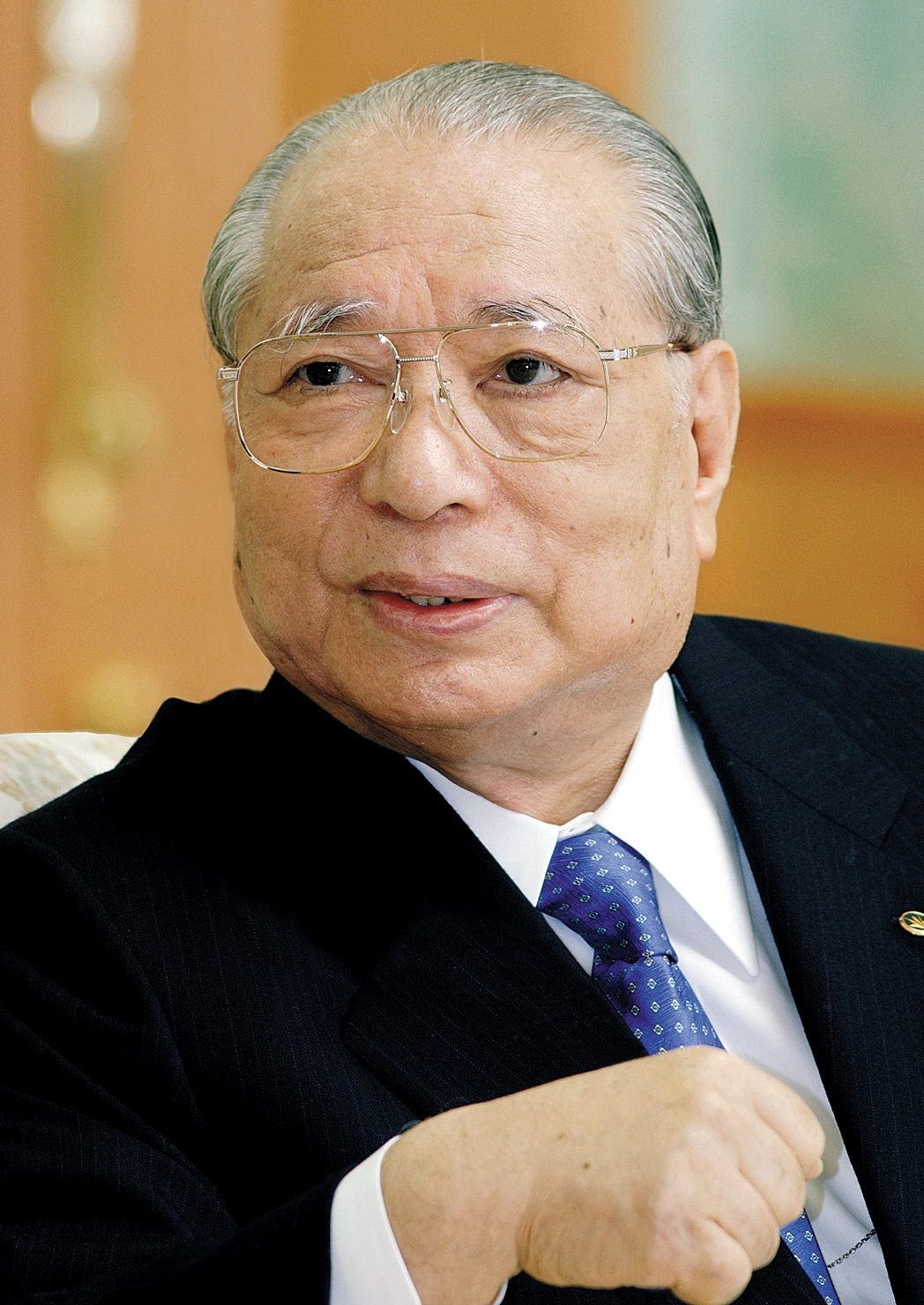
| 5 Quotes | |
| Born as | 池田 大作 |
| Occup. | Writer |
| From | Japan |
| Born | January 2, 1928 Ōta, Tokyo |
| Age | 98 years |
| Cite | |
Citation Formats
APA Style (7th ed.)
Daisaku ikeda biography, facts and quotes. (2026, February 19). FixQuotes. https://fixquotes.com/authors/daisaku-ikeda/
Chicago Style
"Daisaku Ikeda biography, facts and quotes." FixQuotes. February 19, 2026. https://fixquotes.com/authors/daisaku-ikeda/.
MLA Style (9th ed.)
"Daisaku Ikeda biography, facts and quotes." FixQuotes, 19 Feb. 2026, https://fixquotes.com/authors/daisaku-ikeda/. Accessed 5 Mar. 2026.
Early Life and Background
Daisaku Ikeda (Ikeda Daisaku, 1928-01-02 to 2023-11-15) was born in Omori, Tokyo, the fifth son in a large family whose livelihood was tied to Japan's precarious interwar economy. His childhood unfolded under the tightening atmosphere of militarization and then the catastrophe of total war - air raids, shortages, and the quiet dread of state control over thought and speech. Those pressures left him with an unusually early sensitivity to the cost of ideology when fused to violence.
Illness also shaped his inner landscape. He suffered tuberculosis as a youth, forcing long periods of convalescence and intensifying his appetite for books and reflection. While older brothers were swept into the conflict, he watched a nation promise glory and deliver ruin; the postwar years brought black markets, hunger, and a new constitution that renounced war. The combination of fragility and upheaval pushed him toward a lifelong preoccupation with resilience, human dignity, and the question of how ordinary people could reclaim agency after historical trauma.
Education and Formative Influences
Ikeda's formal schooling was interrupted by illness and the demands of survival in devastated Tokyo, and he did not follow the elite university path that defined many public intellectuals of his generation. Instead, his decisive education came through apprenticeship: in 1947 he met Josei Toda, the educator and postwar reconstruction leader of Soka Gakkai, and became his close disciple and secretary. Toda's synthesis of Nichiren Buddhism with a practical program of self-reform and social engagement gave Ikeda a framework that was at once spiritual discipline, moral psychology, and a method of speaking to the anxieties of an exhausted society.
Career, Major Works, and Turning Points
After Toda's death in 1958, Ikeda emerged as the movement's principal organizer and strategist, becoming the third president of Soka Gakkai in 1960 and driving rapid expansion during Japan's high-growth era, when urban migration and corporate life left many searching for community. He helped found the Soka Gakkai International (SGI) in 1975, turning a Japanese lay Buddhist organization into a global network, and pursued a long campaign of cultural diplomacy through exhibitions, institutions, and dialogue. His writing career ran alongside leadership: the serialized novel The Human Revolution and its sequel The New Human Revolution mythologized the postwar rebuilding of the movement while offering a didactic model of inner change; he also produced poems, essays, and extensive published dialogues with thinkers such as Arnold J. Toynbee. A major turning point came in the late 1970s and early 1980s amid internal and external controversies, including a period of resignation from the Soka Gakkai presidency and later escalating conflict with the Nichiren Shoshu priesthood, culminating in the 1991 excommunication of Soka Gakkai - an event that pushed SGI toward a more explicitly lay-centered identity and intensified Ikeda's emphasis on individual conscience over institutional authority.
Philosophy, Style, and Themes
Ikeda's worldview is anchored in a postwar conviction that peace is not an abstraction but a daily practice, won first in the psyche and then in social relations. He argued that suffering could be alchemized into meaning through disciplined effort and supportive community, a stance that made him both accessible and polarizing. His most persistent thesis - that personal transformation is the engine of historical change - appears in his insistence that “A great revolution in just one single individual will help achieve a change in the destiny of a society and, further, will enable a change in the destiny of humankind”. Psychologically, the claim reads as autobiography: a chronically ill youth, denied conventional credentials, asserting a pathway from the private battle to public consequence.
His prose tends toward exhortation and parable, designed less to ornament experience than to mobilize it; the novels in particular function as moral theater, converting organizational history into a guide for readers' own decisions. Leadership, in his vocabulary, is emotional labor as much as strategy, summarized in the maxim, “A person, who, no matter how desperate the situation, gives others hope, is a true leader”. That emphasis on hope reveals a temperament formed under wartime despair and postwar scarcity, wary of cynicism as a corrosive habit. Even his language of creativity is muscular rather than aesthetic - “You must not for one instant give up the effort to build new lives for yourselves. Creativity means to push open the heavy, groaning doorway to life”. - casting imagination as a moral act that breaks inertia, whether in an individual confronting illness or a society tempted by resignation.
Legacy and Influence
Ikeda's influence is inseparable from SGI's global footprint: millions of members, a distinctive lay Buddhist culture, and an institutional ecosystem including Soka schools and universities, peace proposals, and cultural exchange programs. Admirers credit him with democratizing a form of Buddhism into a practical ethics of courage, dialogue, and daily discipline; critics question the movement's internal dynamics, political entanglements in Japan, and the hagiographic tone of some of his literature. As a writer, his most enduring role may be as a shaper of narrative - turning postwar Japanese experience into a story of human agency - and as an architect of a transnational vocabulary of "human revolution" that continues to frame how many readers interpret suffering, responsibility, and the possibility of peace in an age still shadowed by the catastrophes that formed him.
Our collection contains 5 quotes written by Daisaku, under the main topics: Never Give Up - Leadership - Change - Perseverance.
Daisaku Ikeda Famous Works
- 1995 The New Human Revolution (Novel)
- 1985 Before It's Too Late: A Dialogue (Dialogue)
- 1976 Choose Life: A Dialogue (Dialogue)
- 1976 The Living Buddha: An Interpretive Biography (Biography)
- 1964 The Human Revolution (Novel)
Source / external links