
Dan Gable Biography Quotes 5 Report mistakes
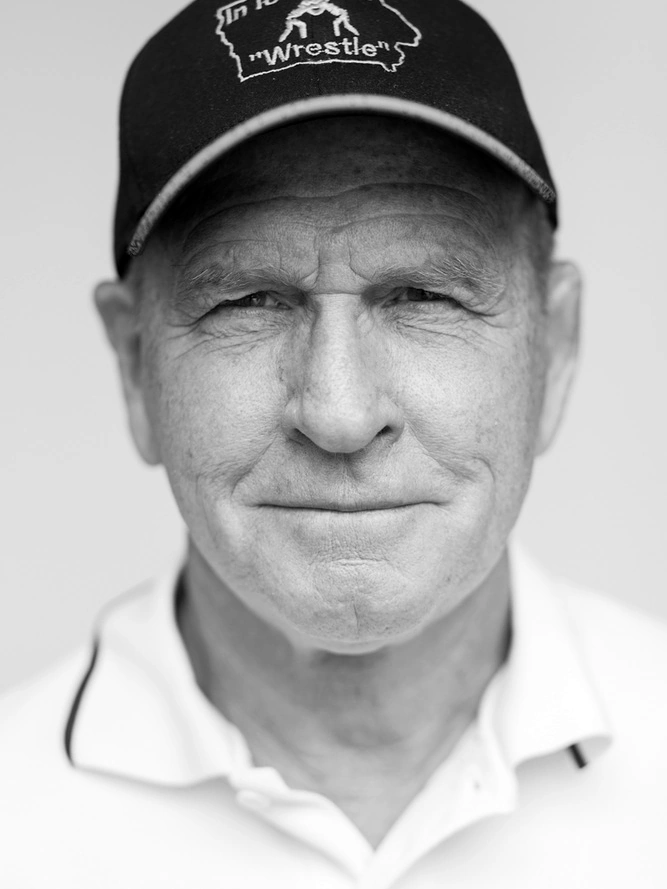
Attr: Fstoppers
| 5 Quotes | |
| Born as | Daniel Lewis Gable |
| Occup. | Athlete |
| From | USA |
| Born | October 25, 1948 Waterloo, Iowa, USA |
| Age | 77 years |
| Cite | |
Citation Formats
APA Style (7th ed.)
Dan gable biography, facts and quotes. (2026, February 11). FixQuotes. https://fixquotes.com/authors/dan-gable/
Chicago Style
"Dan Gable biography, facts and quotes." FixQuotes. February 11, 2026. https://fixquotes.com/authors/dan-gable/.
MLA Style (9th ed.)
"Dan Gable biography, facts and quotes." FixQuotes, 11 Feb. 2026, https://fixquotes.com/authors/dan-gable/. Accessed 13 Feb. 2026.
Early Life and Background
Daniel Lewis Gable was born on October 25, 1948, in Waterloo, Iowa, and grew up in a Midwestern world where factory schedules, farm rhythms, and school gymnasiums set the tempo of life. He was a restless, competitive child who gravitated toward the blunt honesty of wrestling: no clock to run out with the ball, no teammate to blame, no place to hide when the mat tightened around a mistake. The sport offered him a language of effort that fit the era's working-class stoicism and the postwar American faith in self-making.In 1964, when Gable was 15, his sister Diane was murdered in their family home, a trauma that re-ordered his interior life. He rarely framed it publicly as motivation, but the facts of his later discipline suggest a private bargain with grief: structure as survival, work as a kind of control, victory as proof that pain could be transmuted into something earned. From that point, wrestling was not merely competition; it was a daily ritual in which he could decide, again and again, what would define him.
Education and Formative Influences
At West High School in Waterloo, Gable became a national-level talent, compiling a remarkable record and training with a single-mindedness that stood out even in a sport built on obsession. He moved on to Iowa State University in Ames, where he wrestled under coach Harold Nichols and absorbed the discipline of collegiate wrestling at its most exacting: hand-fighting, angles, conditioning, and the ruthless film-study culture emerging in late-1960s American sport. The wider backdrop - Vietnam-era anxiety, a society arguing about authority - only sharpened the appeal of a world where results were measurable and personal responsibility was absolute.Career, Major Works, and Turning Points
Gable's competitive peak fused technical mastery with a punishing pace, culminating in the 1972 Munich Olympics where he won freestyle gold at 68 kg, surrendering only a single point across the tournament; the lone blemish, a late point conceded in the final, reportedly haunted him more than the medal satisfied him. After retiring as an athlete, he became head wrestling coach at the University of Iowa in 1976 and built one of the defining dynasties in American collegiate sports: 15 NCAA team championships in 21 seasons, multiple unbeaten seasons, and a pipeline of champions that made Iowa City a proving ground for the national style. His turning point was not just winning but institutionalizing winning - translating a private ethic into a public culture that outlived his tenure.Philosophy, Style, and Themes
Gable's philosophy begins with the insistence that wrestling is a forge for the whole person, a place where hardship becomes familiar rather than frightening. "Once you've wrestled, everything else in life is easy". In his case, the line is less bravado than autobiography: the mat became a controlled environment for stress, where fear could be rehearsed into focus and suffering could be converted into competence. That is why his most enduring lessons are not about tricks but about tolerance for discomfort - the ability to keep attacking when the body wants negotiation.His style as both competitor and coach emphasized tempo, re-attack, and an almost moral faith in preparation, yet he never reduced wrestling to conditioning alone. "The 1st period is won by the best technician. The 2nd period is won by the kid in the best shape. The 3rd period is won by the kid with the biggest heart". The progression outlines his psychology: technique as craft, fitness as will, and heart as identity - the part of a person that refuses to be bargained out of a match. Underneath it runs an early confidence that he treated as a learnable habit rather than a gift: "Right out of high school I never had the fear of getting beat, which is how most people lose". For Gable, fear was not an emotion to deny but a mechanic of defeat to be disarmed through repetition and standards.
Legacy and Influence
Gable's legacy is twofold: an Olympic model of near-flawless competitive execution and an American coaching template that made intensity, accountability, and constant motion into a recognizable brand. He helped professionalize the mindset of U.S. wrestling, elevating the importance of year-round training, positional precision, and psychological readiness, while also shaping popular ideas about grit far beyond the sport. Generations of athletes - in wrestling rooms and elsewhere - borrowed his premise that excellence is manufactured in ordinary days, and that the hardest opponent is often the impulse to relent. In an age that increasingly markets inspiration, Gable's influence endures because it was never primarily about speeches; it was about habits, and the uncompromising daily choices that make a reputation feel inevitable.Our collection contains 5 quotes written by Dan, under the main topics: Witty One-Liners - Motivational - Training & Practice.