
Dan O'Brien Biography Quotes 17 Report mistakes
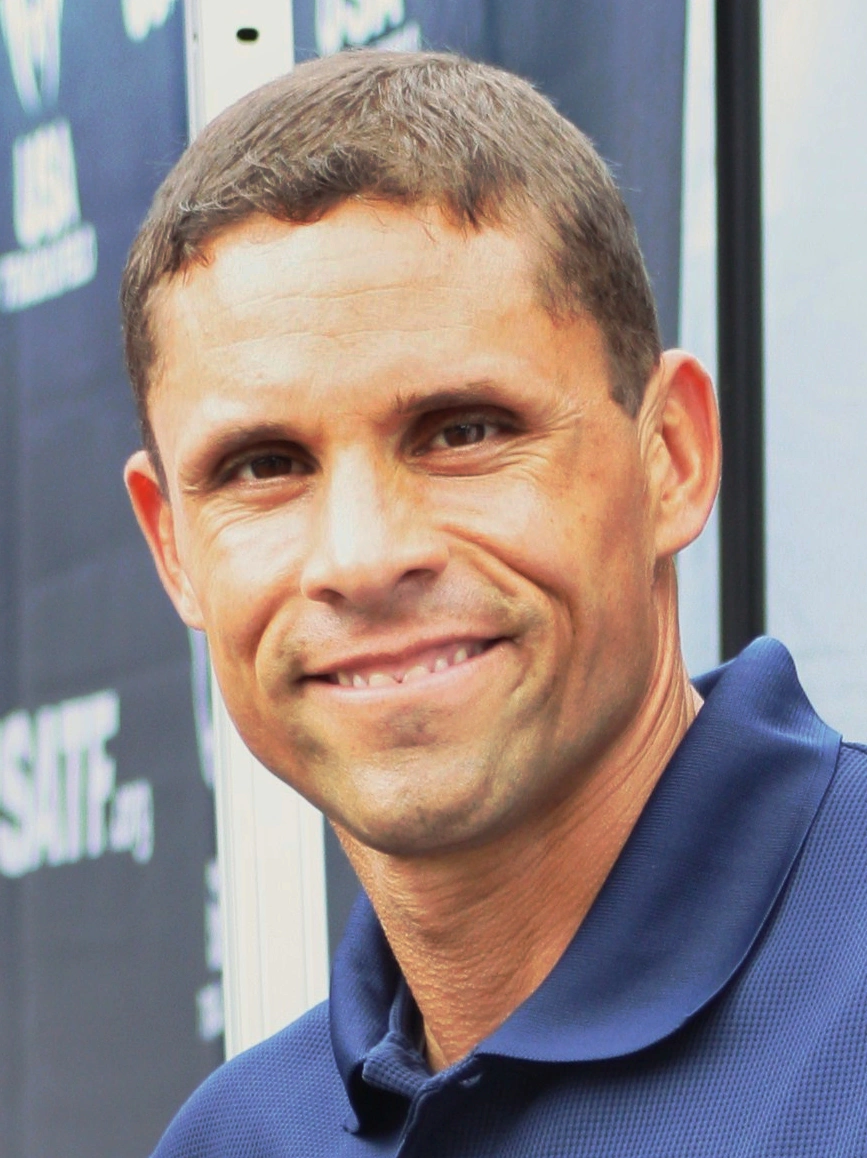
Attr: Gumpert10, Public domain
| 17 Quotes | |
| Born as | Daniel Dion O'Brien |
| Occup. | Athlete |
| From | USA |
| Born | June 18, 1966 Los Angeles, California, USA |
| Age | 59 years |
| Cite | |
Citation Formats
APA Style (7th ed.)
Dan o'brien biography, facts and quotes. (2026, February 11). FixQuotes. https://fixquotes.com/authors/dan-obrien/
Chicago Style
"Dan O'Brien biography, facts and quotes." FixQuotes. February 11, 2026. https://fixquotes.com/authors/dan-obrien/.
MLA Style (9th ed.)
"Dan O'Brien biography, facts and quotes." FixQuotes, 11 Feb. 2026, https://fixquotes.com/authors/dan-obrien/. Accessed 28 Mar. 2026.
Early Life and Background
Daniel Dion O'Brien was born June 18, 1966, in Portland, Oregon, and came of age in the Pacific Northwest at a moment when American track and field was searching for a new identity after the 1970s boom and the cold-war fueled intensity of the 1980s. His childhood was energetic and tightly managed, the sort of household where adults tried to channel excess motion into something productive and safe. “When I was little, I wasn't allowed to put sugar on my breakfast cereal because it made me so hyper”. That small detail, often told as a joke, points to a deeper through-line: even early on, his life was about regulating drive, turning restlessness into repeatable routine.O'Brien also spoke publicly about identity in a way that was unusual for elite athletes of his generation, treating race not as a box to be checked but as an interior narrative he actively shaped. “It's important for me to think I'm mixed-race”. In the 1970s and 1980s, when American sports culture pushed athletes toward simplified personas, his insistence on complexity suggested a private need to reconcile belonging and difference - a psychological stance that would later match the decathlete's requirement to inhabit many roles without being consumed by any single one.
Education and Formative Influences
He developed into a multi-event talent and entered the University of Idaho in Moscow, where the decathlon's punishing logic - sprints, throws, jumps, and endurance compressed into two days - rewarded curiosity as much as power. Collegiate track in that era was both a laboratory and a proving ground, with limited financial security and enormous competitive pressure; O'Brien learned to live by incremental gains, to take coaching, technique, and recovery as seriously as raw competitiveness, and to accept that progress in a ten-event life is rarely linear.Career, Major Works, and Turning Points
Turning professional, O'Brien rose in the early 1990s as the United States searched for a successor to the mythic standard set by earlier Olympic champions. His defining public arc included dominance at the World Championships - highlighted by his 1991 world title and a return to the top in 1995 - and then the jagged vulnerability of 1992, when he failed to clear an early height in the Olympic Trials pole vault and missed the Barcelona team. The disappointment could have fossilized into a career-ending label, but it became a hinge: he rebuilt, won again, and ultimately captured Olympic gold in Atlanta in 1996, performing under the uniquely American pressure of home Games and the international expectation that the decathlon's winner embodies "the world's greatest athlete". He remained a fixture into the late 1990s, collecting global medals while navigating injuries and the fading margins that separate longevity from decline in combined events.Philosophy, Style, and Themes
O'Brien's worldview was shaped by the decathlon's refusal to let any athlete hide. “The decathlon includes ten separate events and they all matter. You can't work on just one of them”. On the surface, it is a training principle; psychologically, it is a creed against escapism. The decathlete cannot build a self-image around one gift and ignore the rest - weakness will be audited on the track, in the ring, and on the runway. That demand made O'Brien unusually candid about imperfection: he treated failure not as a personal verdict but as an expected data point in a system that forces constant confrontation with limits.His mental edge was not bravado so much as an engineered resilience, a willingness to endure daily evidence of inadequacy without collapsing into self-pity or anger. “You have to be able to be a good loser. You have to be okay knowing you're going to fail every day in something without getting mad and upset”. This is the decathlete's emotional economy: ten events create ten opportunities to be humbled, and the only sustainable response is composure. That same logic helped him metabolize the 1992 collapse - a public failure of a single event that threatened his whole identity - into a later mastery that looked, from the outside, like destiny but was built from disciplined self-forgiveness.
Legacy and Influence
O'Brien's enduring influence lies less in any single mark than in the model he offered for what an elite athlete can be: technically versatile, psychologically transparent, and willing to let complexity show. His 1996 Olympic triumph remains a central American decathlon memory precisely because it followed a highly visible setback, making his career a case study in how champions are constructed over time rather than revealed in one perfect afternoon. For later multi-event athletes, he helped normalize a language of craft - the idea that greatness is a mosaic of small competencies - and his candor about identity and failure continues to resonate on a quotes-and-biography level because it describes the private work behind public victory.Our collection contains 17 quotes written by Dan, under the main topics: Motivational - Funny - Never Give Up - Victory - Sports.
Source / external links