
Dan Quayle Biography Quotes 65 Report mistakes
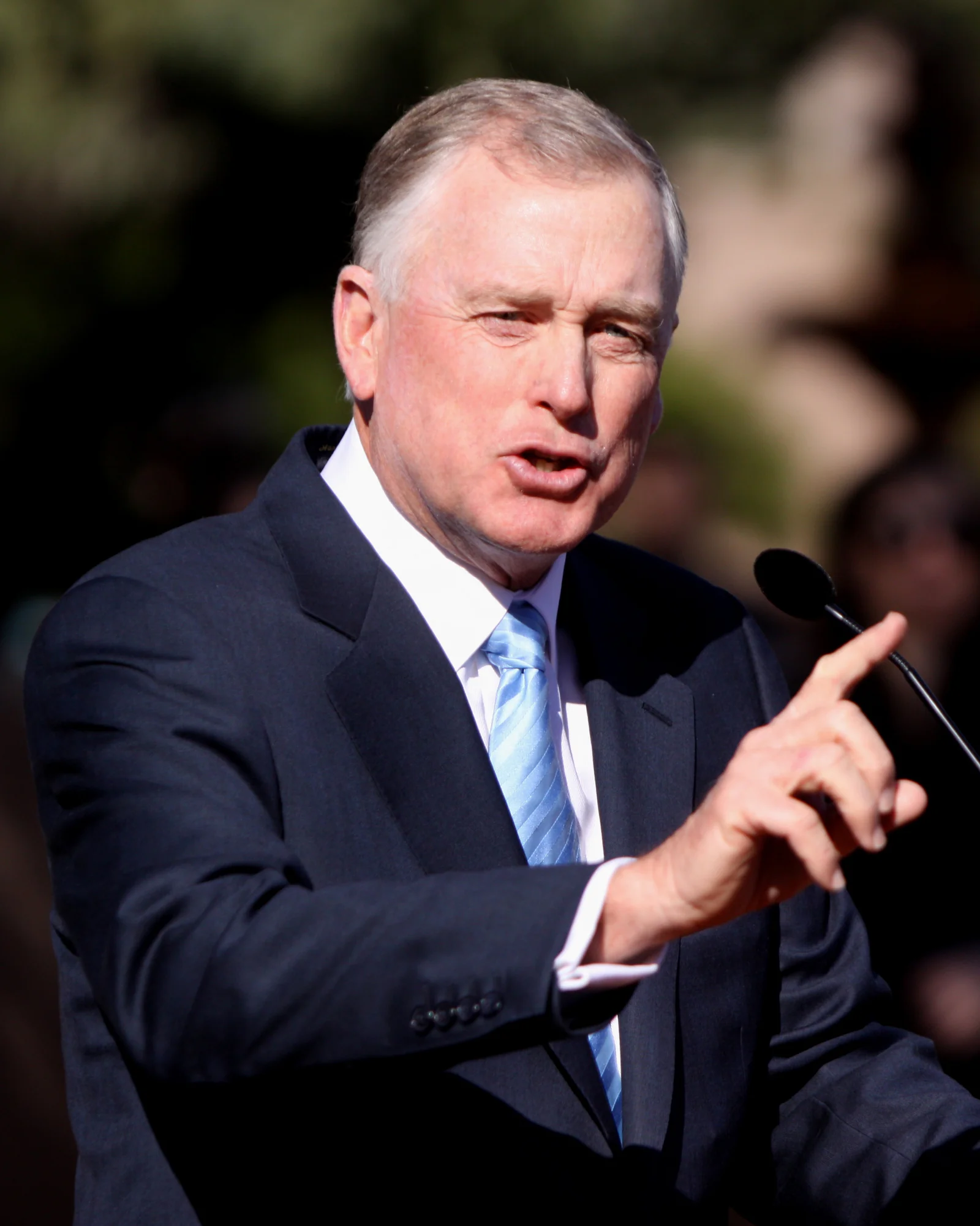
| 65 Quotes | |
| Occup. | Vice President |
| From | USA |
| Born | February 4, 1947 |
| Age | 79 years |
| Cite | |
Citation Formats
APA Style (7th ed.)
Dan quayle biography, facts and quotes. (2026, February 1). FixQuotes. https://fixquotes.com/authors/dan-quayle/
Chicago Style
"Dan Quayle biography, facts and quotes." FixQuotes. February 1, 2026. https://fixquotes.com/authors/dan-quayle/.
MLA Style (9th ed.)
"Dan Quayle biography, facts and quotes." FixQuotes, 1 Feb. 2026, https://fixquotes.com/authors/dan-quayle/. Accessed 6 Mar. 2026.
Early Life and Background
James Danforth "Dan" Quayle was born February 4, 1947, in Indianapolis, Indiana, into a family whose identity fused Midwestern respectability with the power of local institutions. The Quayles were prominent in Indiana publishing and civic life; the influence of the family-owned newspaper business, and the expectation that public service was an honorable extension of private responsibility, formed his earliest sense of how reputation is built and guarded in a small-state political culture.He came of age as postwar confidence gave way to the turbulence of the 1960s - Vietnam, student protest, and an intensifying national argument over authority. Quayle's temperament leaned toward order and patriotism rather than rebellion. That preference, reinforced by community norms and church-and-club civic networks, set the emotional foundation for his later appeal: a familiar, reassuring figure to voters who felt disoriented by cultural change, and a convenient target to critics who read polish as superficiality.
Education and Formative Influences
Quayle attended DePauw University in Greencastle, Indiana, graduating in 1969, then earned a JD from Indiana University School of Law in Indianapolis in 1974. Between those degrees lay the defining pressure of his cohort: the Vietnam-era draft and the moral theater surrounding military service. Quayle served in the Indiana National Guard (1969-1975), a fact that became a lasting lens through which admirers and opponents judged him. Law school and Guard service together sharpened a conservative, process-oriented mind: respect for institutions, preference for incremental change, and a belief that public life is a contest over rules and legitimacy as much as over ideals.Career, Major Works, and Turning Points
After practicing law, Quayle entered politics early, winning a U.S. House seat in 1976 at 29 and becoming a U.S. senator in 1980. In the Senate he aligned with the Republican mainstream of the Reagan era - defense-minded, tax-cut oriented, culturally traditional - and built relationships that made him a viable national running mate. George H. W. Bush selected him in 1988 to signal generational contrast and Midwestern steadiness; the campaign also exposed Quayle as unusually vulnerable to narrative framing. The vice presidency (1989-1993) gave him portfolios in space policy and the National Space Council, and in domestic policy he chaired the Council on Competitiveness, pushing deregulation and cost-benefit scrutiny. His most famous public turning point was not legislative but rhetorical: the 1992 "potatoe" misspelling episode, which cemented a caricature that often overwhelmed his substantive work. After leaving office he remained a party elder, advising candidates, serving on corporate boards, and publishing memoir and political reflection, notably Standing Firm (1994).Philosophy, Style, and Themes
Quayle's governing instinct was to separate the mechanics of winning from the mechanics of governing, a division that could read as candor or cynicism depending on the listener. His remark, “You do the policy, I'll do the politics”. , captured a self-image as a coalition manager and messenger rather than a grand theorist - a vice presidential temperament shaped by hierarchy and team play. Psychologically, it points to a man who sought mastery over the performative arena where reputations are made and destroyed, perhaps because he understood, earlier than many, that modern politics often treats policy as secondary to narrative.His public voice was also marked by malapropisms and oddly circular formulations that became late-night material, but they were more revealing than they were merely comic. “If we don't succeed we run the risk of failure”. compresses a genuine, almost anxious literalism: he spoke in slogans meant to be safe, universally agreeable, and difficult to weaponize - yet that very caution produced language that sounded unmoored. Another line, “We are ready for any unforeseen event that may or may not occur”. , inadvertently disclosed the vice president's true occupational hazard: responsibility without full control, proximity to crisis without command of the levers. Quayle's theme, in effect, was stability - family, flag, predictable rules - even as his own media persona became a symbol of uncertainty about competence in a television age.
Legacy and Influence
Quayle's legacy sits at the intersection of power and perception. Institutionally, he helped professionalize the modern vice presidency's policy roles and advanced Republican deregulation arguments through the Council on Competitiveness; politically, he embodied the era's accelerating shift toward image-driven accountability, where a gaffe could eclipse years of committee work. As a cultural figure, he became shorthand for doubts about preparedness, yet his endurance in party networks shows another truth: he was a disciplined partisan operative who understood coalition maintenance, message discipline, and the value of being acceptable to many factions. In that tension - between substantive proximity to governance and an enduring comic archetype - lies his lasting significance in late-20th-century American political memory.Our collection contains 65 quotes written by Dan, under the main topics: Witty One-Liners - Motivational - Funny - Art - Puns & Wordplay.
Other people related to Dan: Ben Quayle (Politician)
Source / external links