
Dan Rather Biography Quotes 25 Report mistakes
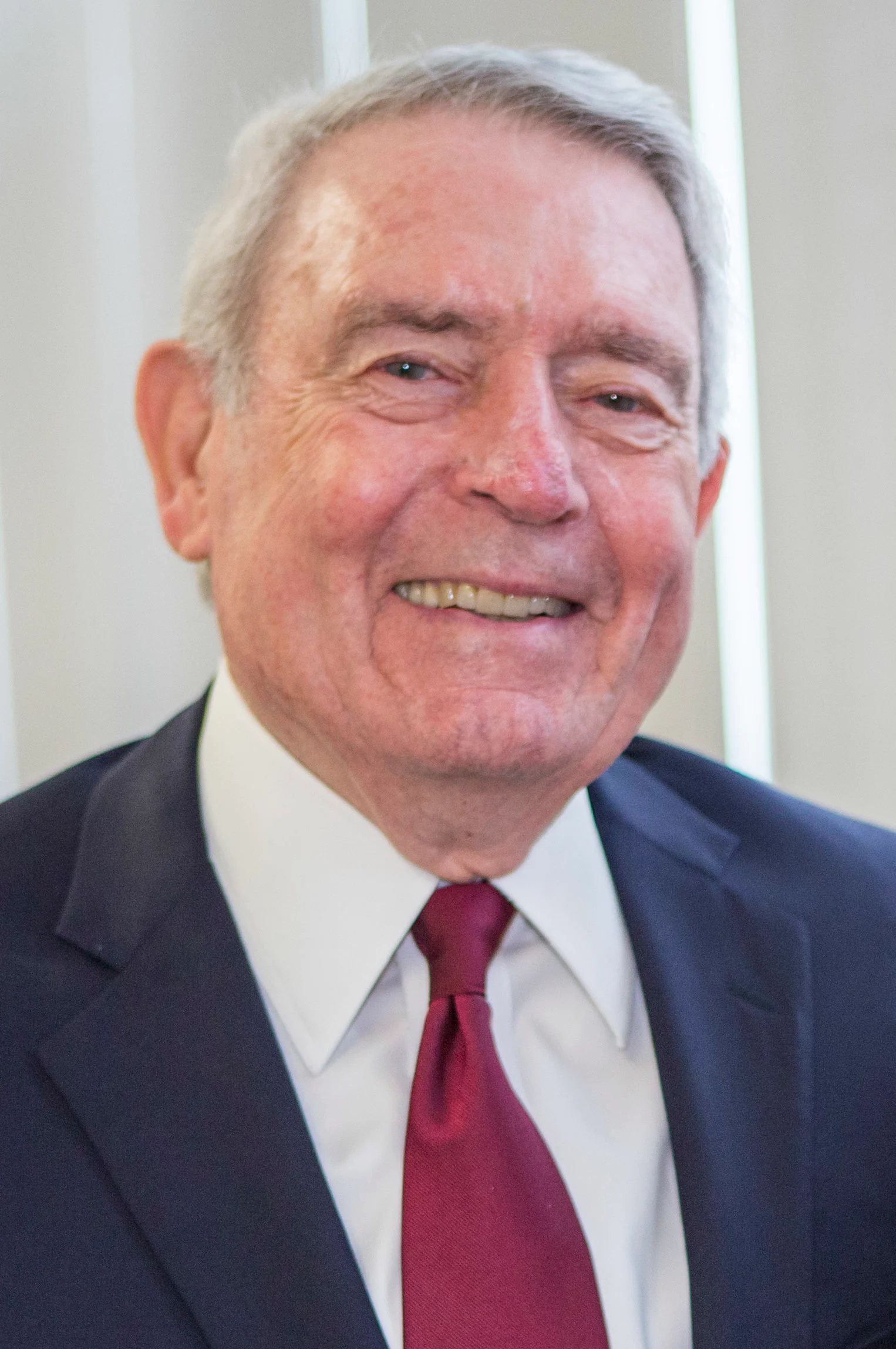
| 25 Quotes | |
| Born as | Daniel Irvin Rather Jr. |
| Occup. | Journalist |
| From | USA |
| Born | October 31, 1931 Wharton, Texas, USA |
| Age | 94 years |
| Cite | |
Citation Formats
APA Style (7th ed.)
Dan rather biography, facts and quotes. (2026, February 2). FixQuotes. https://fixquotes.com/authors/dan-rather/
Chicago Style
"Dan Rather biography, facts and quotes." FixQuotes. February 2, 2026. https://fixquotes.com/authors/dan-rather/.
MLA Style (9th ed.)
"Dan Rather biography, facts and quotes." FixQuotes, 2 Feb. 2026, https://fixquotes.com/authors/dan-rather/. Accessed 31 Mar. 2026.
Early Life and Background
Daniel Irvin Rather Jr. was born on October 31, 1931, in Wharton County, Texas, and grew up largely in the Houston area during the long shadow of the Great Depression and the mobilization of World War II. His family life carried the rhythms of working- and middle-class Texas - churchgoing seriousness, regional pride, and the expectation that a person should show up and do the job even when the odds were unclear. That blend of stoicism and restlessness would become a recognizable Rather signature: a courtly manner that could harden into grit when the story demanded it.Texas in the 1930s and 1940s also meant heat, hurricanes, and the uneasy dance between nature and modernity. The weather that shaped the Gulf Coast - destructive, sudden, and indifferent to status - became an early lesson in consequence. Rather learned to respect authority but not defer to it, and he absorbed the local tradition of plain speech. From the start, he was drawn to the public square: who has power, who gets heard, and what happens when institutions fail their own stated ideals.
Education and Formative Influences
Rather attended Sam Houston State Teachers College (now Sam Houston State University) in Huntsville, Texas, graduating in 1953, and later studied at South Texas College of Law in Houston. The combination mattered: one foot in a teacher-training environment that prized clarity and civic purpose, the other in legal thinking that trained him to parse claims, evidence, and motive. In mid-century Texas, journalism was often learned in the field, but his schooling sharpened his sense that public accountability was not a mood - it was a discipline, built from asking the uncomfortable follow-up.Career, Major Works, and Turning Points
Rather began in local Texas broadcasting and reporting, then rose rapidly through the CBS News system, with key early visibility from coverage of Hurricane Carla in 1961. He became a national figure during the Civil Rights era and the Vietnam years, and his career became entwined with the defining traumas of modern American media: he reported from Dallas on the day President John F. Kennedy was assassinated in 1963, later served as a White House correspondent, and earned a reputation as a persistent interrogator of official narratives. In 1981 he succeeded Walter Cronkite as anchor and managing editor of the CBS Evening News, holding that role until 2005. His later years at CBS were dominated by the bruising politics of the 1980s and 1990s, war coverage and culture-war scrutiny, and finally the 2004 "60 Minutes Wednesday" report on George W. Bush's Texas Air National Guard service - a segment that became a turning point, with fierce disputes over documentation and verification. After leaving the CBS anchor desk, he rebuilt his public work through interviews, long-form conversations, and political commentary, notably with HDNet/Axs TV ("Dan Rather Reports", "The Big Interview") and through widely read digital essays that reframed him less as an institutional voice and more as a veteran witness to institutional strain.Philosophy, Style, and Themes
Rather's journalism was animated by a reporter's double bind: to be tough enough to confront power yet human enough to be moved by what power does to ordinary lives. His on-air style blended a Texas bluntness with a rhetorical flourish that could feel old-school, even theatrical, but it came from a belief that news had to be memorable to be metabolized. He treated reporting as a journey whose risks were not fully visible at the start, and he often argued that courage is partly a refusal to be paralyzed by foresight: “If all difficulties were known at the outset of a long journey, most of us would never start out at all”. That line captures a psychology built for conflict - not because he enjoyed it, but because he believed the alternative was quiet complicity.His worldview was shaped by institutional betrayal as much as by institutional pride. Rather never entirely stopped believing in American civic ideals, yet his experience in war reporting, politics, and corporate media taught him suspicion of easy narratives and friendly patrons. His aphorism “Don't taunt the alligator until after you've crossed the creek”. reads like folksy advice, but it also signals a tactical mind: get the facts, secure the record, then take the fight. And behind the humor was a hard-won realism about motives and misdirection - “A tough lesson in life that one has to learn is that not everybody wishes you well”. In practice, that realism surfaced as insistence on verification, a willingness to press officials in uncomfortable moments, and an enduring fascination with how ambition and fear distort public truth.
Legacy and Influence
Rather's legacy is inseparable from the evolution of American broadcast news: he helped carry the medium from the high-trust era of network authority into a period of fragmentation, polarization, and relentless critique. To admirers, he modeled perseverance, field experience, and a stubborn commitment to asking what powerful people would rather not answer; to critics, his career stands as a warning about the catastrophic cost of disputed sourcing in a politicized environment. Either way, his life tracks the central drama of modern journalism - the struggle to keep public facts public - and his post-CBS reinvention showed that an anchor can outlive the anchor chair, becoming instead a chronicler of democratic pressure points for a new media age.Our collection contains 25 quotes written by Dan, under the main topics: Witty One-Liners - Motivational - Wisdom - Art - Sarcastic.
Other people related to Dan: Howard Stringer (Businessman), Don Hewitt (Producer), Brian Williams (Journalist), Charles Osgood (Journalist)
Dan Rather Famous Works
- 2017 What Unites Us (Book)
- 2001 The American Dream: Stories from the Heart of Our Nation (Book)
- 1991 I Remember (Book)
- 1977 The Camera Never Blinks (Book)
- 1974 The Palace Guard (Book)
Source / external links