
Daniel Webster Biography Quotes 35 Report mistakes
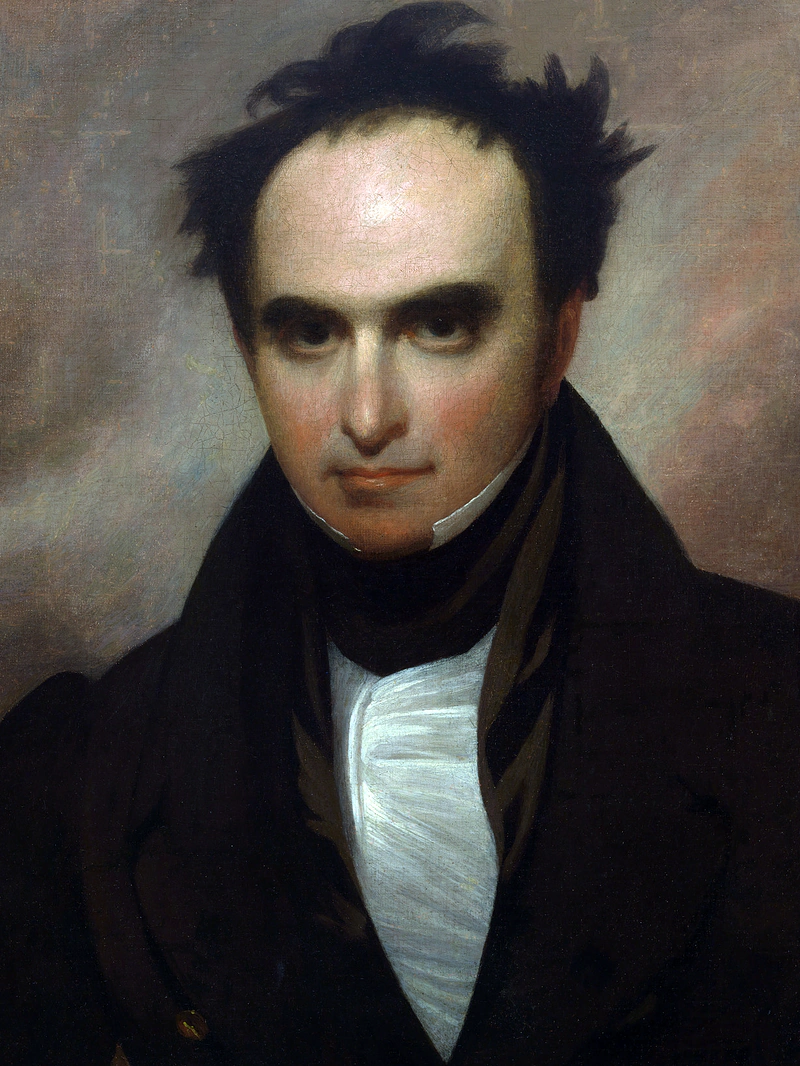
| 35 Quotes | |
| Occup. | Statesman |
| From | USA |
| Born | January 18, 1782 Salisbury, New Hampshire |
| Died | October 24, 1852 Marshfield, Massachusetts |
| Aged | 70 years |
| Cite | |
Citation Formats
APA Style (7th ed.)
Daniel webster biography, facts and quotes. (2026, February 11). FixQuotes. https://fixquotes.com/authors/daniel-webster/
Chicago Style
"Daniel Webster biography, facts and quotes." FixQuotes. February 11, 2026. https://fixquotes.com/authors/daniel-webster/.
MLA Style (9th ed.)
"Daniel Webster biography, facts and quotes." FixQuotes, 11 Feb. 2026, https://fixquotes.com/authors/daniel-webster/. Accessed 5 Mar. 2026.
Early Life and Background
Daniel Webster was born on January 18, 1782, in Salisbury, New Hampshire (now Franklin), in the thin-soiled hill country that shaped early American ideas of thrift, duty, and self-command. His father, Ebenezer Webster, was a Revolutionary War veteran and local officeholder; his mother, Abigail Eastman Webster, steadied a large family whose security depended on farms, timber, and the uncertain cash economy of the Upper Merrimack. Frail as a boy and often kept from hard labor, Webster grew up watching the brutal arithmetic of rural survival, and he carried into public life a farmer's sensitivity to land, credit, and the dignity of work.The young republic around him was still improvising its institutions. New England Federalism, Congregational morality, and the memory of wartime sacrifice combined to make "union" feel less like abstraction than like inheritance. Webster absorbed that atmosphere early: local courts and town meetings offered drama, argument, and the possibility that a commanding voice could convert private anxiety into public order.
Education and Formative Influences
Webster's gifts were recognized as a kind of family capital to be invested. He attended Phillips Exeter Academy and graduated from Dartmouth College in 1801, where he honed the sonorous, architectural style that later made him the Senate's most formidable orator. He read law under Thomas W. Thompson and then in Boston under Christopher Gore, entering a world where Federalist constitutional theory met commercial ambition; the discipline of legal reasoning, the precedent-soaked language of the common law, and the example of Hamiltonian nationalism pressed him toward a lifelong belief that the Union required not only sentiment but enforceable structure.Career, Major Works, and Turning Points
Admitted to the bar in 1805, Webster practiced first in Boscawen and then Portsmouth, moving to Boston in 1816 as the city became a capital of finance and shipping. Elected to Congress (1813-1817) as the War of 1812 strained New England loyalties, he later remade himself as the great constitutional advocate before the Supreme Court: Dartmouth College v. Woodward (1819) defended contracts and institutional continuity; McCulloch v. Maryland (1819) and Gibbons v. Ogden (1824) advanced national power over parochial obstruction. He served in the Senate (1827-1841, 1845-1850) and twice as Secretary of State (1841-1843 under Harrison-Tyler; 1850-1852 under Fillmore). His "Second Reply to Hayne" (1830) fixed his public identity as the voice of an indissoluble Union. The turning point that shadowed his later years was his support for the Compromise of 1850, especially the Fugitive Slave Act: he believed it necessary to avert disunion, but it cost him moral authority in much of the North. He died on October 24, 1852, at Marshfield, Massachusetts.Philosophy, Style, and Themes
Webster's inner life was a constant negotiation between moral grandeur and political necessity. He distrusted easy certainty, especially in himself, as if ambition were a cognitive bias to be watched: “I mistrust the judgment of every man in a case in which his own wishes are concerned”. That suspicion helps explain his attachment to constitutional forms - written limits as a check on personal impulse, party heat, and sectional appetite. His nationalism was emotional but also procedural: he treated the Constitution as a hard-won machine for turning conflict into verdicts, and he feared that once the machine broke, passion would govern by force.His themes recur with the logic of a lawyer building a case: union as destiny, education as civic infrastructure, and executive power as a perennial temptation. In the Senate he could compress a nation's self-image into a vow - “I was born an American; I will live an American; I shall die an American”. - yet he also warned that liberty is not naturally safe but historically contested: “The contest for ages has been to rescue liberty from the grasp of executive power”. Stylistically, he fused courtroom method with biblical cadence: definition, concession, and rebuttal rose into moral panorama. The famous "bunker" of his rhetoric - massive, resonant, seemingly inevitable - was built on preparation and the accumulation of facts, even when the effect felt spontaneous.
Legacy and Influence
Webster endures as the most consequential American nationalist of the antebellum Senate and as a principal architect of constitutional argument in the age of Marshall. His legal victories strengthened the Contract Clause, the Commerce Clause, and the practical authority of federal institutions over state interference, shaping the pathway by which an agrarian republic became a national market and a national state. Yet his reputation remains tragically double: the orator who sacralized Union also helped enforce a compromise that bound Northern power to Southern slavery. That tension - between preserving the constitutional order and confronting its moral failures - is why Webster remains not merely a monument of eloquence but a case study in the costs of statesmanship.Our collection contains 35 quotes written by Daniel, under the main topics: Motivational - Wisdom - Truth - Justice - Freedom.
Other people related to Daniel: Dolley Madison (First Lady), John C. Calhoun (Statesman), John Tyler (President), William H. Seward (Politician), Robert Charles Winthrop (Politician), Philip Hone (Politician), William Wirt (Statesman)