
Dante Alighieri Biography Quotes 30 Report mistakes
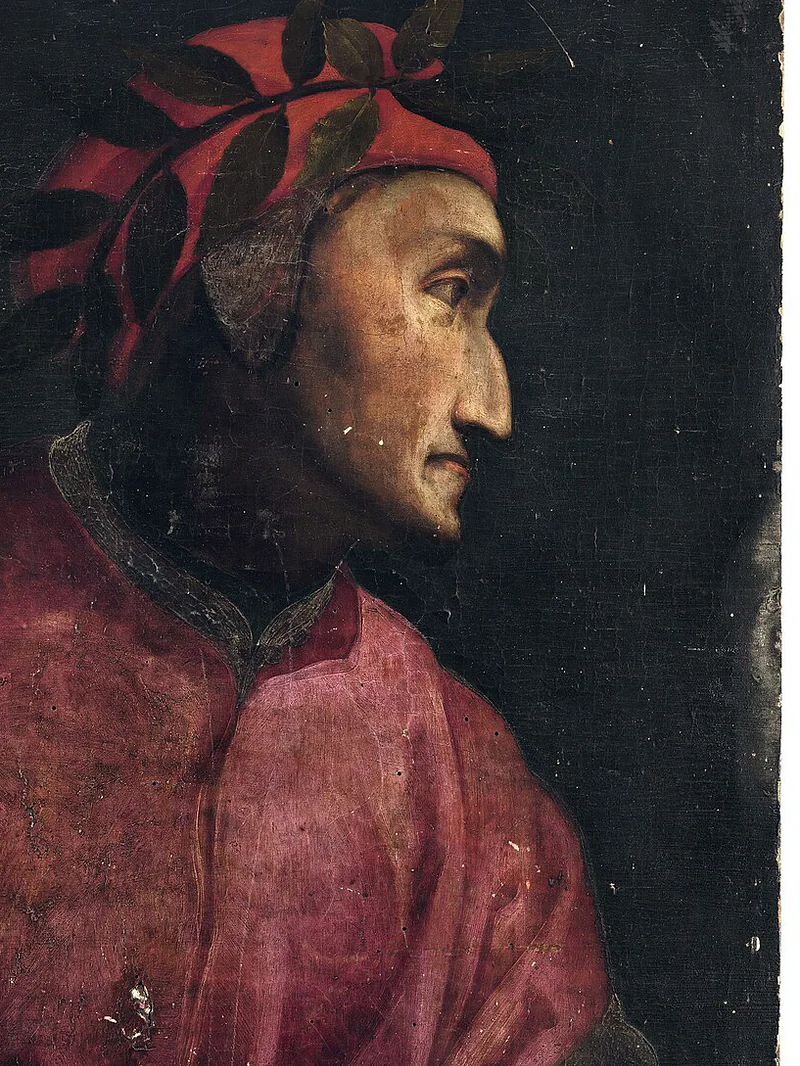
Attr: Public domain, PDM
| 30 Quotes | |
| Known as | Dante |
| Occup. | Poet |
| From | Italy |
| Born | June 1, 1265 Florence, Italy |
| Died | September 13, 1321 Ravenna, Italy |
| Aged | 56 years |
| Cite | |
Citation Formats
APA Style (7th ed.)
Dante alighieri biography, facts and quotes. (2026, February 11). FixQuotes. https://fixquotes.com/authors/dante-alighieri/
Chicago Style
"Dante Alighieri biography, facts and quotes." FixQuotes. February 11, 2026. https://fixquotes.com/authors/dante-alighieri/.
MLA Style (9th ed.)
"Dante Alighieri biography, facts and quotes." FixQuotes, 11 Feb. 2026, https://fixquotes.com/authors/dante-alighieri/. Accessed 25 Mar. 2026.
Early Life and Background
Dante Alighieri was born on 1265-06-01 in Florence, a city whose wealth and volatility were fueled by banking, guild power, and papal-imperial rivalry. His family belonged to the lesser nobility (the Alighieri), respectable but not dominant, and he grew up in the wake of the Guelph victory over the Ghibellines at Benevento (1266), when Florence tilted toward papal alignment yet remained internally combustible. That atmosphere trained him early to read public life as moral theater - a place where ambition, faction, and rhetoric shaped destinies as decisively as swords.A defining private thread began in childhood with Beatrice Portinari, whom he later transformed into an emblem of salvific love. Florence offered him both the disciplines of civic belonging and the temptations of status, and his earliest identity was braided from these two forces - a citizen pulled between the citys hard pragmatism and a lyric hunger for transcendence. The death of Beatrice in 1290 sharpened that tension into a lifelong method: turning loss into architecture, and grief into a system of meaning.
Education and Formative Influences
Dante received the kind of education available to an ambitious Florentine: grammar, rhetoric, and the Latin authors, likely under Brunetto Latini, whose encyclopedic learning and civic ideals Dante later both honored and judged. He absorbed the troubadour tradition through the Sicilian poets and Guido Guinizzelli, then refined it with his friend and rival Guido Cavalcanti in the Dolce Stil Novo, where love became an interior, philosophical event. By the 1290s he was reading Aristotle through scholastic commentary, wrestling with Augustine and Boethius, and testing how reason, faith, and vernacular poetry could be made to speak in one voice.Career, Major Works, and Turning Points
His early masterwork, La Vita Nuova (circa 1292-1294), fused autobiographical lyric with prose commentary, presenting Beatrice as both historical beloved and spiritual catalyst. Public life soon overtook the lyric: Dante fought at Campaldino in 1289, entered guild life to qualify for office, and served as a prior of Florence in 1300 during vicious feuds between the White and Black Guelphs. When Pope Boniface VIII backed the Blacks and Charles of Valois entered Florence (1301), Dante - aligned with the Whites and away on diplomacy - was condemned in 1302 for alleged corruption and barratry; he never returned. Exile became his central turning point: it forced a redefinition of audience (Italy, not Florence), of language (the vernacular as a national instrument in De vulgari eloquentia), and of authority (philosophy and empire in Convivio and De monarchia). In wandering courts from Verona to the Casentino to Ravenna, he composed the Commedia, later called the Divine Comedy, completing it near the end of his life; he died in Ravenna on 1321-09-13 after a diplomatic mission to Venice.Philosophy, Style, and Themes
The Comedy is often read as a medieval encyclopedia, but its engine is psychological: a mind staging its own rescue. Dantes most famous opening confession - “In the middle of the journey of our life I came to myself within a dark wood where the straight way was lost”. - is not only narrative premise but diagnosis of disorientation after political ruin, bereavement, and moral fatigue. Exile deepened this inwardness into a harsh education in dependency and pride; the poem repeatedly tests whether suffering purifies or merely hardens. His line about displacement - “You shall find out how salt is the taste of another man's bread, and how hard is the way up and down another man's stairs”. - converts lived humiliation into a discipline of perception, the kind that can see through courtly flattery and civic myth.His method joins scholastic clarity to lyric voltage: terza rima propels argument as if it were music, while concrete images make metaphysics tactile. The work insists that humans are responsible for their powers of reason and desire; in Ulysses address to his crew, Dante sharpens an ethical anthropology into a command: “Consider your origins: you were not made to live as brutes, but to follow virtue and knowledge”. Yet the poem is not a simple celebration of intellect. It is a drama of ordered love - eros transfigured into caritas - where Beatrice becomes the personification of truth that both wounds and heals, and where history itself is weighed as evidence in a cosmic court.
Legacy and Influence
Dante helped stabilize Italian as a literary language, proving the vernacular could bear theology, philosophy, satire, and intimate confession with equal authority; Petrarch and Boccaccio built after him, and later centuries treated him as both poet and founder. His moral imagination shaped Western visions of Hell, Purgatory, and Paradise more than any theologian, while his political thought - skeptical of papal overreach yet wary of civic faction - remains a touchstone for debates about authority and conscience. The Comedy endures because it is simultaneously public and private: an anatomy of a civilization and a record of one mans interior struggle to make suffering intelligible without making it meaningless.Our collection contains 30 quotes written by Dante, under the main topics: Motivational - Ethics & Morality - Wisdom - Art - Nature.
Other people related to Dante: Dante G. Rossetti (Poet)
Dante Alighieri Famous Works
- 1321 Letter to Can Grande della Scala (Essay)
- 1320 Quaestio de aqua et terra (Essay)
- 1320 Paradiso (Poetry)
- 1320 The Divine Comedy (Poetry)
- 1319 Purgatorio (Poetry)
- 1314 Inferno (Poetry)
- 1313 De Monarchia (Non-fiction)
- 1307 Convivio (Essay)
- 1304 De vulgari eloquentia (Essay)
- 1294 La Vita Nuova (Poetry)