
Dario Amodei Biography Quotes 6 Report mistakes
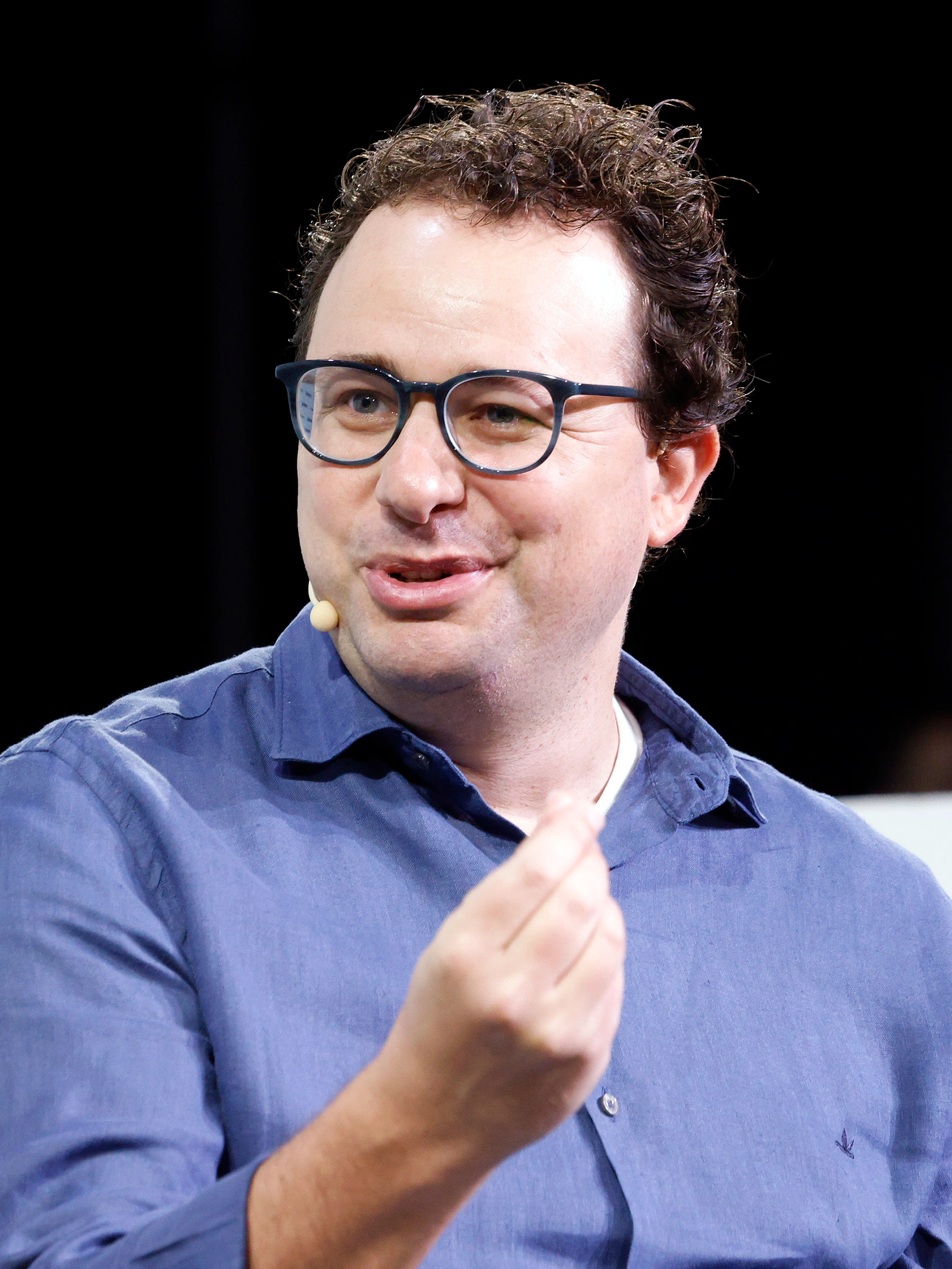
Attr: TechCrunch, CC BY 2.0
| 6 Quotes | |
| Occup. | Scientist |
| From | USA |
| Born | 1983 San Francisco, California, USA |
| Cite | |
Citation Formats
APA Style (7th ed.)
Dario amodei biography, facts and quotes. (2026, February 16). FixQuotes. https://fixquotes.com/authors/dario-amodei/
Chicago Style
"Dario Amodei biography, facts and quotes." FixQuotes. February 16, 2026. https://fixquotes.com/authors/dario-amodei/.
MLA Style (9th ed.)
"Dario Amodei biography, facts and quotes." FixQuotes, 16 Feb. 2026, https://fixquotes.com/authors/dario-amodei/. Accessed 2 Apr. 2026.
Early Life and Background
Dario Amodei (born circa 1983) emerged from an American cohort that came of age alongside the internet and then watched computation turn from a tool into an environment. Public biographies tend to emphasize his later role in artificial intelligence, but the deeper throughline is temperament: an analytic mind drawn to high-stakes questions, and a moral seriousness sharpened by the sense that technological progress can arrive faster than institutions can metabolize it. That sensibility would later define his stance on frontier AI - less as a field of clever tricks than as a social force with the power to rearrange labor, information, security, and governance.His private life is not widely documented, yet his public pattern is clear: an inclination toward systems-level thinking, and a willingness to walk away from comfort when he believes the trajectory of a technology demands new guardrails. In the 2000s and 2010s - years of post-9/11 security politics, financial volatility, and the platformization of daily life - the idea that tools could amplify both knowledge and coercion was not theoretical. It was the air. Amodei would eventually become one of the best-known technologists to treat that duality as a personal responsibility rather than a philosophical footnote.
Education and Formative Influences
Amodei trained as a scientist in the American research university system, developing the mathematical and experimental discipline that later mapped onto machine learning: careful measurement, skepticism about confounded results, and comfort with abstraction. The decisive influence was the broader shift in science toward data-intensive methods and the early successes of deep learning, which suggested that general-purpose learning systems could outperform hand-engineered approaches - while also making the internal logic of those systems harder to interpret. That tension between capability and understanding became a defining problem for him.Career, Major Works, and Turning Points
He rose to prominence in the modern AI boom, working at major labs during the period when transformer-based models and large-scale training made "foundation models" central to the industry. His reputation formed around both capability work and safety-minded research, and his career is marked by a consequential break: leaving a leading AI organization to co-found Anthropic, where he became a central architect of its technical direction and public posture. Under his leadership, Anthropic pursued frontier models (notably the Claude family) while arguing for practical alignment methods, risk evaluations, and governance that could scale with capability - an attempt to keep engineering, policy, and ethics in the same room rather than in sequential, too-late phases.Philosophy, Style, and Themes
Amodei speaks like a scientist who has been forced into statesmanship: probabilistic, model-based, and alert to second-order effects. His worldview is shaped by acceleration - the conviction that multiple societal transitions (economic, informational, geopolitical) are compressing into a shorter window than previous industrial revolutions. "In a way, it sounds crazy, right. But here's the way I think about it. I use this phrase called "the compressed 21st century“.” Psychologically, this frame does two things: it legitimizes urgency without hysteria, and it casts preparedness as the only sane response to speed.His themes are not apocalyptic so much as civic: avert catastrophe, preserve agency, distribute benefits, and constrain concentrated power. “I am optimistic about meaning. I worry about economics and the concentration of power. That’s actually what I worry about more, the abuse of power”. That sentence reveals a hierarchy of fears - less about machines becoming mystical adversaries and more about humans using machines to lock in asymmetries. Yet he resists pure fear as an organizing principle, insisting that durable action requires a positive horizon: “Fear is one kind of motivator, but it’s not enough: we need hope as well”. In practice, his style blends laboratory pragmatism with moral rhetoric: he argues for safety research, evaluations, and public-interest commitments not as add-ons, but as the only credible way to justify building ever more powerful systems.
Legacy and Influence
Amodei's influence rests on helping define what it means to lead a frontier AI lab in public - treating alignment, audits, and governance as core product constraints rather than reputational insurance. As Anthropic became a major counterweight in the AI ecosystem, his stance pushed competitors, policymakers, and journalists to take "responsible scaling" seriously, even when incentives favor speed. Whether history judges this era as a managed transition or a preventable stumble, his signature contribution is the insistence that technical progress and public benefit must be engineered together - and that the hardest problems are not only in the models, but in the human systems that deploy them.Our collection contains 6 quotes written by Dario, under the main topics: Freedom - Deep - Hope - Time - Business.
Source / external links