
Dave Eggers Biography Quotes 15 Report mistakes
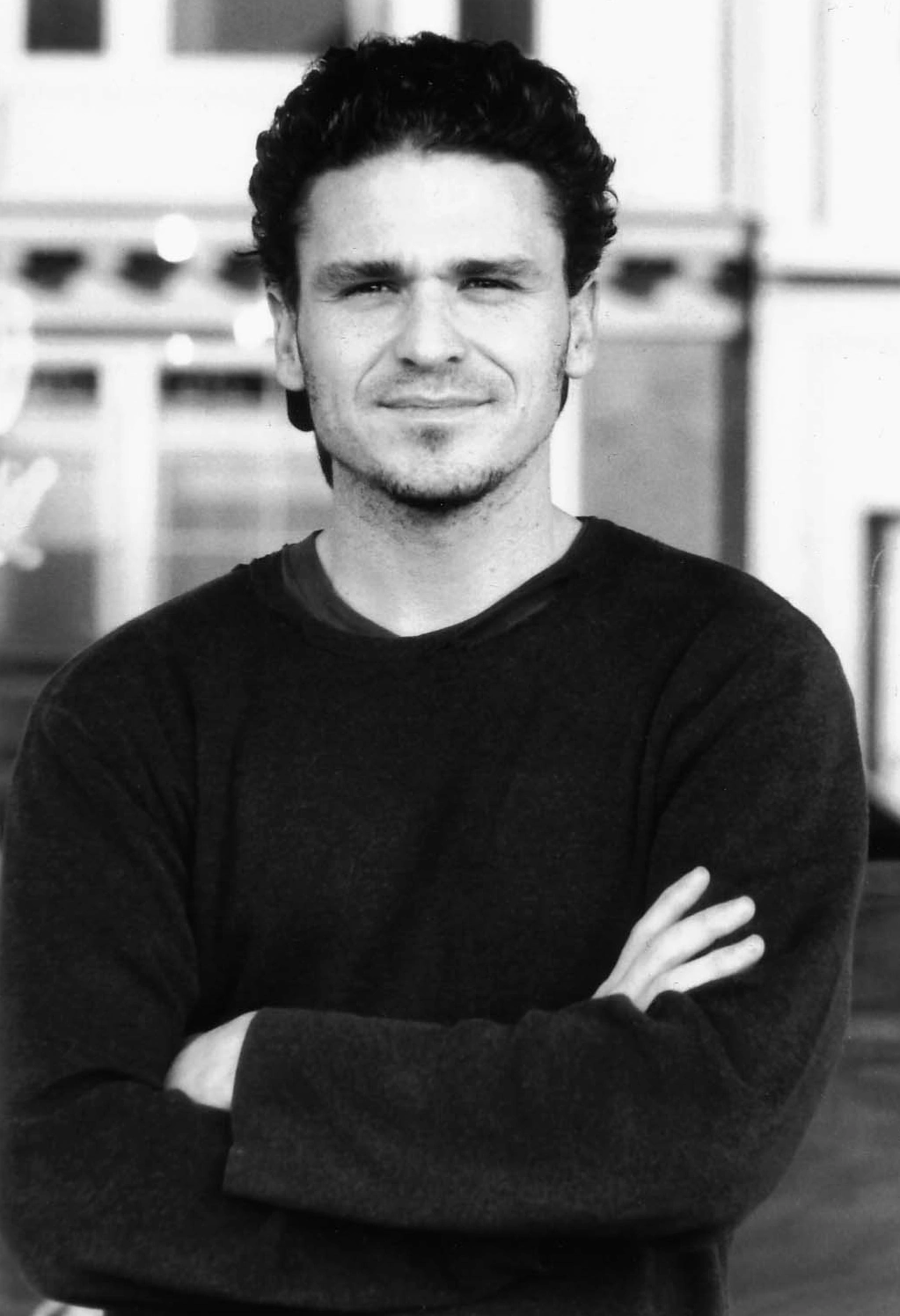
| 15 Quotes | |
| Occup. | Writer |
| From | USA |
| Born | January 8, 1970 |
| Age | 56 years |
| Cite | |
Citation Formats
APA Style (7th ed.)
Dave eggers biography, facts and quotes. (2026, February 11). FixQuotes. https://fixquotes.com/authors/dave-eggers/
Chicago Style
"Dave Eggers biography, facts and quotes." FixQuotes. February 11, 2026. https://fixquotes.com/authors/dave-eggers/.
MLA Style (9th ed.)
"Dave Eggers biography, facts and quotes." FixQuotes, 11 Feb. 2026, https://fixquotes.com/authors/dave-eggers/. Accessed 28 Mar. 2026.
Early Life and Background
Dave Eggers was born on January 8, 1970, in Boston, Massachusetts, and grew up largely in the western suburbs of Chicago, a region whose late-20th-century mix of comfort, commuter routine, and cultural anxiety would later surface in his satirical portraits of American innocence and appetite. The third of four siblings in a Catholic family, he absorbed both the warmth of close kinship and the discipline of institutions - school corridors, parish expectations, the feeling that lives are steered by rules made elsewhere.His early adulthood was cleaved by loss. In 1991 and 1992, while still in his early twenties, Eggers lost both parents to cancer, then became guardian to his younger brother, Christopher. That abrupt shift - from son to caretaker, from student life to household management - hardened his sense that private grief is never purely private; it becomes paperwork, logistics, money, and the daily theater of keeping someone else afloat. The experience would become the emotional engine of his best-known memoir and would shape his lifelong insistence on attention as a moral act.
Education and Formative Influences
Eggers attended the University of Illinois at Urbana-Champaign, where he studied journalism and began testing the boundary between reported fact and stylized voice, a boundary that would become his trademark. After college he moved to the San Francisco Bay Area, entering a 1990s cultural milieu of indie publishing, zines, and early tech optimism, where sincerity and irony competed for moral authority; he learned to treat form itself as argument, and to distrust any tone that claimed purity.Career, Major Works, and Turning Points
In the mid-1990s Eggers co-founded the satirical magazine Might, then helped create McSweeney's, an imprint and journal that made design, play, and editorial risk into a literary identity. His breakthrough, A Heartbreaking Work of Staggering Genius (2000), turned the ordeal of becoming a young guardian into a self-aware performance - comedic, grieving, defensive, and tender - and became a defining text of post-1990s memoir culture. He expanded into novels that pressed on American power and self-mythology: You Shall Know Our Velocity! (2002), What Is the What (2006, the life story of Valentino Achak Deng), The Circle (2013), and The Every (2021). Parallel to the books ran an equally consequential turn: co-founding 826 Valencia in 2002 (and later 826 National), along with related efforts like ScholarMatch, placing his belief in civic craft alongside his literary craft.Philosophy, Style, and Themes
Eggers writes from the conviction that attention can be both aesthetic and ethical: to notice precisely is to refuse the flattening that institutions, markets, and even well-meaning narratives impose. His prose often toggles between lyric description and comic acceleration, using lists, direct address, and abrupt tonal pivots to mimic a mind that cannot decide whether to mourn, perform, or escape. Even in domestic space he senses an economy of pressure - “The house is a factory”. The line captures his recurring intuition that American life converts intimacy into production, and that a person must either submit to the machinery or name it.Loss is not a backstory in Eggers; it is a method, a forcing function that exposes what language is trying to hide. “They took my mother's stomach out six months ago”. In his work, such blunt medical fact sits beside sensuous perception - “Through the small tall bathroom window the December yard is gray and scratchy, the tree calligraphic”. That oscillation is psychological: the mind survives by shuttling between the unspeakable and the vividly speakable. His social vision extends the same mechanism outward. His tutoring and literacy projects are built on the premise that concentrated regard restores agency to people trained to believe they have none: “Some of these kids just don't plain know how good they are: how smart and how much they have to say. You can tell them. You can shine that light on them, one human interaction at a time”. The writer who once narrated himself as overwhelmed by responsibility came to treat responsibility as a craft - sustained, local, person-to-person.
Legacy and Influence
Eggers' enduring influence lies in a rare dual footprint: he helped redefine contemporary American literary culture through McSweeney's and a generation of genre-bending, self-conscious narration, and he made the writer-as-citizen feel operational rather than rhetorical through 826 and related education philanthropy. His novels about surveillance capitalism sharpened public imagination about tech utopianism's coercions, while his nonfiction collaborations modeled a way to amplify other lives without pretending the author disappears. For readers and younger writers, Eggers remains a case study in how a public voice can be built from private catastrophe, and how style can serve as both shield and instrument - a way of surviving, and a way of showing up.Our collection contains 15 quotes written by Dave, under the main topics: Deep - Learning - Kindness - Equality - Mother.
Other people related to Dave: Gus Van Sant (Director)
Dave Eggers Famous Works
- 2018 The Monk of Mokha (Biography)
- 2013 The Circle (Novel)
- 2006 What is the What (Novel)
- 2002 You Shall Know Our Velocity! (Novel)
- 2000 A Heartbreaking Work of Staggering Genius (Novel)
Source / external links