
David Bailey Biography Quotes 65 Report mistakes
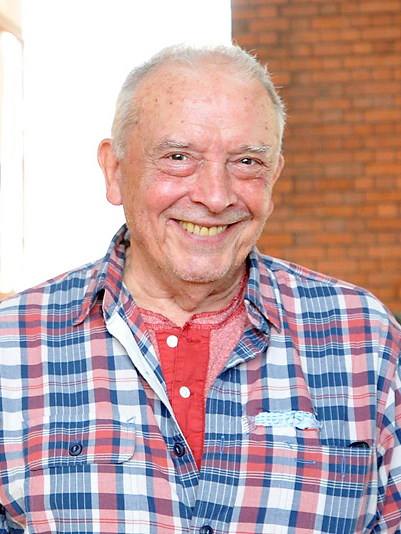
| 65 Quotes | |
| Occup. | Photographer |
| From | England |
| Spouses | Rosemary Bramble (1960-1961) Catherine Deneuve (1965-1972) Marie Helvin (1975-1985) Catherine Dyer (1986) |
| Born | January 2, 1938 Leytonstone, Essex, England |
| Age | 88 years |
| Cite | |
Citation Formats
APA Style (7th ed.)
David bailey biography, facts and quotes. (2026, March 23). FixQuotes. https://fixquotes.com/authors/david-bailey/
Chicago Style
"David Bailey biography, facts and quotes." FixQuotes. March 23, 2026. https://fixquotes.com/authors/david-bailey/.
MLA Style (9th ed.)
"David Bailey biography, facts and quotes." FixQuotes, 23 Mar. 2026, https://fixquotes.com/authors/david-bailey/. Accessed 27 Mar. 2026.
Early Life and Background
David Bailey was born on January 2, 1938, in Leytonstone, East London, into a city still marked by Depression-era scarcity and the aftershocks of war. He grew up amid working-class routines, ration-book pragmatism, and the tough humor of the East End - an environment that prized quick perception and distrusted pretension. From early on he carried the feeling of being an outsider in formal settings, later speaking openly about dyslexia and the frustration of school, and that early impatience with authority helped shape the blunt directness that became his signature behind the camera.London in Bailey's youth was also a place of rapid cultural recomposition: American music, cinema, and street style flowed into bomb-site neighborhoods, while the old class system still policed who was allowed to appear "important". He learned to watch people - how they performed status, how they protected themselves, how they cracked when relaxed - and that observational habit became his first apprenticeship. Before he had a reputation, he had a radar for bravado and vulnerability, the social mathematics of faces, and a hunger to get out of the narrow futures on offer.
Education and Formative Influences
Bailey's education was largely informal: school did not fit him, and he sought his own curriculum through images, music, and the charged atmosphere of postwar London. National Service in the Royal Air Force in the mid-1950s widened his horizons and hardened his independence, and by the time he returned he was determined to make pictures rather than take instructions. He studied photography through looking - at magazines, at cinema lighting, at the new documentary frankness of mid-century work - and through practice, teaching himself how to simplify, how to wait, and how to cut through artifice without losing glamour.Career, Major Works, and Turning Points
Bailey entered professional photography as London began to rebrand itself from imperial capital to youth capital. After assisting established photographers, he joined Vogue in 1960, and his ascent coincided with the rise of "Swinging London", a moment when celebrity, pop music, and fashion fused into a new kind of public theater. His portraits - often shot against clean backgrounds with crisp lighting and confrontational immediacy - helped redefine how the famous could look: less embalmed by studio convention, more like individuals caught mid-thought. His collaborations and rivalries with contemporaries such as Terence Donovan and Brian Duffy sharpened a competitive, modernist edge, while high-profile subjects from models to musicians turned Bailey into a cultural figure in his own right. He also expanded into film and long-form projects, but portraiture remained the arena where he repeatedly changed the temperature of an image: making glamour feel like presence, not costume.Philosophy, Style, and Themes
Bailey's style is frequently described as minimal, but its true engine is psychological compression. He strips away visual noise so the sitter has fewer places to hide, then uses timing and direct address to elicit a moment of disclosure - a flicker of boredom, a flash of aggression, an unguarded softness. Under the surface, he is a photographer of social masks: the anxious labor required to look powerful, desirable, or new. That sensitivity to the performance of status surfaces in his wry observation that “Every man who is high up loves to think that he has done it all himself; and the wife smiles, and lets it go at that”. The line is not merely comic - it reveals Bailey's suspicion of self-mythology and his interest in the small domestic arrangements behind public triumph.His work is also built on a paradox: he chases vitality while never forgetting photography's elegiac undertow. “All pictures are unnatural. All pictures are sad because they're about dead people”. That bleak clarity helps explain the tension in his best portraits - the sense that the image is both celebration and capture, a trophy and a warning. Yet Bailey is not a romantic about mystery for its own sake; he treats the extraordinary as something hidden in plain sight, insisting that “It takes a lot of imagination to be a good photographer... it takes a lot of looking before you learn to see the extraordinary”. In psychological terms, this is his credo: discipline as a route to revelation, attention as a form of affection, and looking as the antidote to the numbness of mass culture.
Legacy and Influence
Bailey helped modernize British portraiture by aligning it with the speed, candor, and ambiguity of postwar celebrity - and by proving that fashion photography could carry the emotional voltage of documentary without surrendering elegance. His images became part of how the 1960s are remembered: not as pageantry, but as faces meeting the viewer head-on, alive with appetite and doubt. Generations of photographers absorbed his lessons in simplicity, confrontation, and respect for the sitter's complexity, while his cultural footprint endures in the very grammar of magazine portraiture - the clean background, the sharp light, the sense that fame is not a pedestal but a psychological condition visible in the eyes.Our collection contains 65 quotes written by David, under the main topics: Witty One-Liners - Motivational - Wisdom - Art - Music.
Source / external links