
David Baker Biography Quotes 10 Report mistakes
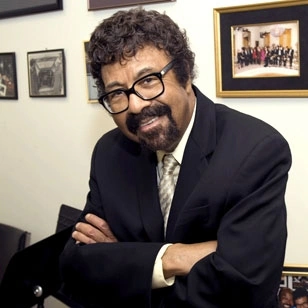
| 10 Quotes | |
| Born as | David Nathaniel Baker Jr. |
| Occup. | Composer |
| From | USA |
| Born | December 21, 1931 Indianapolis, Indiana, U.S. |
| Age | 94 years |
| Cite | |
Citation Formats
APA Style (7th ed.)
David baker biography, facts and quotes. (2026, February 11). FixQuotes. https://fixquotes.com/authors/david-baker/
Chicago Style
"David Baker biography, facts and quotes." FixQuotes. February 11, 2026. https://fixquotes.com/authors/david-baker/.
MLA Style (9th ed.)
"David Baker biography, facts and quotes." FixQuotes, 11 Feb. 2026, https://fixquotes.com/authors/david-baker/. Accessed 28 Mar. 2026.
Early Life and Education
David Nathaniel Baker Jr. was born in 1931 in Indianapolis, Indiana, and came of age amid one of the Midwest's most vibrant jazz communities. The city that also nurtured Wes Montgomery and Freddie Hubbard gave Baker a living laboratory in which to learn the language of swing and bebop. He studied formally at Indiana University, where he earned undergraduate and graduate degrees, grounding his instinctive musicality with rigorous training in theory, composition, and music education. The duality of his formation, both streetwise and scholarly, became the signature of his later work as a composer and educator.Performance Beginnings and Pivotal Setback
Baker began his career as a trombonist, steeped in the modern jazz vocabulary shaped by trailblazers such as J. J. Johnson, another Indianapolis native whose virtuosity and musical logic profoundly influenced Baker. Early performing success was interrupted by a serious jaw injury that curtailed his trombone playing. Rather than ending his musical path, the setback became a turning point. Baker redirected his instrumental focus to cello and other strings, broadened his compositional ambitions, and increasingly devoted himself to teaching and writing. The resilience he demonstrated in the face of adversity became a model he later passed on to generations of students.Indiana University and the Rise of Jazz Studies
Baker joined the faculty of Indiana University and helped transform the school into a powerhouse of jazz education. He founded and chaired what became the Jazz Studies Department, building a curriculum that treated jazz as both an art to be felt and a discipline to be studied. At the Jacobs School of Music he worked alongside influential colleagues, including legendary trumpet pedagogue Bill Adam, to create an environment where technical precision and stylistic authenticity could coexist. His classroom became a crossroads visited by aspiring performers, composers, and bandleaders. Among the many students shaped by his approach were drummer Jeff Hamilton and trumpeter Chris Botti, who carried Baker's lessons into international careers.Composer, Author, and Pedagogue
As a composer, Baker wrote across boundaries, producing big band charts, chamber works, concertos, and orchestral scores that spoke fluently in both jazz and classical idioms. He embraced the spirit of third stream synthesis, valuing complexity when it served expression and accessibility when it served communication. Beyond composition, he authored a shelf of method books and texts that became touchstones for musicians and teachers. His "How to Play Bebop" series and volumes on jazz improvisation and arranging distilled the music's grammar into practical, stepwise pedagogy without sacrificing the creativity at its core. He also edited and contributed to projects such as The Black Composer Speaks, amplifying the voices and histories of composers of African descent and broadening the canon his students encountered.National Leadership and the Smithsonian
Baker's influence extended far beyond Bloomington. He became the artistic and musical director of the Smithsonian Jazz Masterworks Orchestra, a flagship ensemble dedicated to preserving and presenting major works from the jazz repertoire. In collaboration with figures such as Smithsonian curator John Edward Hasse and the orchestra's production leadership, Baker prepared authoritative performances that balanced scholarly fidelity with living improvisational spirit. Through concerts, recordings, and educational outreach, he brought historically significant music to new audiences, often contextualizing it with the same clarity he brought to his teaching.Artistic Voice and Working Method
Baker's music reflects a deep respect for form and a love of rhythm and timbre. He drew on blues inflection, bebop chromaticism, and extended harmonies while employing classical developmental techniques. His writing for strings and winds reveals a composer who understood instrumental color from the inside. In rehearsal he was known for exacting standards, practical solutions, and memorable aphorisms that got to the heart of a musical problem. He mentored improvisers to think compositionally and trained composers to internalize the swing feel so that notated rhythms still danced.Community, Colleagues, and Mentorship
Though his career was national in scope, Baker maintained profound ties to his Indianapolis roots and the wider Midwestern scene. He honored the legacies of elders such as J. J. Johnson and engaged peers across academia and the bandstand to elevate jazz education. His colleagues at Indiana University, along with visiting artists and bandleaders, formed a network through which students learned not only repertoire and technique but also professionalism and community. Through ensembles he directed and juries he chaired, he championed young musicians, connecting them to opportunities and insisting on both stylistic fluency and ethical responsibility.Recognition and Later Years
Baker's achievements earned broad recognition, including designation as a National Endowment for the Arts Jazz Master, one of the highest honors in American jazz. He received numerous awards and honorary degrees, but he measured success by the durability of programs he built and the trajectories of students he mentored. In his later years he remained active as a composer, conductor, and teacher, continuing to write new works, revise pedagogical materials, and lead performances that traced the history of jazz while pointing to its future.Legacy
David Nathaniel Baker Jr. stands as a central architect of modern jazz education and a composer who bridged traditions with integrity. From Indianapolis to Indiana University to the Smithsonian, he mapped pathways that made the music more legible without taming its spirit. The people around him tell the story as vividly as his resume: the influence of J. J. Johnson in his early sound, the collegial synergy with educators like Bill Adam, the institutional partnership with John Edward Hasse at the Smithsonian, and the achievements of students such as Jeff Hamilton and Chris Botti who carried his methods onto world stages. His legacy endures in classrooms, concert halls, and recordings where his charts, lessons, and example continue to shape how musicians learn, play, and listen.Our collection contains 10 quotes written by David, under the main topics: Music - Writing - Reason & Logic - War - Privacy & Cybersecurity.
Source / external links