
David Foster Wallace Biography Quotes 26 Report mistakes
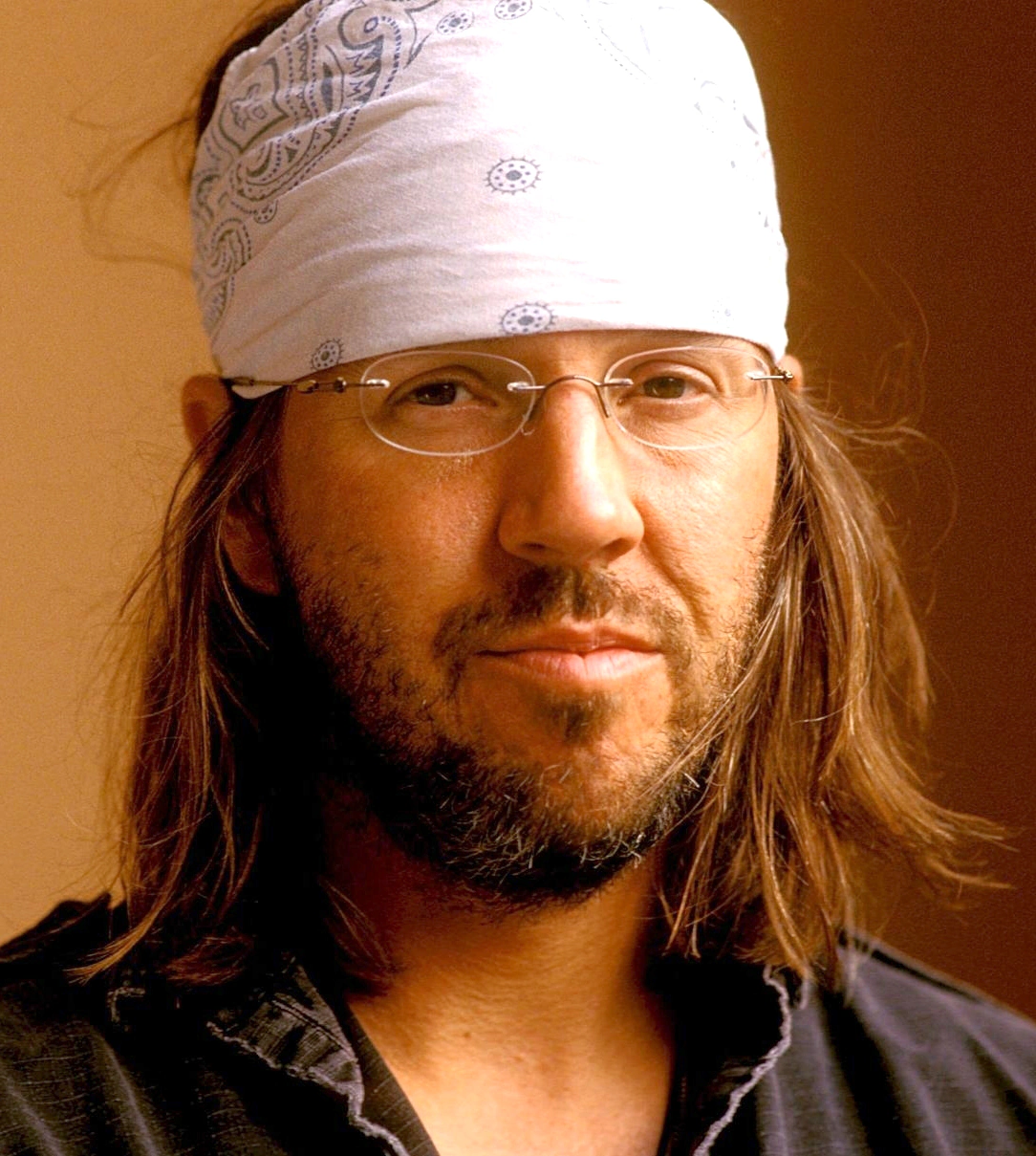
| 26 Quotes | |
| Occup. | Writer |
| From | USA |
| Born | February 21, 1962 Ithaca, New York, USA |
| Died | December 12, 2008 Claremont, California, USA |
| Aged | 46 years |
| Cite | |
Citation Formats
APA Style (7th ed.)
David foster wallace biography, facts and quotes. (2026, February 16). FixQuotes. https://fixquotes.com/authors/david-foster-wallace/
Chicago Style
"David Foster Wallace biography, facts and quotes." FixQuotes. February 16, 2026. https://fixquotes.com/authors/david-foster-wallace/.
MLA Style (9th ed.)
"David Foster Wallace biography, facts and quotes." FixQuotes, 16 Feb. 2026, https://fixquotes.com/authors/david-foster-wallace/. Accessed 25 Mar. 2026.
Early Life and Background
David Foster Wallace was born February 21, 1962, in Ithaca, New York, and grew up mainly in Urbana, Illinois, a Midwestern college town whose ordinariness he would later treat as both comfort and trap. His father, James Donald Wallace, taught philosophy at the University of Illinois; his mother, Sally Foster Wallace, taught English and was known locally for a prescriptive precision about language. The household prized argument, books, and rhetorical exactness, and Wallace learned early that intellect could be a form of intimacy as well as a shield.As a teenager he was a high-level tennis player, and the sport became his first laboratory for obsession, shame, and the peculiar loneliness of competition - material he later reworked in essays and fiction. The same years brought the beginnings of severe depression and anxiety, conditions he often described as private weather systems that distorted attention and desire. His early sense of being both gifted and unmoored - brilliant in systems, uncertain in living - set the psychological stakes of nearly everything he wrote.
Education and Formative Influences
Wallace studied at Amherst College, graduating in 1985 with a philosophy thesis on modal logic and fatalism and a creative writing thesis that became the basis of his first novel. He absorbed analytic philosophy (especially Wittgenstein), alongside the maximalist American fiction of Thomas Pynchon and John Barth, and the clean moral pressure of Flannery O'Connor and Dostoevsky. Amherst trained him to treat ideas as instruments, not ornaments, but it also intensified his worry that cleverness could become a self-enclosed game, a fear that would later drive his break with purely postmodern play.Career, Major Works, and Turning Points
After graduate study in philosophy at Harvard (1985-1987) and then at the University of Arizona MFA program, Wallace published The Broom of the System (1987), a comic, talky novel already haunted by questions of voice and control. In the early 1990s he began teaching (notably at Illinois State University) and emerged as a singular essayist with A Supposedly Fun Thing I'll Never Do Again (1997), while his second novel, Infinite Jest (1996), fused addiction, entertainment, and late-capitalist despair into a sprawling architecture of jokes and dread. The Pale King, left incomplete at his death, turned to bureaucracy, attention, and the moral difficulty of staying awake in ordinary life. Wallace struggled for years with depression and medication changes; on December 12, 2008, he died by suicide in Claremont, California.Philosophy, Style, and Themes
Wallace's inner life was a tug-of-war between the hunger to be seen and the terror of being trapped inside the self. He treated contemporary American consciousness as a feedback loop of wanting, watching, and withdrawing, and he saw entertainment not as a trivial backdrop but as a moral environment. “Nuclear weapons and TV have simply intensified the consequences of our tendencies, upped the stakes”. For him, the modern problem was not that people lacked information but that they drowned in stimuli designed to monetize attention, leaving loneliness to metastasize into craving. “The interesting thing is why we're so desperate for this anesthetic against loneliness”. His own history with depression and addiction-like compulsions gave the diagnosis its unnerving authority: he wrote as someone who knew how relief can become a prison.Technically, Wallace's style mixed high-speed comedy with philosophical rigor: recursive sentences, footnotes that mimic the mind's anxious digressions, and a shifting chorus of voices that dramatize how people narrate themselves into corners. Yet his ambition was never just formal novelty; he wanted a renewed ethical seriousness in fiction. “Fiction's about what it is to be a human being”. He argued, implicitly and explicitly, that irony was a powerful solvent but a poor shelter - it could expose hypocrisy while leaving the exposed person with no shared language for care. His obsession with Wittgenstein, selfhood, and communication fed this: the nightmare was solipsism, the inability to reach another mind, and the consequent temptation to settle for surfaces - consumption, performance, knowingness - instead of relation.
Legacy and Influence
Wallace became one of the defining American writers of the late 20th century, both celebrated and contested: admired for intellectual reach and emotional candor, criticized at times for sprawl and for the gendered limits of his empathy. His influence runs through contemporary maximalist fiction, the modern essay, and the current literary preoccupation with attention, addiction, and mediated life; his footnoted, dialect-rich realism is now a recognizable toolkit. More enduring than any technique is the moral wager he made against cultural cynicism: that art can still name what hurts, describe how people hide, and risk tenderness without naivete. In an era that trained audiences to laugh first and feel later, Wallace insisted that seriousness was not a pose but a form of care.Our collection contains 26 quotes written by David, under the main topics: Ethics & Morality - Truth - Wisdom - Art - Sarcastic.
Other people related to David: Jesse Eisenberg (Actor), Jason Segel (Actor), Thomas Pynchon (Writer)
David Foster Wallace Famous Works
- 2012 Both Flesh and Not (Essay Collection)
- 2011 The Pale King (Novel)
- 2005 Consider the Lobster (Essay Collection)
- 2004 Oblivion (Short Story Collection)
- 1999 Brief Interviews with Hideous Men (Short Story Collection)
- 1997 A Supposedly Fun Thing I'll Never Do Again (Essay Collection)
- 1996 Infinite Jest (Novel)
- 1989 Girl with Curious Hair (Short Story Collection)
- 1987 The Broom of the System (Novel)
Source / external links