
David Hare Biography Quotes 17 Report mistakes
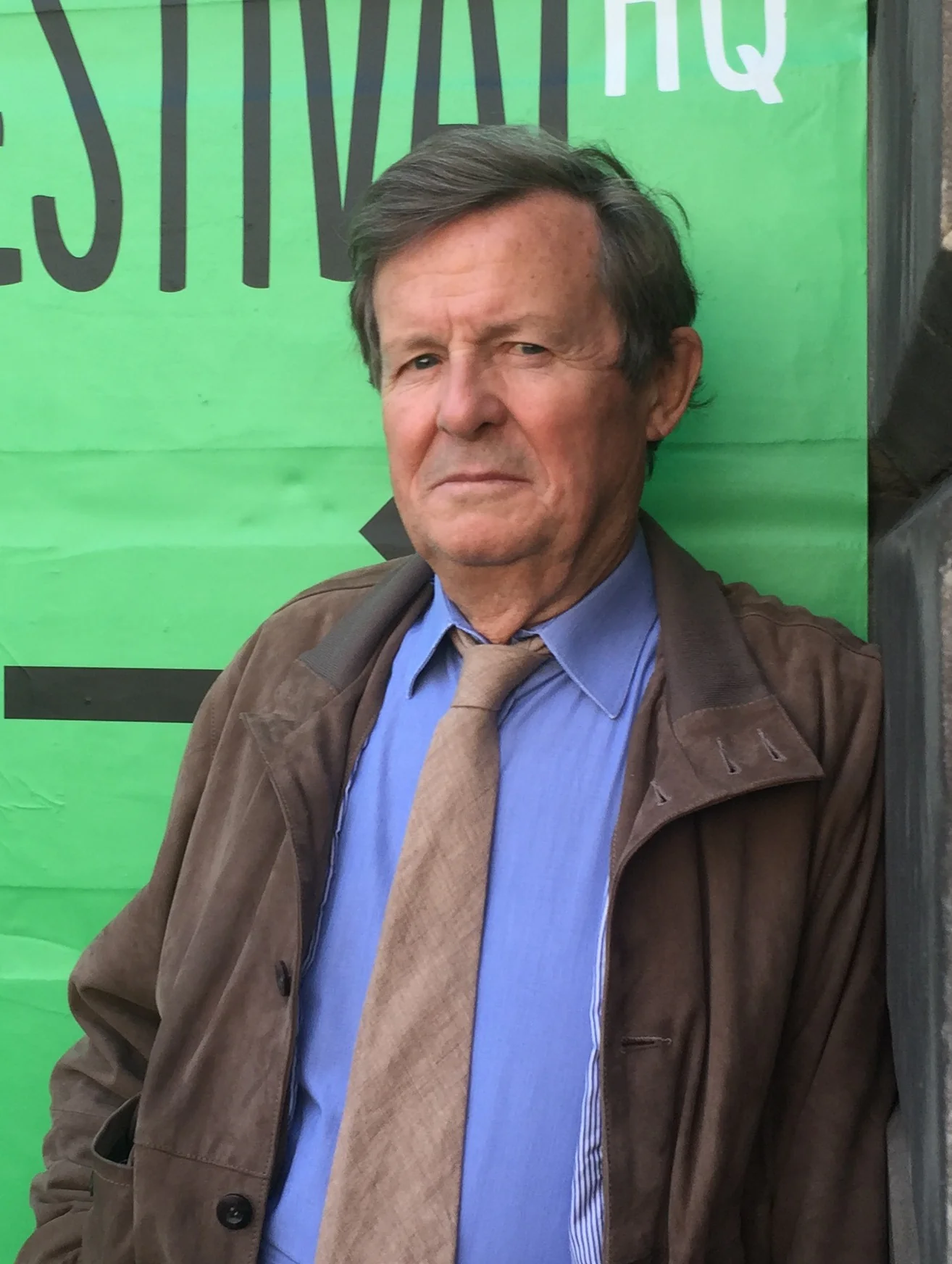
Attr: By Peter Burnett
| 17 Quotes | |
| Born as | David Rippon Hare |
| Known as | Sir David Hare |
| Occup. | Playwright |
| From | United Kingdom |
| Born | June 5, 1947 St Leonards-on-Sea, Sussex, England |
| Age | 78 years |
| Cite | |
Citation Formats
APA Style (7th ed.)
David hare biography, facts and quotes. (2026, February 2). FixQuotes. https://fixquotes.com/authors/david-hare/
Chicago Style
"David Hare biography, facts and quotes." FixQuotes. February 2, 2026. https://fixquotes.com/authors/david-hare/.
MLA Style (9th ed.)
"David Hare biography, facts and quotes." FixQuotes, 2 Feb. 2026, https://fixquotes.com/authors/david-hare/. Accessed 6 Mar. 2026.
Early Life and Background
David Rippon Hare was born on June 5, 1947, in St Leonards-on-Sea, Sussex, into a Britain still living with postwar austerity and the slow unwinding of empire. His family life was respectable, constrained, and quietly tense - a milieu that would later feed his ear for the coded language of the professional classes and the moral hesitations of people who believe themselves decent. The landscape of seaside town, London proximity, and national transition gave him an early sense that private routine and public history are never separate stories.He came of age as the 1950s gave way to the 1960s - the years of Suez aftershocks, the Profumo scandal, Harold Wilsons modernizing promises, and a growing skepticism toward inherited authority. Hare was not a populist outsider; his gaze came from within the institutions he would later anatomize. That position - both participant and critic - became central to his inner drama: a desire to belong to the educated establishment, paired with an impatience for its evasions and self-protective myths.
Education and Formative Influences
Hare attended Lancing College and then read English at Jesus College, Cambridge, where he helped found the Cambridge University Amateur Dramatic Club offshoot that became Portable Theatre. The countercultural energy of late-1960s Britain, the expansion of subsidized theatre, and the new seriousness in British drama after Osborne shaped his conviction that the stage could act as a civic instrument - not merely to entertain, but to interrogate the language of power, journalism, government briefs, and bourgeois conscience.Career, Major Works, and Turning Points
After early success with Slag (1970) and The Great Exhibition (1972), Hare became associated with a generation that treated theatre as a public forum, writing for the Royal Court and National Theatre while also working in film and television. Plenty (1978) announced his mature theme - the damage done when national myths curdle into private disappointment - while A Map of the World (1982), Racing Demon (1990), Murmuring Judges (1991), and The Absence of War (1993) formed a widely discussed trilogy of institutional critique (church, law, party politics). He later deepened his documentary-tinged method with Via Dolorosa (1998) and Stuff Happens (2004), and pursued a late-career synthesis of memory, class, and national mood in The Permanent Way (2003), The Vertical Hour (2006), and the elegiac reflection of The Red Barn (2016). Across decades, turning points often followed British political shocks - Thatcherism, New Labour, the Iraq War - as he repeatedly adjusted form to meet events, moving between fictional drama and verbatim strategies without abandoning character as the moral sensor.Philosophy, Style, and Themes
Hares work is driven by the belief that modern Britain specializes in the management of appearances: committees, inquiries, polite speech, and the soothing rhetoric of incrementalism. His characteristic protagonists - clergy, civil servants, lawyers, editors, ministers, the well-educated spouses beside them - tend to be intelligent, socially functional people who discover that their fluent talk cannot prevent complicity. The drama is rarely about wickedness; it is about drift, evasion, and the slow normalization of the unacceptable. He writes with an investigative temperament and a lyric ear, building scenes where decorum becomes pressure and the sentence itself becomes evidence.Psychologically, Hare returns to a fear that progress is fragile and reversible - that comfort can be a solvent of conscience as surely as crisis. The aphorism “The ultimate tendency of civilization is towards barbarism”. captures the bleak undertow beneath his institutional portraits: the idea that refined systems can still produce cruelty, and that procedural language can anesthetize moral alarm. Yet he also insists on inner counterforces - a stubborn appetite for illumination, for the moment a character chooses candor over career - akin to “Children always turn to the light”. And his best figures live the split he dramatizes again and again between intellect and feeling, strategy and sincerity: “Some people carry their heart in their head and some carry their head in their heart. The trick is to keep them apart yet working together”. That tension shapes his style - analytic but emotionally pressurized, skeptical of grand narratives yet hungry for truth-telling that costs something.
Legacy and Influence
David Hare stands as one of the defining British playwrights of the late 20th and early 21st centuries, a writer who treated contemporary governance and professional life as fit subjects for tragedy, satire, and uneasy moral inventory. He helped normalize the idea that theatre could engage directly with recent history - not only as allegory but as argument - while his screenwriting and public essays extended that civic ambition beyond the stage. His enduring influence lies in a method: marry the intimacy of character to the machinery of institutions, listen closely to how power speaks, and make the audience feel that politics is not elsewhere but inside the sentences people use to live with themselves.Our collection contains 17 quotes written by David, under the main topics: Wisdom - Love - Sarcastic - Leadership - Deep.
Other people related to David: Barnett Newman (Artist), Julianne Moore (Actress), Bill Nighy (Actor), Wallace Shawn (Actor)
Frequently Asked Questions
- David Hare School: Lancing College and Jesus College, Cambridge
- David Hare wife: Nicole Farhi
- How old is David Hare? He is 78 years old
David Hare Famous Works
- 2004 Stuff Happens (Play)
- 2002 Screenplay: The Hours (Screenplay)
- 1998 The Blue Room (Play)
- 1998 The Judas Kiss (Play)
- 1995 Skylight (Play)
- 1993 The Absence of War (Play)
- 1978 Plenty (Play)
- 1970 Slag (Play)
Source / external links