
David Herbert Lawrence Biography Quotes 85 Report mistakes
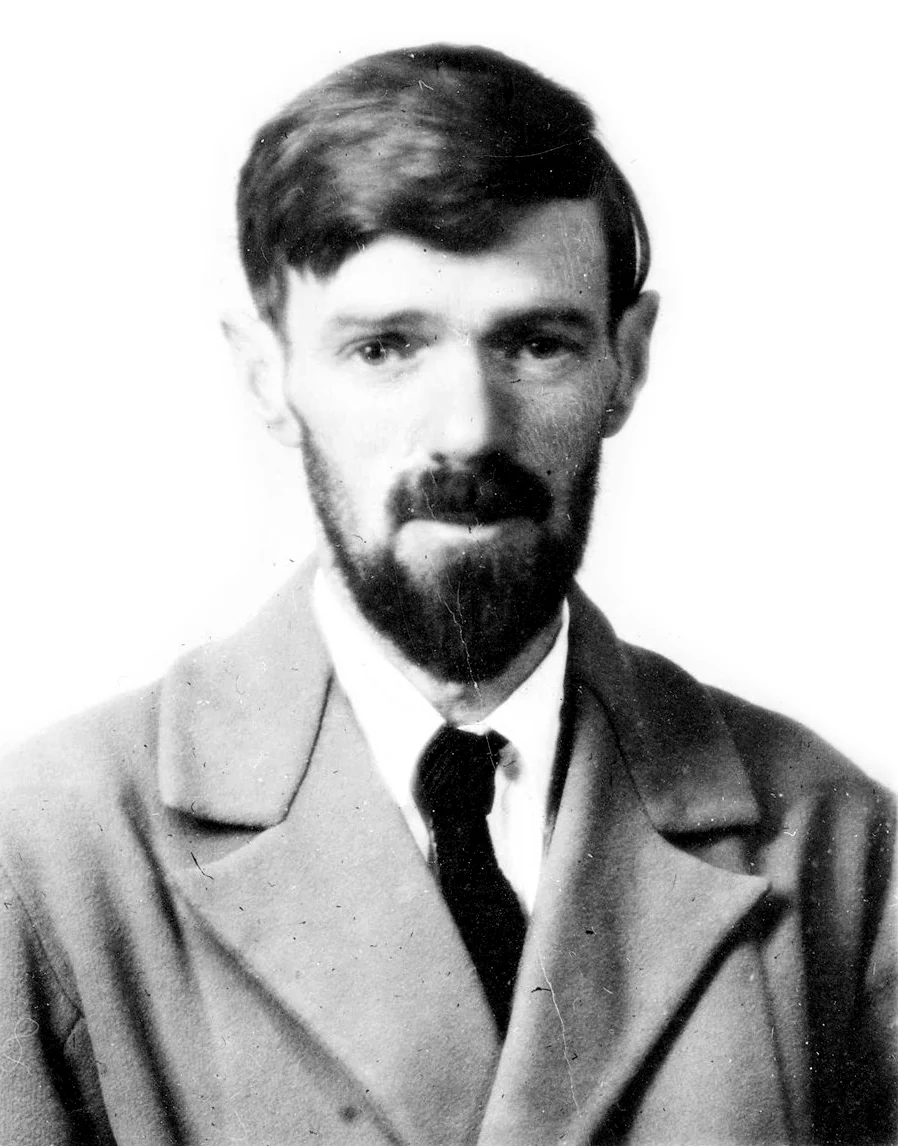
| 85 Quotes | |
| Occup. | Writer |
| From | England |
| Born | September 11, 1885 |
| Died | March 2, 1930 |
| Aged | 44 years |
| Cite | |
Citation Formats
APA Style (7th ed.)
David herbert lawrence biography, facts and quotes. (2026, February 11). FixQuotes. https://fixquotes.com/authors/david-herbert-lawrence/
Chicago Style
"David Herbert Lawrence biography, facts and quotes." FixQuotes. February 11, 2026. https://fixquotes.com/authors/david-herbert-lawrence/.
MLA Style (9th ed.)
"David Herbert Lawrence biography, facts and quotes." FixQuotes, 11 Feb. 2026, https://fixquotes.com/authors/david-herbert-lawrence/. Accessed 12 Feb. 2026.
Early Life and Background
David Herbert Lawrence was born on September 11, 1885, in Eastwood, Nottinghamshire, a coal-mining town whose grit and closeness would become the emotional geology of his fiction. His father, Arthur John Lawrence, was a miner with a drinkers conviviality and a singers pride; his mother, Lydia Beardsall Lawrence, came from a more aspirational, Methodist-inflected background and carried a fierce desire to lift her children into education and respectability. The marriage was riven by class, temperament, and money, and the young Lawrence grew up as a watchful intermediary, absorbing the feel of domestic conflict as a kind of weather.Illness and sensitivity sharpened his inwardness. A childhood bout of pneumonia left him physically delicate but mentally intense, and he learned early to read rooms and silences. Eastwoods landscapes - pit heaps, hedgerows, chapel rhythms, and the rough intimacy of working life - gave him both a subject and a lifelong ambivalence: he loved the earthiness and directness of miners, yet he recoiled from the spiritual starvation he sensed in industrial England. That tension - belonging and escape - would later power his most personal novels.
Education and Formative Influences
Lawrence won scholarships that carried him from local schooling to Nottingham High School, then to teacher training at University College, Nottingham, and into the lower-middle-class profession his mother prized. He read widely in English literature and modern thought, but his formative education was as much emotional as intellectual: his closeness to his mother, his complicated identification with his fathers bodily vitality, and his early experiences of love and shame in a judgmental provincial culture all became the raw material for a new kind of psychological realism. The England of his youth - late Victorian turning Edwardian, industrial, anxious about sexuality and class - provided both the constraints he fought and the energy he mined.Career, Major Works, and Turning Points
He began publishing poems and stories while working as a schoolteacher, then broke through with Sons and Lovers (1913), a thinly veiled transmutation of Eastwood life and his bond with his mother, widely seen as his first masterpiece. In 1912 he met Frieda von Richthofen Weekley, a married German-born aristocrat; their elopement scandalized friends and family, but it also gave him the partnership and friction that shaped his adult life. The First World War intensified public suspicion of the couple, and Lawrence, monitored and censored, turned his sense of exile into art: The Rainbow (1915) was prosecuted for obscenity and suppressed; Women in Love (1920) expanded its vision into a darker study of love, will, and modernity. Restless and often ill with tuberculosis, he lived a nomadic life across Italy, Germany, Ceylon, Australia, and New Mexico, producing essays, poems, travel writing, and fiction at a fierce pace - Aaron's Rod (1922), Kangaroo (1923), The Plumed Serpent (1926) - before his late, embattled climax in Lady Chatterley's Lover (1928), privately printed and immediately notorious. He died in Vence, France, on March 2, 1930, at 44, with reputation contested and influence already spreading.Philosophy, Style, and Themes
Lawrences work is a prolonged argument with modernity: against mechanization, against moral policing, against the deadening of instinct by social scripts. He insisted that the deepest truths are somatic and relational, not merely conceptual, and he framed human life as a struggle to recover a lost wholeness of feeling. "My great religion is a belief in the blood, the flesh, as being wiser than the intellect. We can go wrong in our minds. But what our blood feels and believes and says, is always true. The intellect is only a bit and a bridle". Read psychologically, this is less anti-intellectualism than self-defense - a man who feared that cleverness could become a weapon against intimacy, and who sought an ethics rooted in lived sensation.His style matches the philosophy: abrupt lyricism, prophetic cadence, close observation of gesture and weather, and sudden plunges into interior debate. He saw art as emergent pattern, discovered rather than imposed, and his essays on fiction treat form as a living recognition rather than a plan: "Design in art, is a recognition of the relation between various things, various elements in the creative flux. You can't invent a design. You recognize it, in the fourth dimension. That is, with your blood and your bones, as well as with your eyes". Sex in Lawrence is rarely decorative; it is a testing ground for truth, domination, tenderness, and the possibility of a new social bond. Even his provocation carried a moral claim about dignity: "Pornography is the attempt to insult sex, to do dirt on it". The recurring theme is not liberation as license, but liberation as honest contact - between men and women, mind and body, self and landscape.
Legacy and Influence
Lawrence left a body of work that forced English-language literature to speak more frankly about desire, marriage, class, and spiritual exhaustion, and he became a central battleground in twentieth-century debates over censorship, obscenity law, and the literary representation of sex. The later legal vindication of Lady Chatterley's Lover helped redraw the boundary between art and moral panic, while novels like Sons and Lovers and Women in Love remain foundational for psychological and modernist fiction. His reputation continues to swing between visionary and irritant - criticized for gender politics and mystical absolutism, praised for emotional candor, formal daring, and the insistence that industrial civilization cannot be understood without reckoning with the body.Our collection contains 85 quotes written by David, under the main topics: Witty One-Liners - Ethics & Morality - Wisdom - Truth - Art.
David Herbert Lawrence Famous Works
- 1928 Lady Chatterley's Lover (Novel)
- 1926 The Plumed Serpent (Novel)
- 1925 St. Mawr (Novella)
- 1920 Women in Love (Novel)
- 1915 The Rainbow (Novel)
- 1913 Sons and Lovers (Novel)
- 1911 The White Peacock (Novel)
Source / external links