
David Hockney Biography Quotes 25 Report mistakes
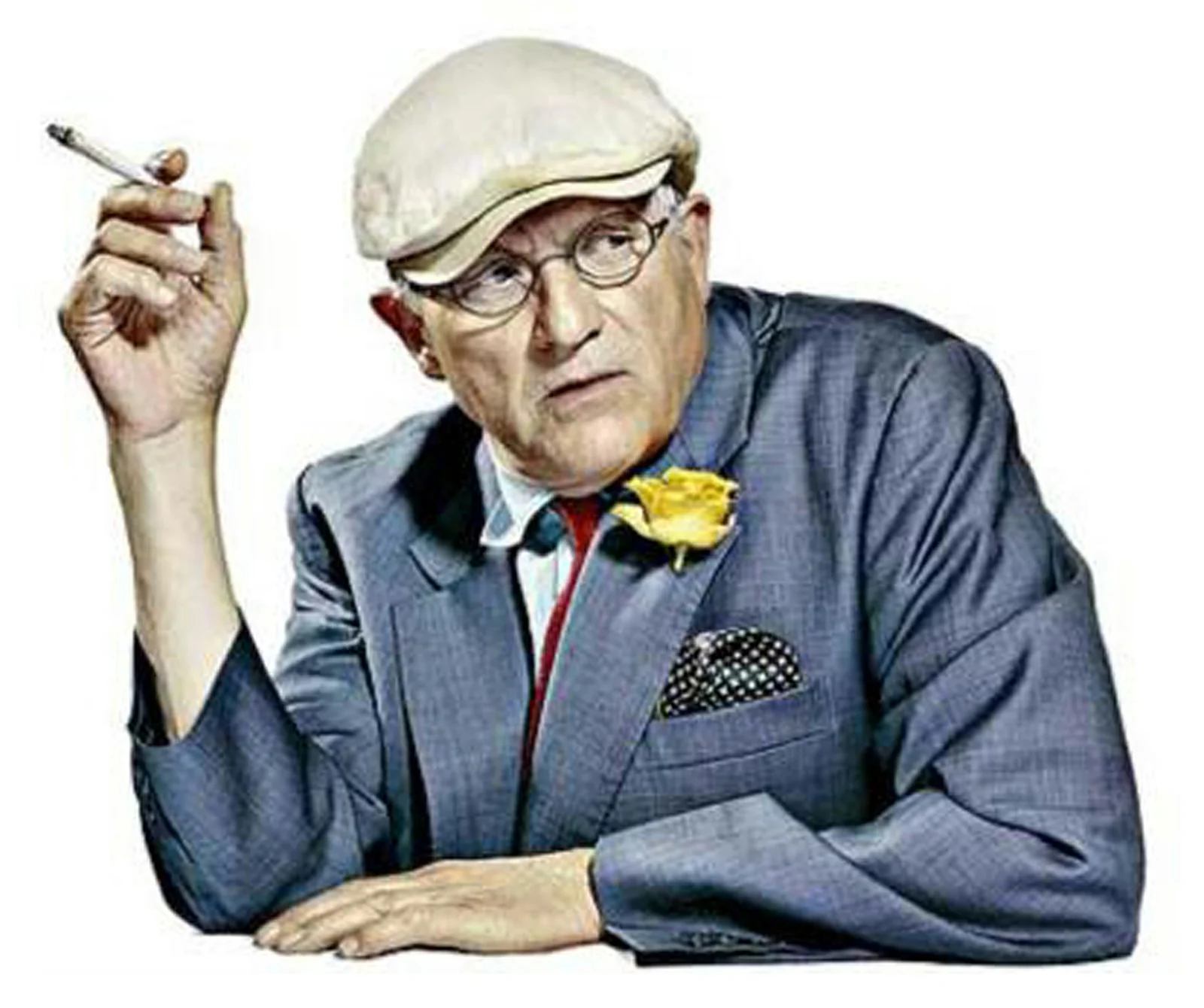
| 25 Quotes | |
| Occup. | Artist |
| From | England |
| Born | July 9, 1937 |
| Age | 88 years |
| Cite | |
Citation Formats
APA Style (7th ed.)
David hockney biography, facts and quotes. (2026, February 2). FixQuotes. https://fixquotes.com/authors/david-hockney/
Chicago Style
"David Hockney biography, facts and quotes." FixQuotes. February 2, 2026. https://fixquotes.com/authors/david-hockney/.
MLA Style (9th ed.)
"David Hockney biography, facts and quotes." FixQuotes, 2 Feb. 2026, https://fixquotes.com/authors/david-hockney/. Accessed 5 Mar. 2026.
Early Life and Background
David Hockney was born on July 9, 1937, in Bradford, West Riding of Yorkshire, England, the fourth of five children in a working-class family marked by independence of mind. Bradford in the 1940s and 1950s was a city of mills, smoke, and tight streets - a landscape of postwar austerity that sharpened his appetite for color, light, and psychological space. His father, Kenneth Hockney, a conscientious objector during World War II, modeled a stubborn moral autonomy; his mother, Laura, provided steadiness and a belief that talent could justify an unconventional life.From early adolescence Hockney drew obsessively, learning to treat looking as a form of labor. The local environment offered few cultural permissions for flamboyant modernity, and his emerging homosexuality made secrecy and performance part of daily life. That tension - between provincial constraint and the hunger for visual freedom - later became a motor in his art, pushing him toward places where desire could be pictured without apology and where formal experiment felt like a kind of personal truth-telling.
Education and Formative Influences
He studied at Bradford School of Art (1953-1957) and then at the Royal College of Art in London (1959-1962), arriving as British Pop Art was forming its own answer to American consumer spectacle. At the RCA he absorbed Picasso and Matisse as lessons in compression and invention, while also tracking the new visual grammar of advertising, magazines, and cinema; he was already testing how to turn biography into icon. His refusal to write a conventional diploma essay - he argued the work itself was the thesis - foreshadowed a career built on the artist as a maker who thinks through images rather than around them.Career, Major Works, and Turning Points
Hockney emerged in early-1960s London with works that mixed text, desire, and wit, then found catalytic freedom after first visiting Los Angeles in 1964, where light, architecture, and gay life offered subjects equal to his ambitions. California became the stage for his most famous paintings, including "A Bigger Splash" (1967) and portraits that treated friends and lovers as modern sitters, culminating in "Mr and Mrs Clark and Percy" (1970-1971) and the large double portrait "American Collectors (Fred and Marcia Weisman)" (1968). In the 1980s he pivoted hard into photography and perception with his "joiners" - multi-image photomontages - and later extended that inquiry into set design for opera, Yorkshire landscape cycles such as "Bigger Trees Near Warter" (2007), and digital drawing on iPhone and iPad, insisting that new tools could revive old questions about seeing.Philosophy, Style, and Themes
Hockney is often labeled a Pop painter, but his deeper through-line is epistemological: how does a picture carry time, attention, and lived experience? His early taste for flat color and clear edges was less cool detachment than a way to keep emotion legible - desire without melodrama, intimacy without haze. Portraiture, for him, is a social contract: he watches posture, decor, and the tiny negotiations of couples, then composes them with a classicist's balance and a diarist's candor.He distrusted the single, mechanical viewpoint as a tyranny of realism. “We live in an age where the artist is forgotten. He is a researcher. I see myself that way”. That research ethic drove his long study of photography's limits: “But slowly I began to use cameras and then think about what it was that was going on. It took me a long time, I mean I actually played with cameras and photography for about 20 years”. Even his blunt aphorisms reveal a psyche allergic to complacent taste-making; “The moment you cheat for the sake of beauty, you know you're an artist”. Beauty, for Hockney, is not prettiness but an earned distortion - a deliberate bending of fact to restore the fullness of perception, especially the way the eye and mind actually move through a room, a face, a road.
Legacy and Influence
Hockney has become one of the defining British artists of the postwar era because he made pleasure intellectually serious and made formal argument sensuous. He expanded the possibilities of figurative painting when abstraction seemed dominant, then reopened debates about photography, optics, and Renaissance perspective for a contemporary audience. His influence runs from painters reinvigorated by color and intimacy to photographers and digital artists encouraged by his refusal to rank mediums by prestige. In an age of rapid image consumption, his lasting gift is a discipline of attention: looking not as passive reception, but as a practiced, lifelong way of thinking and living.Our collection contains 25 quotes written by David, under the main topics: Witty One-Liners - Wisdom - Art - Freedom - Anxiety.
Source / external links