
David Hume Biography Quotes 46 Report mistakes
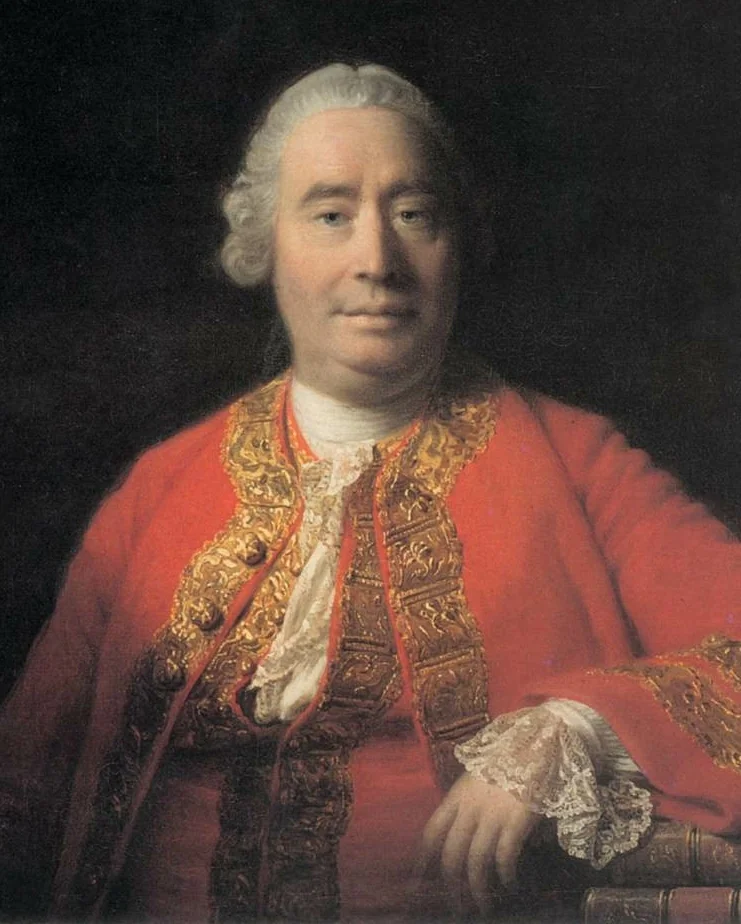
| 46 Quotes | |
| Occup. | Philosopher |
| From | Scotland |
| Born | May 7, 1711 Edinburgh, Scotland |
| Died | August 25, 1776 Edinburgh, Scotland |
| Aged | 65 years |
| Cite | |
Citation Formats
APA Style (7th ed.)
David hume biography, facts and quotes. (2026, February 11). FixQuotes. https://fixquotes.com/authors/david-hume/
Chicago Style
"David Hume biography, facts and quotes." FixQuotes. February 11, 2026. https://fixquotes.com/authors/david-hume/.
MLA Style (9th ed.)
"David Hume biography, facts and quotes." FixQuotes, 11 Feb. 2026, https://fixquotes.com/authors/david-hume/. Accessed 25 Mar. 2026.
Early Life and Background
David Hume was born on 7 May 1711 in Edinburgh, Scotland, and raised at Ninewells, the family estate near Chirnside in Berwickshire. His father, Joseph Hume of Ninewells, died when David was young, leaving his mother, Katherine Falconer, to manage the household and the education of her children with a stern, practical piety typical of Lowland Presbyterian culture. The boy grew up amid the aftershocks of the 1707 Union and the simmering Jacobite threat - a Scotland negotiating its place in a British commercial empire while its churches argued over orthodoxy and its intellectuals began to look to Newton and Locke rather than scholastic authority.From early on, Hume felt the pressure of expectation: the family hoped for a steady profession, preferably law, while his temperament pulled toward books and speculative questions. In later recollections he described a youth of intense study that strained his health, a telling clue to his inner life: ambition fused to self-scrutiny, and curiosity strong enough to risk bodily collapse. That tension - between the respectable life and the life of thought - became a recurring motor in his career, sharpening his sensitivity to how social approval, habit, and self-interest shape what people call conviction.
Education and Formative Influences
Hume entered the University of Edinburgh unusually young, absorbing classics and the new philosophy but chafing at inherited metaphysics. Reading Locke, Bayle, and the scientific triumphs associated with Newton, he conceived a bold project: to treat human nature with the same explanatory discipline that natural philosophers brought to matter and motion. A brief attempt at commercial work in Bristol only clarified his vocation, and by the early 1730s he had chosen exile from familiar institutions - first in France, notably at La Fleche - to think without the constant surveillance of Scottish clerical culture.Career, Major Works, and Turning Points
In 1739-40 he published A Treatise of Human Nature, the work he later said "fell dead-born from the press", an early humiliation that forced him to become both philosopher and strategist. He recast his arguments in more accessible form as An Enquiry concerning Human Understanding (1748) and An Enquiry concerning the Principles of Morals (1751), then widened his reach through Political Discourses (1752) and the multi-volume History of England (1754-62), which made him famous and financially secure. Professional recognition lagged: suspected of irreligion, he failed to obtain a chair at Edinburgh and later at Glasgow, yet he served as librarian to the Advocates Library (a post that granted him vast access to books), as secretary on diplomatic missions, and as undersecretary of state in London. In his final years he oversaw the publication of Dialogues concerning Natural Religion (1779, posthumous), ensuring his most pointed critique of theological certainty appeared only after his death on 25 August 1776 in Edinburgh.Philosophy, Style, and Themes
Hume's philosophy begins with a psychological wager: that the mind can be explained from within experience, without smuggling in metaphysical guarantees. His famous analysis of causation does not deny regularity in nature; it denies our rational entitlement to necessary connection beyond observed conjunction, leaving probability and practice where dogma once stood. “A wise man proportions his belief to the evidence”. That sentence is more than an epistemic rule - it is a moral discipline aimed at the human craving for certainty. Hume understood that people often believe first and justify later, so he built a method designed to cool intellectual vanity and expose the hidden engines of assent.Yet his skepticism is not cold nihilism; it is an anatomy of how life actually proceeds. “Custom is the great guide to human life”. In Hume's hands, custom is both the glue of sanity and the source of unexamined prejudice: it steadies expectation, grounds science as a practice, and also explains why superstition persists. His moral theory likewise locates judgment in sentiment and social feeling rather than abstract deduction - “The rules of morality are not the conclusion of our reason”. - a claim that reveals his inner realism about the limits of argument. Reason can inform, compare, and foresee consequences; it cannot, by itself, generate the warmth of approval or the sting of blame. The elegance of his prose - balanced, ironic, and judicial - reflects a personality trained to watch his own mind at work, then report its operations with controlled candor.
Legacy and Influence
Hume became a central architect of modern empiricism and a permanent irritant to philosophical complacency. Kant credited Hume with awakening him from "dogmatic slumber", and later thinkers - from Adam Smith and the Scottish Enlightenment circle to logical positivists and contemporary cognitive science - have returned to Hume's account of belief-formation, emotion, and social convention as a blueprint for naturalizing the mind. His essays helped define liberal political economy and a cosmopolitan skepticism about fanaticism, while his histories helped shift British historiography toward narrative grounded in institutions and interests rather than providence. Enduring influence is not only what he argued but the stance he modeled: intellectual courage without theatricality, and a disciplined willingness to live with uncertainty when evidence runs out.Our collection contains 46 quotes written by David, under the main topics: Witty One-Liners - Ethics & Morality - Wisdom - Justice - Friendship.
Other people related to David: Adam Smith (Economist), James Beattie (Poet), Thomas Reid (Philosopher), Gilles Deleuze (Philosopher), Abraham Tucker (Philosopher), Tom G. Palmer (Educator), Adam Ferguson (Philosopher), Hugh Blair (Theologian), Gertrude Himmelfarb (Historian)
David Hume Famous Works
- 1779 Dialogues Concerning Natural Religion (Book)
- 1757 Four Dissertations (Book)
- 1754 The History of England (Book)
- 1751 An Enquiry Concerning the Principles of Morals (Book)
- 1748 An Enquiry Concerning Human Understanding (Book)
- 1739 A Treatise of Human Nature (Book)
Source / external links