
David Merrick Biography Quotes 2 Report mistakes
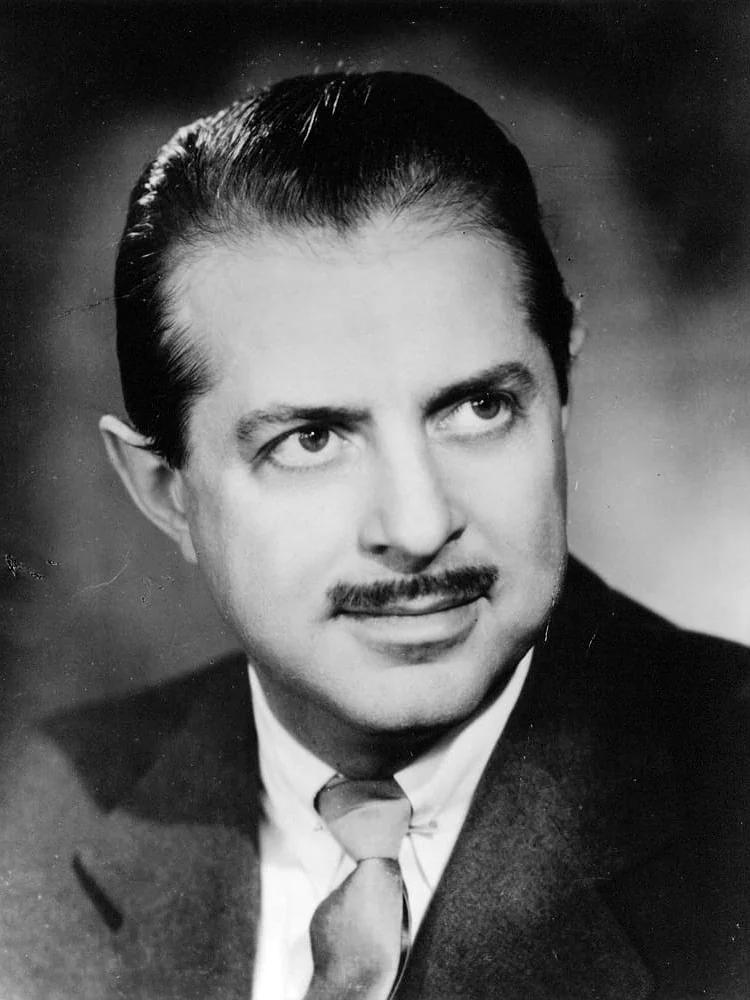
Attr: St. Louis Walk of Fame
| 2 Quotes | |
| Born as | David Lee Margulois |
| Occup. | Producer |
| From | USA |
| Spouses | Leonore Beck (1938-1963) Jeanne Gibson (1963-1966) Etan Aronson (1969-1976; 1983-1999) Karen Prunczik (1982-1983) Natalie Ting Teresa Lloyd (1999-2000) |
| Born | November 27, 1912 St. Louis, Missouri |
| Died | April 25, 2000 London, England |
| Aged | 87 years |
| Cite | |
Citation Formats
APA Style (7th ed.)
David merrick biography, facts and quotes. (2026, February 3). FixQuotes. https://fixquotes.com/authors/david-merrick/
Chicago Style
"David Merrick biography, facts and quotes." FixQuotes. February 3, 2026. https://fixquotes.com/authors/david-merrick/.
MLA Style (9th ed.)
"David Merrick biography, facts and quotes." FixQuotes, 3 Feb. 2026, https://fixquotes.com/authors/david-merrick/. Accessed 12 Feb. 2026.
Early Life and Background
David Merrick was born David Lee Margulois on November 27, 1912, in New York City, the son of Jewish immigrants in a metropolis where vaudeville, Yiddish theater, Tin Pan Alley, and the new glamour of Broadway coexisted with tenement austerity. He came of age between the aftershocks of World War I and the hard arithmetic of the Great Depression, absorbing early the idea that entertainment was both escape and commerce - a place where hunger could be transmuted into hustle and where attention was its own currency.The city shaped his inner life: impatient, competitive, quick to read a room, and allergic to being ignored. Even as a young man he learned that power on Broadway rarely belonged to the most virtuous, but to those who could control the story - who could make a show feel inevitable and make an opening feel like an event. That instinct for orchestration would become his signature, and it began in an era when radio and film were remaking popular taste and forcing theater to out-invent its rivals or die.
Education and Formative Influences
Merrick attended New York University and trained for the law, a pragmatic choice that sharpened his negotiating skills and his tolerance for conflict; he later used legal training not as a credential but as a tool. He studied contracts, leverage, and liability - the backstage grammar of American capitalism - and he watched how producers, press agents, unions, landlords, and stars bargained for advantage. In the 1930s and 1940s, when Broadway depended on private risk and word-of-mouth, that education taught him to treat every rehearsal, ad buy, and column inch as part of a single strategic campaign.Career, Major Works, and Turning Points
After early work in theater management and producing, Merrick emerged as one of Broadway's defining producers from the 1950s through the 1970s, pursuing hits with a gambler's appetite and a lawyer's attention to edge. He produced or backed landmark shows including Gypsy (1959), Hello, Dolly! (1964), Promises, Promises (1968), and 42nd Street (1980), and he championed playwright-driven work as well as commercial spectacle. He became equally famous for audacious publicity stunts - engineered controversies, planted stories, and irresistible openings - treating the press as an extension of the stage. His later years were marked by illness; he suffered a stroke in the 1980s, yet his name remained shorthand for the producer as showman, manipulator, and cultural gatekeeper. He died on April 25, 2000.Philosophy, Style, and Themes
Merrick's psychology was built around victory as a total condition, not merely a personal milestone. He was candid - sometimes chillingly so - about the competitive hunger that drove him: "It's not enough that I should succeed - others should fail". Read less as a cartoonish quip than as a confession, it reveals a man for whom Broadway was not a collegial arts community but a Darwinian marketplace in which dominance protected you from oblivion. In an industry where one flop could erase years of capital and credibility, his paranoia was partly rationalized as prudence, and his drive became an armor against the humiliations he never forgot.That worldview shaped his style: relentless control of narrative, aggressive dealmaking, and a willingness to weaponize publicity. He treated the opening night like an election and the reviews like battle reports, and he often acted as if the entire ecosystem - rival producers, skeptical critics, even hesitant investors - were adversaries to be outmaneuvered. "It is not enough for me to win. My enemies must lose". The line captures the dark symmetry of his temperament: applause was sweetest when it also proved someone wrong. Yet the paradox is that this combative stance frequently served the audience. By pushing for sharper scripts, tighter pacing, and bigger theatricality, he forced Broadway to compete with television and film on its own terms - by being more immediate, more communal, more eventful.
Legacy and Influence
Merrick's enduring influence lies in redefining the modern producer as both artistic impresario and public strategist, a figure who can shape taste by shaping attention. He helped mid-century Broadway become a national brand, exporting its hits, amplifying its stars, and proving that theater could still command mass culture when packaged with urgency and myth. His methods remain controversial - admired for ingenuity, criticized for ruthlessness - but his impact is unmistakable: he expanded what a producer could dare, and he left behind a template for Broadway success in an age where the show is inseparable from the story told about the show.Our collection contains 2 quotes written by David, under the main topics: Witty One-Liners - Savage.
Other people related to David: Carol Channing (Actress), Tommy Tune (Dancer)
Frequently Asked Questions
- David Merrick musicals: David Merrick produced many Broadway musicals, including "42nd Street" (1980), "Hello, Dolly!" (1964), and "Gypsy" (1959).
- David Merrick spouse: David Merrick was married to actress Judith Kennedy.
- David Merrick movies: David Merrick produced several films, including "The Lion in Winter" (1968) and "Irma la Douce" (1963).
- David Merrick upenn: David Merrick attended the University of Pennsylvania before beginning his career in theater production.
- How old was David Merrick? He became 87 years old
Source / external links