
David Milne Biography Quotes 18 Report mistakes
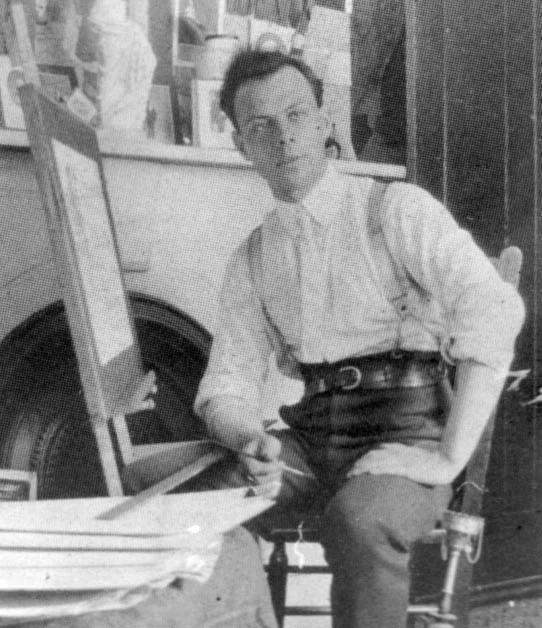
| 18 Quotes | |
| Occup. | Artist |
| From | Canada |
| Born | January 8, 1882 |
| Died | December 26, 1953 |
| Aged | 71 years |
| Cite | |
Citation Formats
APA Style (7th ed.)
David milne biography, facts and quotes. (2026, February 11). FixQuotes. https://fixquotes.com/authors/david-milne/
Chicago Style
"David Milne biography, facts and quotes." FixQuotes. February 11, 2026. https://fixquotes.com/authors/david-milne/.
MLA Style (9th ed.)
"David Milne biography, facts and quotes." FixQuotes, 11 Feb. 2026, https://fixquotes.com/authors/david-milne/. Accessed 27 Mar. 2026.
Early Life and Background
David Brown Milne was born on January 8, 1882, in Burgoyne, Ontario, a rural corner of southwestern Canada whose winter light, fields, and fence lines would later reappear as distilled motifs in his art. Raised in a Presbyterian household and shaped by the practical rhythms of farm life, Milne grew up with the habits of close looking and patient repetition - qualities that became central to his mature method. The Canada of his childhood was still largely agrarian; professional art existed, but at a distance, and ambition often meant leaving.That tension between rootedness and departure stayed with him. Milne was neither a bohemian by temperament nor a nationalist by program. Instead, his early years suggest an inward, self-reliant personality: a man drawn to solitude, allergic to artistic fashion, and compelled to build a private standard of clarity. The landscape around him was not scenic spectacle so much as a training ground for attention - an apprenticeship in seeing.
Education and Formative Influences
In 1903 he moved to New York City and studied at the Art Students League, where he encountered the cosmopolitan pressures of American modern life and the example of painters who treated everyday subjects with structural rigor. The city offered Milne both community and resistance: gallery talk and stylistic schools on one side, and on the other his growing sense that the best work emerged from stripping away display. New York also placed him within reach of new currents - Post-Impressionism, the quieter strains of modernism, and printmaking traditions - while confirming his instinct to pursue a narrower, more disciplined path.Career, Major Works, and Turning Points
Milne worked in New York during the years surrounding the 1913 Armory Show, absorbing its shock without becoming its disciple, and developed a strong early practice in drawing and etching that trained his economy of line. In 1916 he relocated to Boston Corners, New York, where the relative isolation suited him; there he produced some of his finest early paintings and prints, exploring houses, rivers, and winter fields with a pared-down, searching precision. After the First World War he returned to Canada, living for periods in Ontario and later in places such as Six Mile Lake and Baptiste Lake, often in self-imposed retreat. A decisive turning point came in the 1920s and 1930s as he refined a distinctive approach: modest formats, limited means, and an unusually systematic exploration of how a picture could be built from a few calibrated relations of line, color, and blank paper. Though never a public celebrity, he gradually became a touchstone for Canadian collectors, curators, and painters attentive to modernism without grandstanding; he died on December 26, 1953.Philosophy, Style, and Themes
Milne's inner life reads through his surfaces: restraint that is not timid, simplicity that is hard-won. He treated a painting as a solved problem in perception - not a transcription of nature, but a re-organization of it into balanced forces. His preference for small-scale works, often watercolor or oil with conspicuous intervals of unpainted ground, signals a mind wary of overstatement. The frequent solitude of his working conditions was not a romantic pose; it functioned as a laboratory in which he could test how little was needed to make an image convincing, and how silence could sharpen judgment.His themes - lakes, roads, trees, interiors, modest buildings - became vehicles for a philosophy of limited means and wide possibility. “There is a wide range of opportunities for us and we see a main part of our strategy as being a company that supplies products across a range of different end applications and indeed we have quite a wide product portfolio which we enhance each year”. Read psychologically, that impulse maps onto Milne's practice: he returned to a narrow set of subjects the way an inventor returns to a platform, extracting new variations through subtle shifts of contour, hue, and interval. “The growth of a company like ours tends to be a relatively steady because, like some of the other successful mixed signal companies, we have a wide range of products servicing a wide range of end applications”. In Milne's case, the steadiness is artistic rather than commercial - a steady deepening, built on reiteration and control. Even the logic of place mattered: “We are also fortunate in being in quite a sheltered environment, in terms of people moving on to do other things, because there are relatively few companies in Scotland that are looking for the skill set that we've developed”. Transposed to his life, it describes his chosen shelter from fashion, a protective distance from crowded scenes so he could develop a skill set of seeing that was uncompromisingly his own.
Legacy and Influence
Milne's enduring influence lies in the proof he offered to Canadian art: modernism could be rigorous without being loud, and national feeling could arise from attention rather than slogan. Later painters and critics valued him as a model of discipline - a figure who treated the landscape not as patriotic emblem but as a field for formal inquiry and emotional containment. Museums and collectors increasingly placed him among Canada's crucial moderns, not because he founded a movement, but because his work demonstrates how an artist can make a life out of refinement - turning repeated motifs into an evolving record of perception, privacy, and exacting freedom.Our collection contains 18 quotes written by David, under the main topics: Work - Vision & Strategy - Business - Marketing - Technology.
Source / external links