
David Remnick Biography Quotes 1 Report mistakes
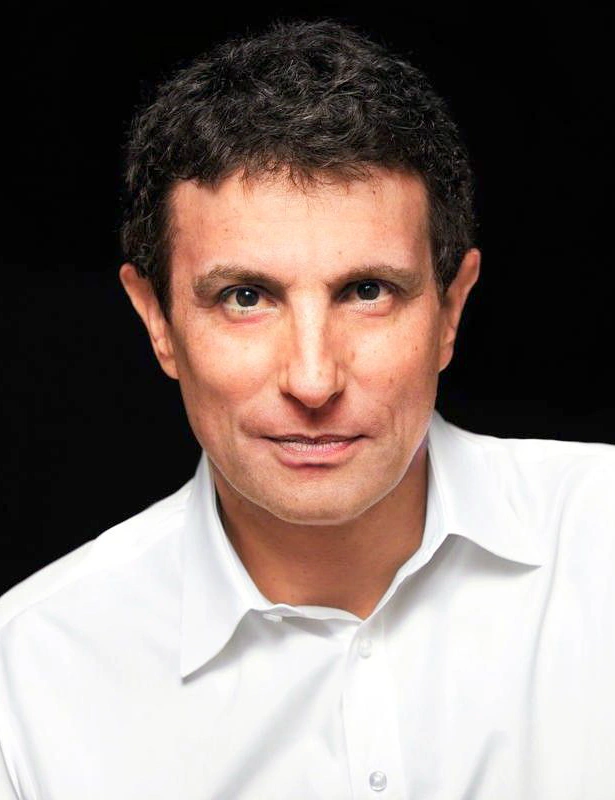
| 1 Quotes | |
| Born as | David Jay Remnick |
| Known as | David J. Remnick |
| Occup. | Journalist |
| From | USA |
| Spouse | Esther Fein (1987) |
| Born | October 29, 1958 Hackensack, New Jersey, USA |
| Age | 67 years |
| Cite | |
Citation Formats
APA Style (7th ed.)
David remnick biography, facts and quotes. (2026, February 11). FixQuotes. https://fixquotes.com/authors/david-remnick/
Chicago Style
"David Remnick biography, facts and quotes." FixQuotes. February 11, 2026. https://fixquotes.com/authors/david-remnick/.
MLA Style (9th ed.)
"David Remnick biography, facts and quotes." FixQuotes, 11 Feb. 2026, https://fixquotes.com/authors/david-remnick/. Accessed 6 Mar. 2026.
Early Life and Background
David Jay Remnick was born on October 29, 1958, in the United States, into a Jewish family shaped by mid-century American upward mobility and the long shadow of Eastern European history. He grew up in New Jersey, in a culture where newspapers, television news, and the aftershocks of Vietnam and Watergate trained an ambitious teenager to treat public life as something both scrutinized and performed.His early sensibility was forged in the ordinary discipline of suburbia and the extraordinary drama of late Cold War politics. Remnick developed the reporter's habit of listening for subtext - what people would not quite say aloud - and the editor's instinct for how a nation narrates itself. Even before he had an institutional platform, he showed a temperament drawn to power, art, and the moral weather of an era, rather than to ideology alone.
Education and Formative Influences
Remnick attended Princeton University, graduating in 1981. He came of age intellectually when American journalism was renegotiating its authority after Watergate: narrative reportage thrived, foreign correspondence conferred prestige, and magazines still set the tempo of cultural debate. His formative influences included the long-form tradition of The New Yorker and the moral seriousness of Cold War reporting, but also the practical lessons of daily journalism - accuracy under deadline, the necessity of sources, and the way a single vivid scene can explain a system more truthfully than a stack of abstractions.Career, Major Works, and Turning Points
Remnick joined The Washington Post and quickly moved into foreign reporting, becoming the paper's Moscow correspondent during the final years of the Soviet Union. That assignment became his defining apprenticeship: he reported through perestroika, the failed August 1991 coup, and the disintegration of an empire, translating the lived texture of political collapse into readable human drama. His book "Lenin's Tomb: The Last Days of the Soviet Empire" (1993) won the Pulitzer Prize and established him as a writer who could fuse granular reporting with historical judgment. In 1998 he became editor of The New Yorker, later editor-in-chief, steering the magazine through the post-9/11 era and into the digital transformation while sustaining its mix of reporting, criticism, and fiction. Under his leadership, the magazine published major investigative work and ambitious political and cultural profiles; his own books, including "King of the World" (1998) on Muhammad Ali and "The Bridge" (2010) on Barack Obama, reflected a continuing fascination with charisma, celebrity, and the burdens of public power.Philosophy, Style, and Themes
Remnick's journalism is anchored in the belief that politics is best understood through character under pressure. In Moscow he watched history stop being a theory and start being a daily negotiation over bread, truth, and fear; the lesson carried into his later portraits of American life, where institutions often fail in slow motion rather than in spectacular collapse. His style tends toward patient accumulation - interviews, archival detail, scene-setting - then a clear moral inference delivered without melodrama. He favors the long view, but not the safe view: to him, narrative is not a decorative wrapper but a method for making complicated power legible.As an editor, he treats a magazine not as a sermon but as a public square with standards. His oft-repeated observation, “98% of the people who get the magazine say they read the cartoons first - and the other 2% are lying”. , is not a throwaway gag so much as a psychological tell: he understands readers as busy, skeptical, and drawn first to pleasure, then to argument. That realism about attention - and about the seductions of style - helps explain why he has defended wit, voice, and surprise as partners to seriousness, not enemies of it. The deeper theme across his work is the tension between myth and fact: how nations and celebrities manufacture stories, how reporters test them, and how ordinary people live inside narratives they did not choose.
Legacy and Influence
Remnick's enduring influence lies in demonstrating that long-form journalism can remain culturally central even as the media economy fractures. As a correspondent he chronicled the end of the Soviet century with a novelist's eye and a reporter's discipline; as an editor he preserved The New Yorker's authority while opening it to new audiences and new platforms. For younger writers, his career models a particular ethic: that elegance does not excuse vagueness, that access must be earned and interrogated, and that the best magazine journalism can be simultaneously literary, investigative, and historically awake.Our collection contains 1 quotes written by David, under the main topics: Witty One-Liners.
Other people related to David: Tina Brown (Editor), Paul Muldoon (Poet), Jane Mayer (Journalist), Malcolm Gladwell (Author), Ken Auletta (Journalist), Janet Malcolm (Writer), John McPhee (Writer)
David Remnick Famous Works
- 2010 The Bridge: The Life and Rise of Barack Obama (Book)
- 2006 Reporting: Writings from The New Yorker (Book)
- 1998 King of the World: Muhammad Ali and the Rise of an American Hero (Book)
- 1997 Resurrection: The Struggle for a New Russia (Book)
- 1996 The Devil Problem: And Other True Stories (Book)
- 1993 Lenin's Tomb: The Last Days of the Soviet Empire (Book)
Source / external links