
David Satcher Biography Quotes 5 Report mistakes
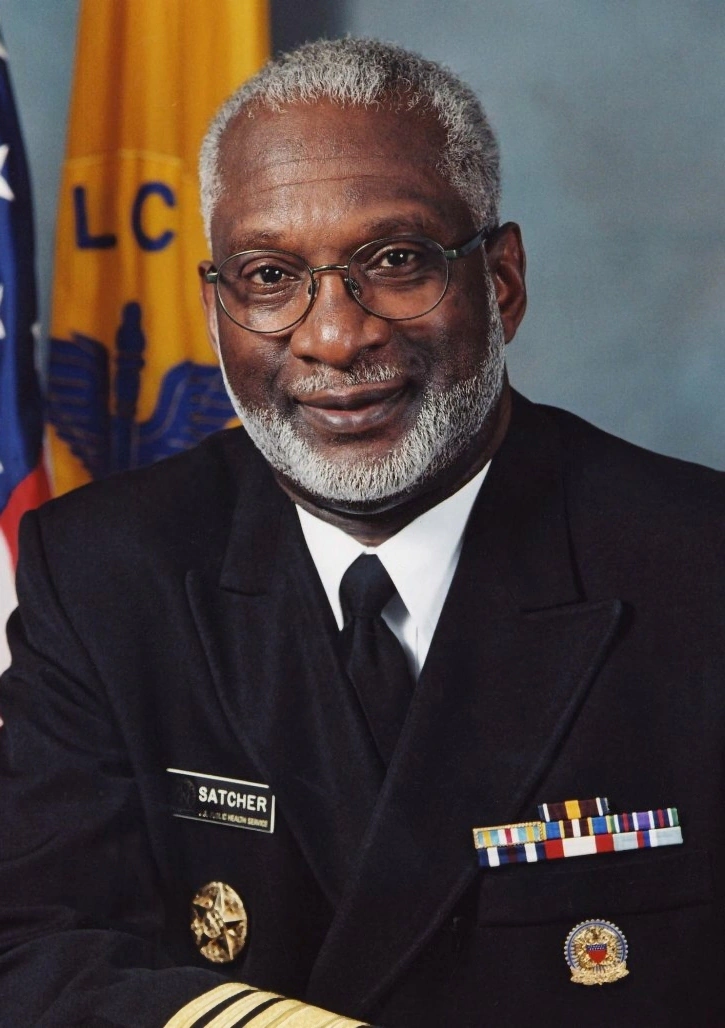
| 5 Quotes | |
| Occup. | Politician |
| From | USA |
| Born | March 2, 1941 Anniston, Alabama, United States |
| Age | 84 years |
| Cite | |
Citation Formats
APA Style (7th ed.)
David satcher biography, facts and quotes. (2026, February 11). FixQuotes. https://fixquotes.com/authors/david-satcher/
Chicago Style
"David Satcher biography, facts and quotes." FixQuotes. February 11, 2026. https://fixquotes.com/authors/david-satcher/.
MLA Style (9th ed.)
"David Satcher biography, facts and quotes." FixQuotes, 11 Feb. 2026, https://fixquotes.com/authors/david-satcher/. Accessed 12 Feb. 2026.
Early Life and Education
David Satcher, born in 1941 in the United States, became one of the most visible physician-leaders of his generation. He came of age during a period when access to quality care and education was unequal across communities, a reality that shaped his lifelong focus on equity in health. After undergraduate studies at Morehouse College, he completed rigorous medical and doctoral training at Case Western Reserve University, preparing for a career that would bridge clinical practice, research, education, and national service.Academic Leadership and Meharry Medical College
Before entering federal service, Satcher built a reputation as a thoughtful academic leader and institution builder. He held faculty and leadership positions that emphasized primary care, prevention, and community medicine. In the 1980s and early 1990s he served as president of Meharry Medical College, one of the nation's oldest and most significant historically Black medical institutions. At Meharry, he worked to strengthen medical education, expand research capacity, and deepen community partnerships, encouraging graduates to serve in underserved areas. His work aligned with the efforts of peers across historically Black institutions and with leaders in the broader health community who were pressing for greater diversity in the workforce and more just distribution of health resources.Director of the Centers for Disease Control and Prevention
In 1993 Satcher became Director of the Centers for Disease Control and Prevention (CDC), a pivotal role during a decade marked by emerging infectious threats and a renewed national focus on prevention. Serving during the administration of President Bill Clinton and alongside Health and Human Services (HHS) Secretary Donna Shalala, he emphasized immunization, surveillance capacity, and public communication that translated science into practical guidance. He strengthened partnerships with state and local health departments and expanded global health collaborations. As his tenure concluded in 1998, Jeffrey P. Koplan succeeded him as CDC Director, helping carry forward priorities that Satcher had highlighted, including preparedness and the control of preventable diseases.Surgeon General and Assistant Secretary for Health
In 1998 Satcher was sworn in as the 16th Surgeon General of the United States and simultaneously served as Assistant Secretary for Health. In these dual roles he helped coordinate prevention policy across HHS, championing measurable goals and evidence-based interventions. He worked closely with Secretary Donna Shalala in the late 1990s and continued as Surgeon General into the early 2000s under President George W. Bush and HHS Secretary Tommy Thompson. His appointment followed the tenure of Surgeon General Joycelyn Elders and the service of Acting Surgeon General Audrey F. Manley, and he was later succeeded by Richard Carmona. Throughout, Satcher sought to keep the Surgeon General's voice grounded in science and accessible to the public, building on a tradition established by predecessors who used national reports to clarify urgent health issues.Flagship Reports and Public Health Priorities
Satcher's tenure as Surgeon General was notable for a series of influential reports and calls to action. He elevated mental health to national attention with the Surgeon General's Report on Mental Health, underscoring that mental health is essential to overall health and calling for parity in coverage and care. He issued Oral Health in America, documenting the burden of dental disease and the consequences of limited access to preventive and restorative services, especially for children and marginalized populations. He introduced Youth Violence and a Call to Action on Overweight and Obesity, each providing a framework for communities, schools, clinicians, and policymakers to reduce risk and promote well-being. He also released a Call to Action to Promote Sexual Health and Responsible Sexual Behavior, aiming to reduce sexually transmitted infections and unintended pregnancy through comprehensive, evidence-based strategies.As Assistant Secretary for Health, Satcher helped launch Healthy People 2010, which set two overarching national objectives: to increase quality and years of healthy life and to eliminate health disparities. The explicit commitment to eliminating disparities put equity at the center of federal prevention policy and influenced program design across agencies, including collaborations with the National Institutes of Health and the Health Resources and Services Administration. These efforts required sustained relationships with state health officials, academic partners, and community leaders, weaving together policy and practice at every level.
Later Work and Mentorship
After federal service, Satcher continued to advance health equity and leadership development. He joined Morehouse School of Medicine in Atlanta, where he helped establish the Satcher Health Leadership Institute to prepare leaders committed to addressing the social determinants of health and to closing gaps in outcomes across populations. In Atlanta he worked within a network of public health and medical leaders that included figures such as former HHS Secretary Louis W. Sullivan and other CDC and academic colleagues, extending his influence through mentorship, scholarship, and coalition-building. His post-government career remained focused on translating evidence into action, mobilizing communities, and expanding the pipeline of diverse health professionals prepared to serve.Impact and Legacy
David Satcher is not primarily known as a politician; rather, he is recognized as a physician, scientist, and public health administrator who used appointed leadership roles to advance prevention, equity, and integrity in health policy. Across his service as CDC Director and as Surgeon General and Assistant Secretary for Health, he consistently elevated science and set clear national goals. He highlighted the importance of mental and oral health, childhood and adolescent well-being, and the prevention of chronic disease. He also broadened the public conversation to include the structural conditions that shape health opportunities. By collaborating with national leaders such as President Bill Clinton, HHS Secretaries Donna Shalala and Tommy Thompson, and successors including Richard Carmona and Jeffrey P. Koplan, Satcher reinforced the ideal that public health leadership should be nonpartisan, transparent, and grounded in evidence. His legacy endures in the frameworks he helped build, the leaders he mentored, and the ongoing pursuit of a more equitable and prevention-centered health system.Our collection contains 5 quotes written by David, under the main topics: Health - Mental Health.
Source / external links