
David Trimble Biography Quotes 7 Report mistakes
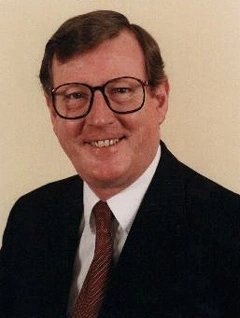
| 7 Quotes | |
| Born as | William David Trimble |
| Known as | Baron Trimble |
| Occup. | Politician |
| From | Ireland |
| Born | October 15, 1944 Bangor, Northern Ireland, United Kingdom |
| Age | 81 years |
| Cite | |
Citation Formats
APA Style (7th ed.)
David trimble biography, facts and quotes. (2026, February 11). FixQuotes. https://fixquotes.com/authors/david-trimble/
Chicago Style
"David Trimble biography, facts and quotes." FixQuotes. February 11, 2026. https://fixquotes.com/authors/david-trimble/.
MLA Style (9th ed.)
"David Trimble biography, facts and quotes." FixQuotes, 11 Feb. 2026, https://fixquotes.com/authors/david-trimble/. Accessed 12 Feb. 2026.
Early Life and Background
William David Trimble was born on 15 October 1944 in Bangor, County Down, in what was then routinely called Northern Ireland, a statelet created in 1921 and defined by a Protestant-Unionist majority and a Catholic-Nationalist minority living through unequal power, segregated neighborhoods, and clashing historical memories. His childhood unfolded in the long shadow between the end of the Second World War and the outbreak of the Troubles, when everyday life could look calm on the surface while politics remained charged by identity and fear.Trimble came from a middle-class, Protestant background shaped by the civic institutions of Unionism and the social confidence that accompanied it, yet also by the vulnerability of being a small jurisdiction on an island where constitutional questions never truly settled. That double inheritance - assurance and anxiety - would later mark his leadership: he could speak the language of communal pride, but he was also acutely aware that the old formulas were becoming ungovernable as violence and demographic change pressed in.
Education and Formative Influences
He studied at Queen's University Belfast, reading law and moving into academic life, eventually becoming a lecturer at Queen's. The legal profession and the habits of scholarship trained him to think in texts, procedures, and enforceable commitments - a temperament that would later collide with Northern Ireland's culture of symbolic politics. Law also gave him a belief that constitutional engineering could reshape incentives, and that peace required institutions capable of surviving bad faith as well as moments of generosity.Career, Major Works, and Turning Points
Trimble entered public prominence in the 1990s through Unionist politics, rising to lead the Ulster Unionist Party (UUP) in 1995 after years in which Unionism wrestled with how to respond to IRA violence, British-Irish diplomacy, and an emerging peace process. A decisive turning point came in 1998 when he helped negotiate and then championed the Belfast/Good Friday Agreement, accepting a power-sharing executive and new cross-border structures in return for consent-based constitutional guarantees and the promise of paramilitary decommissioning. For many Unionists, his stance was an act of strategic realism; for others it looked like surrender. He served as First Minister of Northern Ireland from 1998 to 2002, governing in a climate of repeated institutional suspensions and bitter arguments over whether the IRA and Sinn Fein were meeting obligations. In 1998 he shared the Nobel Peace Prize with John Hume, recognition that elevated him internationally even as his base at home fractured, and he ultimately lost the UUP leadership and his Westminster seat amid Unionism's shift toward the harder-line Democratic Unionist Party.Philosophy, Style, and Themes
Trimble's inner world combined lawyerly literalism with a moral imagination that tried to drag Northern Ireland out of tribal reflex. He was not a romantic about reconciliation; he was a constitutionalist who wanted bargains to bind. His rhetoric often turned on the idea that politics is made or ruined by context, not slogans: "Circumstances give in reality to every political principle, its distinguishing colour, and discriminating effect. The circumstances are what render every civil and political scheme beneficial or noxious to mankind". That sentence functions like a self-portrait - a man convinced that good outcomes come from calibrating institutions to lived realities, and that purity without implementation becomes dangerous theater.His style could be severe, even brittle, because he treated trust as something produced by verification. He framed peace as a moral category larger than the inherited binary: "There are two traditions in Northern Ireland. There are two main religious denominations. But there is only one true moral denomination. And it wants peace". Yet he also understood how the past hijacked perception, warning that what people feared ahead was often an old injury projected forward: "The dark shadow we seem to see in the distance is not really a mountain ahead, but the shadow of the mountain behind - a shadow from the past thrown forward into our future. It is a dark sludge of historical sectarianism. We can leave it behind us if we wish". The tension in his public life came from that last clause - if we wish - because he learned, painfully, that wishing required disciplined constituencies, and that leadership meant asking them to trade grievance for governance.
Legacy and Influence
Trimble remains a pivotal, contested architect of the post-Agreement order: to supporters, the Unionist leader who made consent-based power sharing possible without abandoning the Union; to critics, a man who overestimated the peace process's capacity to force paramilitaries and parties into fully reciprocal compliance. His deeper legacy is institutional and psychological: he helped normalize the idea that Unionism could be pragmatic, not merely defiant, and that peace would be secured not by forgetting history but by preventing it from dictating the future. The structures he defended - however repeatedly strained - became the arena in which Northern Ireland's politics learned to argue with ballots rather than bullets, and his example continues to shape debates about compromise, enforcement, and the cost leaders pay when they move faster than their own side can bear.Our collection contains 7 quotes written by David, under the main topics: Justice - Peace - Decision-Making - Pride.
Other people related to David: Gerry Adams (Politician), Mary McAleese (Statesman), Martin McGuinness (Politician), Mitchell Reiss (Diplomat)
Source / external links