
Dean Inge Biography Quotes 27 Report mistakes
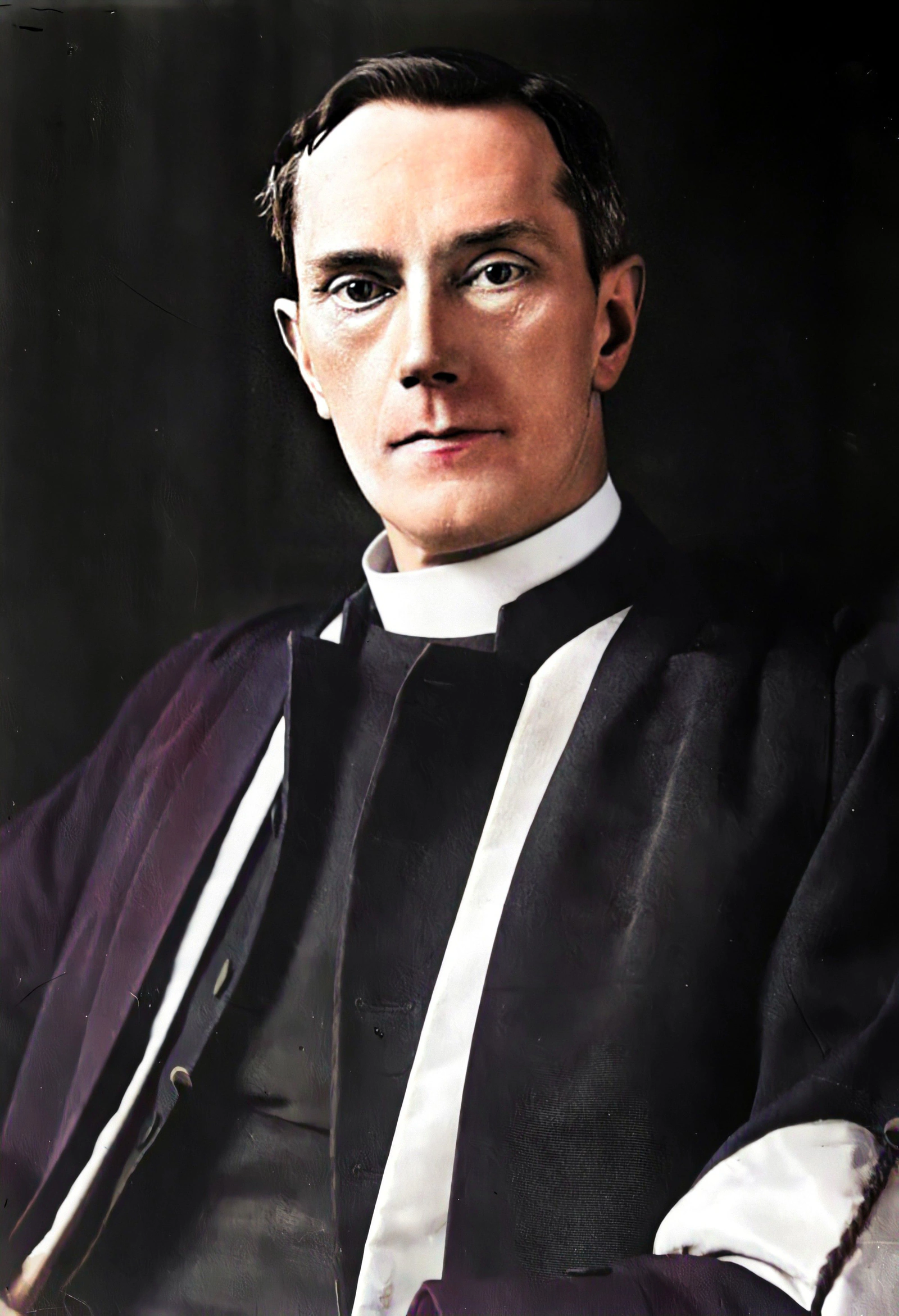
| 27 Quotes | |
| Born as | William Ralph Inge |
| Occup. | Philosopher |
| From | England |
| Born | June 6, 1860 Crayke, Yorkshire, England |
| Died | February 26, 1954 |
| Aged | 93 years |
| Cite | |
Citation Formats
APA Style (7th ed.)
Dean inge biography, facts and quotes. (2026, February 11). FixQuotes. https://fixquotes.com/authors/dean-inge/
Chicago Style
"Dean Inge biography, facts and quotes." FixQuotes. February 11, 2026. https://fixquotes.com/authors/dean-inge/.
MLA Style (9th ed.)
"Dean Inge biography, facts and quotes." FixQuotes, 11 Feb. 2026, https://fixquotes.com/authors/dean-inge/. Accessed 12 Feb. 2026.
Early Life and Background
William Ralph Inge was born on June 6, 1860, in Crayke, Yorkshire, into the clerical world of Victorian England. His father, William Inge, was an Anglican priest and later dean of York, and the household atmosphere blended parish routine with the larger moral confidence of the mid-19th-century Church. From the outset Inge lived inside the institutions he would later diagnose and defend: the established church, the classical schools, and the habits of public argument that joined sermon, essay, and parliamentary speech.The long arc of his life - he died on February 26, 1954 - carried him through the destabilizing sequence of late-Victorian doubt, the shock of the First World War, the interwar crisis of liberal democracy, and the second global conflict that reordered Britain. Inge became famous not only as a philosopher and theologian but as a public moralist with a sharpened, sometimes abrasive wit, earning the nickname "the Gloomy Dean". That sobriquet was less a personal temperament than a public posture: he believed modernity was spending inherited spiritual capital without acknowledging the cost.
Education and Formative Influences
Inge was educated at Eton and then at King's College, Cambridge, where he distinguished himself in classics and philosophy and absorbed the Victorian hunger for system alongside the new critical scholarship that was unsettling older certainties. He was ordained in the Church of England and served in pastoral and academic posts before emerging as an influential lecturer and writer. Philosophically, he drew deeply on Plato and the tradition of Christian Platonism, and he was shaped by the modern recovery of the mystics - a route that allowed him to be intellectually rigorous without narrowing religion into mere social utility.Career, Major Works, and Turning Points
After work at Cambridge and Oxford, Inge rose to national prominence as Dean of St Paul's Cathedral (1911-1934), a position that made him a symbol of Anglican public reason at the very moment that European civilization seemed to implode. His Gifford Lectures were published as The Philosophy of Plotinus (1918), consolidating his standing as an interpreter of late antique metaphysics and as a champion of a spiritual realism that could coexist with scientific knowledge. He edited and introduced classic texts, wrote tirelessly for periodicals, and used the pulpit and the press to speak about war, education, culture, and politics - interventions that made him admired for intellect and resented for elitism. Retirement did not quiet him; he continued to publish essays and reflections that measured Britain's future against a long view of history and a demanding standard of inward life.Philosophy, Style, and Themes
Inge's philosophy can be read as a disciplined attempt to keep transcendence intellectually credible in an age suspicious of it. For him, the heart of religion was neither sentimental comfort nor institutional habit but a perception of value and reality that ordinary empiricism misses: "All faith consists essentially in the recognition of a world of spiritual values behind, yet not apart from, the world of natural phenomena". That sentence captures his inner economy - an almost austere need to hold together two worlds without tearing either apart. It also explains why he distrusted both crude materialism and vague spiritualism. He accepted science as a method while refusing to let it become a metaphysics, insisting, "In praising science, it does not follow that we must adopt the very poor philosophies which scientific men have constructed. In philosophy they have much more to learn than to teach". The point was not anti-science but anti-reduction: he wanted the moral and contemplative dimensions of life to remain thinkable.His style mixed patristic learning with epigram and provocation. Inge could sound like a mystic, but his public voice often took the form of social diagnosis, and his psychology ran toward impatience with self-deception and mass sentimentality. That impatience fueled his skepticism toward modern politics - especially the idea that moral judgment can be replaced by procedure: "Democracy is only an experiment in government, and it has the obvious disadvantage of merely counting votes instead of weighing them". Such lines made him controversial, yet they reveal a consistent theme: the primacy of qualitative discernment over quantitative comfort. Across sermons, lectures, and essays, he returned to the formation of conscience, the hierarchy of values, and the necessity of inward discipline - a Platonist's insistence that the soul must be trained to see.
Legacy and Influence
Inge's enduring significance lies in how he fused scholarship, ecclesiastical authority, and philosophical argument into a single public vocation. As Dean of St Paul's during a pivotal era, he modelled a kind of Anglican intellectual who would not retreat from modern questions, yet would not surrender the claim that spiritual realities are as objective as physical ones. His writings kept Christian Platonism and the study of mysticism in serious conversation with modern philosophy, influencing later Anglican thinkers and sustaining a tradition of religious humanism skeptical of both political utopianism and scientific imperialism. If the "Gloomy Dean" sometimes sounded like a scold, his deeper legacy is more constructive: a demand that culture be judged by what it makes possible in the inner life, and a reminder that public speech can still be anchored in metaphysical conviction.Our collection contains 27 quotes written by Dean, under the main topics: Witty One-Liners - Ethics & Morality - Wisdom - Justice - Freedom.
Dean Inge Famous Works
- 1928 The Church and the Age (Book)
- 1919 Outspoken Essays (Book)
- 1918 The Philosophy of Plotinus (Book)
- 1911 Speculum Animae (Book)
- 1899 Christian Mysticism (Book)
Source / external links