
Dean Kamen Biography Quotes 27 Report mistakes
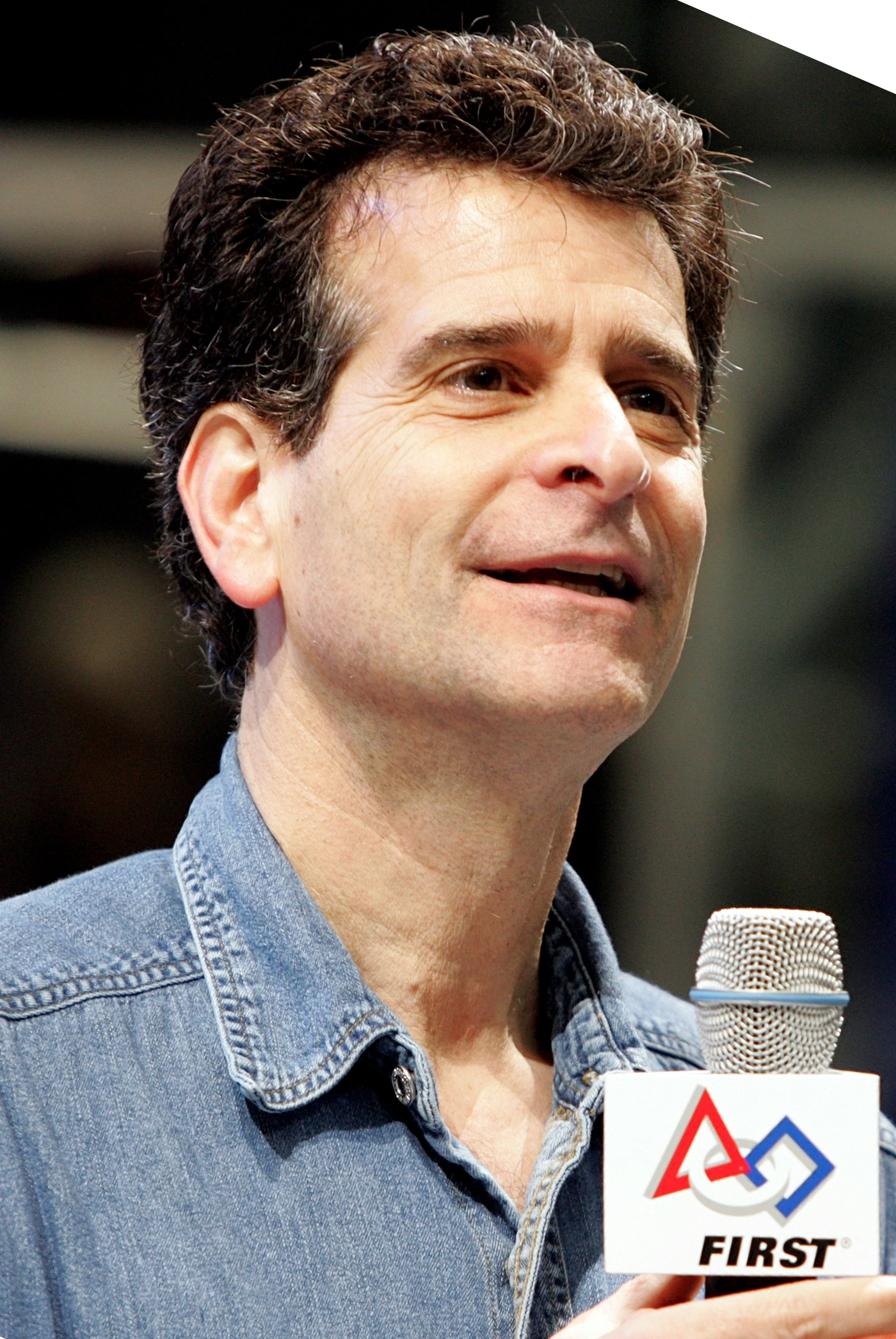
| 27 Quotes | |
| Occup. | Inventor |
| From | USA |
| Born | April 5, 1951 |
| Age | 74 years |
| Cite | |
Citation Formats
APA Style (7th ed.)
Dean kamen biography, facts and quotes. (2026, February 11). FixQuotes. https://fixquotes.com/authors/dean-kamen/
Chicago Style
"Dean Kamen biography, facts and quotes." FixQuotes. February 11, 2026. https://fixquotes.com/authors/dean-kamen/.
MLA Style (9th ed.)
"Dean Kamen biography, facts and quotes." FixQuotes, 11 Feb. 2026, https://fixquotes.com/authors/dean-kamen/. Accessed 26 Mar. 2026.
Early Life and Background
Dean Lawrence Kamen was born on April 5, 1951, in Rockville Centre, Long Island, New York, and came of age in a postwar America intoxicated by gadgets, television science, and the space race. His father, Jack Kamen, was a celebrated illustrator for Mad magazine and other publications, and the household mixed commercial art with a practical, workshop sensibility. That blend mattered: Kamen grew up seeing how imagination becomes an object in the world, and how style can be engineered as carefully as function.As a teenager he was less interested in credentials than in systems - motors, switches, feedback loops, and the quiet power of making something work. Friends and teachers often recalled an early impatience with busywork and a preference for hands-on problem solving, which fit the era: the 1960s were full of big promises (moonshots, nuclear power, antibiotics) and visible limits (urban unrest, Vietnam, environmental anxiety). Kamen internalized both the optimism and the urgency, learning to treat technology as a tool for public-scale problems rather than personal novelty.
Education and Formative Influences
Kamen attended Worcester Polytechnic Institute in Massachusetts but left before completing a degree, a choice consistent with a maker who learned fastest by building. The formative influence was not a classroom canon so much as the culture of engineering as iteration: prototype, test, revise, repeat. Early projects reportedly included sophisticated sound-and-light systems for bands, and he gravitated toward medical devices because hospitals offered clear constraints, immediate feedback, and moral weight - engineering where failure had stakes and success changed lives.Career, Major Works, and Turning Points
In the 1970s Kamen founded AutoSyringe and developed a wearable infusion pump for diabetics, helping move drug delivery from hospital routines to ambulatory freedom; he later created DEKA Research and Development in New Hampshire (the name echoing his initials) as an invention factory that could pursue long arcs. His engineering fingerprints spread through medical and mobility tech: the iBOT stair-climbing wheelchair (a collaboration path that brought visibility through Johnson & Johnson), the HomeChoice dialysis system, and ultimately the Segway Human Transporter, unveiled in 2001 amid intense hype about reshaping cities. If the Segway did not remake urban design, it still demonstrated Kamen's pattern: integrate sensors, control theory, and rugged manufacturing into a product that feels like applied physics. Another turning point was civic rather than commercial - founding FIRST (For Inspiration and Recognition of Science and Technology) in 1989, a competition ecosystem that treats engineering as a varsity pursuit and recruits teenagers into the identity of problem-solver.Philosophy, Style, and Themes
Kamen thinks in connections and in constraints, and he has described the origin of his method as pattern-hunting: “Some broad themes brought me where I am today. At a very young age, my hobby became thinking and finding connections”. Psychologically, that "hobby" is also a coping strategy - a way to turn restless energy into coherent systems, and to convert the chaos of real-world problems into solvable diagrams. The output is not solitary genius mythology but a workshop ethic: multidisciplinary teams, rapid prototyping, and a preference for elegant assemblies over theoretical purity.He is blunt about time, failure, and what counts as real work. “I do not want to waste any time. And if you are not working on important things, you are wasting time”. That line reads less like motivational theater and more like a private rulebook for an inventor who measures days against unmet needs. At the same time, his view of invention is deliberately demystifying, almost bureaucratic: “A patent, or invention, is any assemblage of technologies or ideas that you can put together that nobody put together that way before. That's how the patent office defines it. That's an invention”. The psychology here is revealing - he deflates romance to protect momentum, treating innovation as recombination under pressure, not inspiration waiting to be felt. Even his public disappointments (like the gap between Segway predictions and adoption) fit the same mindset: prototypes are arguments, and the world is the test bench.
Legacy and Influence
Kamen's enduring influence is twofold: tangible devices that expanded patient autonomy and mobility, and an institutional legacy through FIRST that reframed engineering as culture, not just curriculum. In an era when technology is often marketed as frictionless novelty, his career insists on engineering as responsibility - machines built for bodies, cities, and infrastructures that resist easy disruption. He helped normalize the idea that an inventor can be both a product builder and a civic evangelist, and that the most consequential work is not the flashy reveal but the long, iterative grind of making complex systems reliable enough to matter.Our collection contains 27 quotes written by Dean, under the main topics: Witty One-Liners - Truth - Learning - Honesty & Integrity - Work Ethic.
Source / external links