
Debbie Meyer Biography Quotes 5 Report mistakes
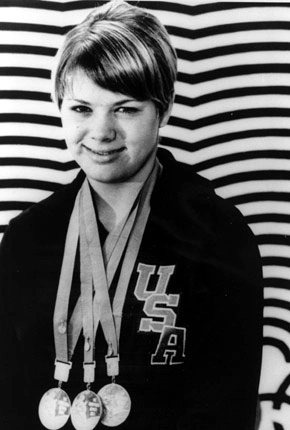
| 5 Quotes | |
| Born as | Deborah Elizabeth Meyer |
| Occup. | Athlete |
| From | USA |
| Born | August 14, 1952 Annapolis, Maryland |
| Age | 73 years |
| Cite | |
Citation Formats
APA Style (7th ed.)
Debbie meyer biography, facts and quotes. (2026, February 11). FixQuotes. https://fixquotes.com/authors/debbie-meyer/
Chicago Style
"Debbie Meyer biography, facts and quotes." FixQuotes. February 11, 2026. https://fixquotes.com/authors/debbie-meyer/.
MLA Style (9th ed.)
"Debbie Meyer biography, facts and quotes." FixQuotes, 11 Feb. 2026, https://fixquotes.com/authors/debbie-meyer/. Accessed 8 Mar. 2026.
Early Life
Deborah Elizabeth Meyer, known worldwide as Debbie Meyer, was born on August 14, 1952, in Annapolis, Maryland, and raised in the United States. As a child she began swimming both for enjoyment and for health; she coped with asthma, and the controlled breathing and humid environment of a pool offered a way to build stamina while managing symptoms. What began as a practical activity quickly revealed a prodigious talent. Support from her family was steady and essential: they organized early morning drives, rearranged schedules around practices and meets, and helped her keep balance between schoolwork and training during years when results began to accelerate.Training and Rise to Prominence
Meyer developed under the demanding, detail-focused guidance of coach Sherm Chavoor at the Arden Hills program near Sacramento, California. Chavoor was known for crafting powerful endurance swimmers through rigorous interval sets and relentless attention to technique. In that training group, Meyer was surrounded by athletes who sharpened her competitive edge. Teammates such as Mike Burton, a distance-freestyle stalwart, and, for a time, Mark Spitz, already a headline-making prodigy, created a daily standard of excellence. Within this environment she progressed from a promising age-group swimmer to a world-class freestyler, steadily lowering her times and setting national records. By her mid-teens she was challenging and surpassing world marks in the 200, 400, and 800 meters, building a reputation for even pacing, fierce finishing speed, and poised execution under pressure.Mexico City 1968
The 1968 Olympic Games in Mexico City, contested at high altitude, posed a daunting physiological test for swimmers, particularly in middle- and long-distance races. Meyer transformed that challenge into a showcase. She captured three individual gold medals in the 200-, 400-, and 800-meter freestyle, the first time any swimmer had swept this trio at a single Olympics. The 200-meter freestyle was making its Olympic debut for women, and her win set the tone for the rest of the program. Across the week she performed with remarkable composure, often surging in the decisive final laps. Her consistency in heats and finals reflected not only her own discipline but also the planning of Chavoor and the day-to-day support of the U.S. coaching and training staff. The wider American team, which included Burton and Spitz among other standouts, created an atmosphere of mutual belief that fortified Meyers focus from race to race.World Records and Competitive Approach
Around the time of the Games, Meyer established multiple world records, often bettering her own marks by narrow but meaningful margins. She was not a sprinter in temperament; her style emphasized metronomic stroke cadence, clean turns, and patience, trusting that the race would open in the third quarter and close decisively in the fourth. Even when asthma symptoms flared, she approached training with methodical adjustments rather than excuses, working with coaches and medical advisors to modify warm-ups, recovery, and breathing strategies. This blend of resilience and precision became a signature, resonating with young athletes who saw in her a practical path to excellence despite obstacles.Recognition and Honors
Meyers Olympic sweep vaulted her into the front rank of American sport. She received the James E. Sullivan Award, recognizing the nations top amateur athlete, a testament to her accomplishments and her comportment as an ambassador for swimming. She was later inducted into the International Swimming Hall of Fame, an acknowledgment of the enduring significance of her records and her pioneering Olympic triple. Additional honors from national and regional halls followed, reflecting how her achievements shaped standards for women in endurance events during a transformative period for the sport.Transition from Competition
After reaching the pinnacle while still in her teens, Meyer gradually stepped away from international racing. The decision reflected both the natural arc of a career that had arrived early at its summit and a desire to direct energy toward education, community, and new projects. Throughout this transition she remained connected to the swimming world, frequently returning to pools as a guest, clinician, and speaker. Her voice carried particular authority for athletes managing health conditions, and she emphasized the importance of individualized planning, attentive coaching, and patient goal-setting.Coaching, Teaching, and Community
Meyer channeled her experience into teaching, founding a swim school in Northern California that emphasized water safety, stroke fundamentals, and character development alongside performance. Parents and coaches valued her calm, practical approach: technique before mileage, purpose before volume, and encouragement rooted in honest feedback. She mentored young swimmers and supported their families with the same steady guidance she had once received from her own parents and from Sherm Chavoor, building a community where future competitors and lifelong swimmers alike could thrive.Influence and Legacy
The lasting impact of Debbie Meyers career reaches beyond the numeric tally of medals and records. She established a template for multi-event excellence in womens freestyle, demonstrating that mastery across 200, 400, and 800 meters was both possible and sustainable under championship conditions. Her example opened imaginative space for later generations of distance and middle-distance freestylers, from national champions to world record holders, who cite predecessors like Meyer as proof that a broad range can be cultivated without sacrificing peak performance. Her Olympic sweep remains a rare accomplishment; the resonance of that week in Mexico City endures in highlight reels, record books, and the aspirations of young swimmers who study how she timed her moves and relied on her training.Character and Personal Qualities
What many remember most about Meyer is not simply the scale of her success but the manner of it: the straightforward demeanor, the refusal to dramatize setbacks, the willingness to credit the people around her. She was quick to acknowledge the daily presence of her family, the exacting standards and belief of Chavoor, and the competitive push provided by training partners like Mike Burton and, during parts of her early development, Mark Spitz. Those relationships were part of the architecture of her achievements, just as essential as the long sets and early mornings. In public appearances she often reframed triumph not as personal destiny but as the cumulative product of a team, a family, and a sport that gave structure to youthful ambition.Enduring Significance
Debbie Meyers story is a cornerstone of American swimming history: a teenager who mastered her craft, met the highest stakes with poise, and then spent decades returning value to the community that raised her. Her legacy is measured in safer swimmers, better-prepared coaches, and athletes who learn, from her example, that steadiness and clarity beat drama and haste. The image that persists is simple and precise: even strokes, rising tempo, a final turn done cleanly, and a finish that clinches the race not with spectacle but with the quiet authority of preparation fulfilled.Our collection contains 5 quotes written by Debbie, under the main topics: Motivational - Sports - Work Ethic - Equality - Training & Practice.
Source / external links