
Deepak Chopra Biography Quotes 17 Report mistakes
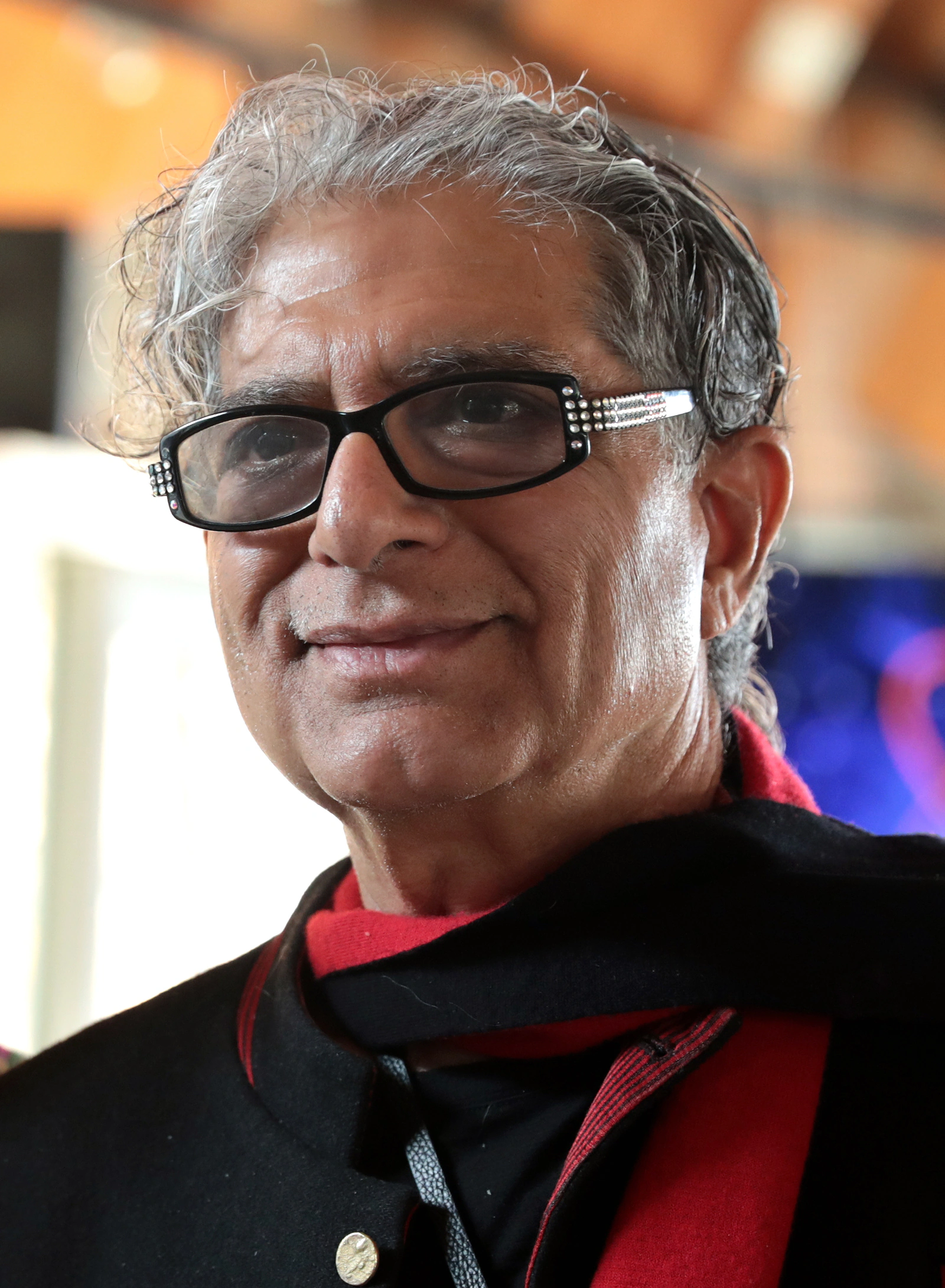
Attr: Gage Skidmore, CC BY-SA 3.0
| 17 Quotes | |
| Occup. | Philosopher |
| From | USA |
| Born | October 22, 1946 New Delhi, India |
| Age | 79 years |
| Cite | |
Citation Formats
APA Style (7th ed.)
Deepak chopra biography, facts and quotes. (2026, February 11). FixQuotes. https://fixquotes.com/authors/deepak-chopra/
Chicago Style
"Deepak Chopra biography, facts and quotes." FixQuotes. February 11, 2026. https://fixquotes.com/authors/deepak-chopra/.
MLA Style (9th ed.)
"Deepak Chopra biography, facts and quotes." FixQuotes, 11 Feb. 2026, https://fixquotes.com/authors/deepak-chopra/. Accessed 12 Feb. 2026.
Early Life and Background
Deepak Chopra was born on October 22, 1946, in New Delhi, India, into a family shaped by medicine and the aftershocks of a newly independent nation. His father served in the Indian Army as a cardiologist, and the household combined clinical discipline with the older Indian assumption that mind, body, and spirit are entangled. That early proximity to hospitals, uniforms, and the moral seriousness of public service formed his lifelong instinct to treat health as both a biological and existential problem.Chopra came of age in a period when India was negotiating modernity through science, bureaucracy, and the continuing authority of spiritual traditions. The city around him carried contrasts: Western-style institutions beside temples and neighborhood healers, state-building rhetoric beside private metaphysical hunger. That tension became a template for his inner life - a drive to translate between worlds and to find a vocabulary that could hold both the microscope and the mantra without dismissing either.
Education and Formative Influences
He studied medicine in India, earning an M.B.B.S. degree, and emigrated to the United States in 1970, joining the long wave of South Asian physicians reshaping American hospitals. He trained in internal medicine and later specialized in endocrinology, fields that put him close to the chemistry of stress, metabolism, and chronic disease. In the U.S., he encountered both the prestige and limits of late-20th-century biomedicine: powerful in acute care, often thin on meaning, prevention, and the lived experience of patients.Career, Major Works, and Turning Points
Chopra practiced and taught medicine, then pivoted toward integrative health after exploring Transcendental Meditation and Ayurvedic frameworks, eventually becoming affiliated with Maharishi Mahesh Yogi's organizations and later separating to chart his own course. His breakthrough came with bestsellers that brought mind-body claims into mass-market publishing, including "Quantum Healing" (1989) and "Ageless Body, Timeless Mind" (1993), followed by a prolific stream of books, lectures, and media appearances that made him one of the best-known spiritual-health entrepreneurs in America. He co-founded the Chopra Center for Wellbeing in Carlsbad, California, and positioned himself as an interpreter of Indian philosophy for Western self-optimization culture, while drawing sustained criticism from scientific skeptics for his use of "quantum" language and expansive claims.Philosophy, Style, and Themes
Chopra's philosophy centers on consciousness as primary and the body as a mutable expression of mind. He casts everyday life as a continuous experiment in attention, suggesting that cognition is not neutral description but biological action: "To think is to practice brain chemistry". The psychological implication is stark - one cannot hide behind "just thoughts" because thoughts are already interventions, rehearsing fear or freedom in the nervous system. His message tends to soothe by enlarging agency, insisting that identity is not exhausted by diagnosis, age, or social role.He writes in aphorisms that invite the reader to exchange fatalism for participation, often treating suffering as misidentification: "We are not victims of aging, sickness and death. These are part of scenery, not the seer, who is immune to any form of change". Yet he also frames modern anxiety as anticipatory conditioning, a loop of imagined judgment: "Our thinking and our behaviour are always in anticipation of a response. It is therefore fear-based". Psychologically, his work functions as a counter-script for people overtrained in performance and self-surveillance; spiritually, it revives Vedantic ideas of the witness self, recast in the idiom of wellness, longevity, and choice.
Legacy and Influence
Chopra's enduring influence lies less in any single clinical innovation than in how decisively he normalized mind-body spirituality within American popular culture, helping create the marketplace now called "wellness". He made Ayurveda, meditation, and consciousness talk legible to readers who might never open a scripture, and he gave countless people a language for the felt link between stress, meaning, and health - even as critics argue that his scientific framing blurs metaphor into claim. In the late-20th and early-21st centuries, his career became a case study in the era's central struggle: how modern societies, rich in data and poor in certainty, reach for narratives that promise wholeness, agency, and a self larger than its symptoms.Our collection contains 17 quotes written by Deepak, under the main topics: Love - Meaning of Life - Deep - Parenting - Health.
Deepak Chopra Famous Works
- 2000 How to Know God (Book)
- 1997 The Path to Love (Book)
- 1995 The Way of the Wizard (Book)
- 1995 The Return of Merlin (Novel)
- 1994 The Seven Spiritual Laws of Success (Book)
- 1989 Quantum Healing (Book)
Source / external links