
Delmore Schwartz Biography Quotes 6 Report mistakes
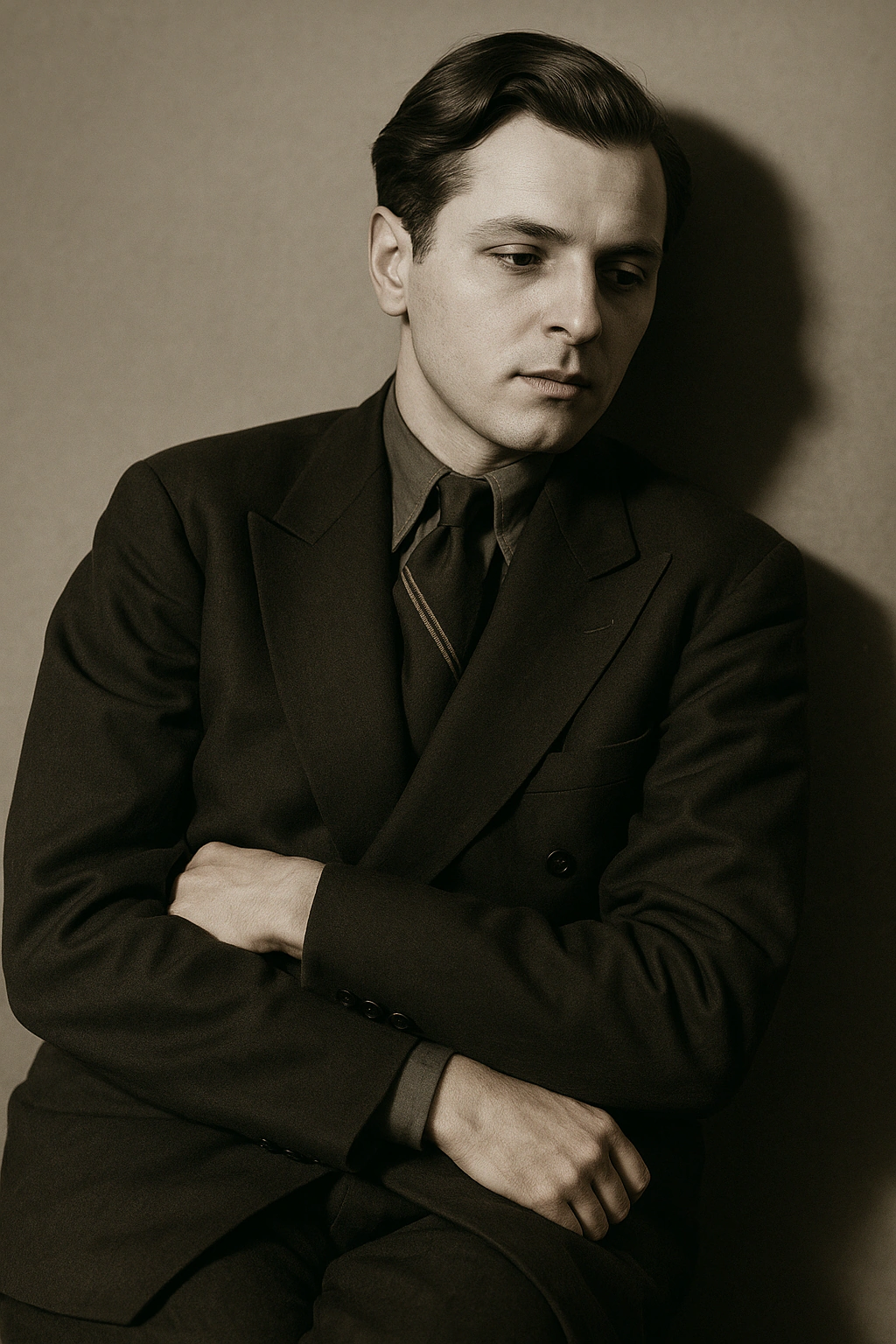
Attr: A Good Day to Die...?
| 6 Quotes | |
| Occup. | Poet |
| From | USA |
| Born | December 8, 1913 Brooklyn, New York, USA |
| Died | July 11, 1966 New York City, New York, USA |
| Aged | 52 years |
| Cite | |
Citation Formats
APA Style (7th ed.)
Delmore schwartz biography, facts and quotes. (2026, February 11). FixQuotes. https://fixquotes.com/authors/delmore-schwartz/
Chicago Style
"Delmore Schwartz biography, facts and quotes." FixQuotes. February 11, 2026. https://fixquotes.com/authors/delmore-schwartz/.
MLA Style (9th ed.)
"Delmore Schwartz biography, facts and quotes." FixQuotes, 11 Feb. 2026, https://fixquotes.com/authors/delmore-schwartz/. Accessed 18 Feb. 2026.
Early Life and Background
Delmore Schwartz was born on December 8, 1913, in Brooklyn, New York, to Romanian Jewish immigrants whose ambitions were sharpened by the citys speed and rivalry. His father, Harry Schwartz, built a prosperous business in real estate and textiles; his mother, Rose, prized cultivation and upward mobility. The familys early comfort placed the boy inside the classic American promise - and the pressures that come with it - at a moment when New York was becoming a capital of modern art, finance, and mass culture.That promise fractured in ways that later became the emotional engine of his writing. His parents bitter divorce and the slow disintegration of family wealth left Schwartz with a sense of dispossession that was both material and metaphysical. He watched adults turn love into litigation and memory into evidence, and he learned how quickly status could evaporate. The shock of that reversal, followed by his fathers death when Delmore was still young, intensified his preoccupation with time, inheritance, and the humiliations of dependency.
Education and Formative Influences
Schwartz moved through New Yorks intense intellectual corridors - including a period at Columbia University and then the University of Wisconsin - before gravitating to Harvard in the mid-1930s, where he studied philosophy and encountered a wider modernist canon. He absorbed T.S. Eliot, Joyce, and the logic of Freud, and he argued literature like a man trying to rescue order from chaos. Even early on, friends recalled his brilliance as inseparable from volatility: a mind that could quote, parody, and anatomize a scene in the same breath, always auditioning experience for its deeper meaning.Career, Major Works, and Turning Points
Schwartz became famous almost overnight with the 1937 short story "In Dreams Begin Responsibilities", published in Partisan Review and later as the title piece of his 1938 collection. The story - a son watching his parents courtship like a film he cannot stop - established his signature: urban Jewish family drama rendered with modernist compression and moral pain. He published poetry, criticism, and stories across the little-magazine world and became a magnetic presence in mid-century literary New York, later teaching and mentoring younger writers, notably at Syracuse University, where a young Lou Reed studied under him. But his career was repeatedly destabilized by alcoholism, paranoia, and mounting isolation; the postwar years brought acclaim and appointments, yet also a slow narrowing of his social and psychic world until his death on July 11, 1966, in New York City, largely alone.Philosophy, Style, and Themes
Schwartz wrote as if consciousness were a courtroom in which memory, desire, and accusation competed for the verdict. His style toggles between lyrical elevation and streetwise exactness, with a critics ear for cadence and a satirists eye for self-deception. The dramas are rarely external; they are arguments inside the self about what one owes to family, to art, to the past. Time, especially, is not a neutral backdrop but an active force that educates and punishes - “Time is the school in which we learn, time is the fire in which we burn”. That double sense of instruction and immolation fed his recurring themes: the child as witness, the adult as betrayed inheritor, the artist as both privileged and doomed. He believed the writers task was to pin down experience with final clarity - “Major writing is to say what has been seen, so that it need never be said again”. Yet the man who demanded such definitive seeing also feared unseen threats and betrayals, a psychological tension that flickers through his later life and work. In that light, his darkly humorous line “Even paranoids have real enemies”. reads less like a punchline than a confession of how vigilance can become identity, how intellect can serve both truth and torment.Legacy and Influence
Schwartz endures as a key bridge between high modernism and the confessional, city-haunted voice that followed: a writer who brought immigrant family life, philosophical ambition, and the psychic costs of American success into a single, pressured music. His best work remains a template for turning private history into public art without sentimental alibis, and his criticism helped set standards for seriousness in an age of ideological noise. As a teacher and legend - brilliant, wounded, prophetic, sometimes unbearable - he became part of the cautionary mythology of postwar letters, while his finest pages continue to reward readers with their moral daring: the insistence that the past can be faced, named, and transformed into form.Our collection contains 6 quotes written by Delmore, under the main topics: Witty One-Liners - Love - Writing - Free Will & Fate - Husband & Wife.
Other people related to Delmore: Saul Bellow (Novelist), Lou Reed (Musician), Karl Shapiro (Poet), James Laughlin (Poet), John Berryman (Poet), Alfred Kazin (Critic)
Frequently Asked Questions
- Delmore Schwartz Lou Reed: Lou Reed admired Schwartz as a mentor at Syracuse University and later referenced him in songs like “European Son” and “My House.”
- Delmore Schwartz In Dreams Begin Responsibilities: A landmark 1937 story/poem blending memory and family history; it became Schwartz’s signature work.
- Delmore Schwartz: books: Key books: In Dreams Begin Responsibilities (1937), The World Is a Wedding (1948), and Summer Knowledge: New and Selected Poems (1959).
- Delmore Schwartz best poems: Top poems include “In Dreams Begin Responsibilities,” “The Heavy Bear Who Goes With Me,” and “The Far Rockaway of My Youth.”
- How old was Delmore Schwartz? He became 52 years old
Delmore Schwartz Famous Works
- 1948 The World Is a Wedding (Poetry)
- 1947 In Dreams Begin Responsibilities and Other Stories (Collection)
- 1937 In Dreams Begin Responsibilities (Short Story)
Source / external links