
Deng Xiaoping Biography Quotes 11 Report mistakes
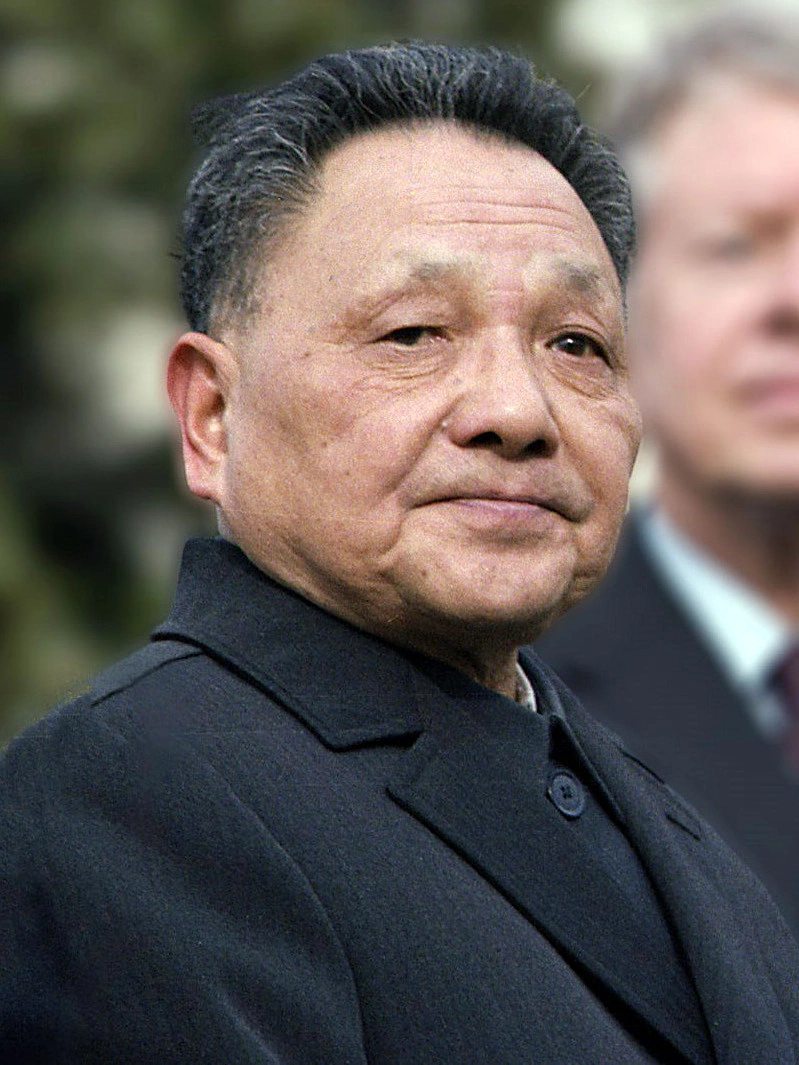
| 11 Quotes | |
| Occup. | Leader |
| From | China |
| Born | August 22, 1904 Guang'an, Sichuan, China |
| Died | February 19, 1997 Beijing, China |
| Aged | 92 years |
| Cite | |
Citation Formats
APA Style (7th ed.)
Deng xiaoping biography, facts and quotes. (2026, February 11). FixQuotes. https://fixquotes.com/authors/deng-xiaoping/
Chicago Style
"Deng Xiaoping biography, facts and quotes." FixQuotes. February 11, 2026. https://fixquotes.com/authors/deng-xiaoping/.
MLA Style (9th ed.)
"Deng Xiaoping biography, facts and quotes." FixQuotes, 11 Feb. 2026, https://fixquotes.com/authors/deng-xiaoping/. Accessed 5 Mar. 2026.
Early Life and Background
Deng Xiaoping was born Deng Xiansheng on 1904-08-22 in Paifang village, Guang'an County, Sichuan, in the last years of the Qing dynasty and the violent birth of the Republic. His family were relatively secure rural gentry, able to fund schooling but close enough to peasant life to understand the pressures of land, taxes, and local power. That dual vantage - disciplined aspiration paired with a hard sense of material limits - would later shape a leader more interested in outcomes than slogans.In the 1910s and early 1920s, China fractured among warlords and competing ideologies while new urban currents promised national salvation. Deng came of age amid that turbulence, absorbing the period's mix of humiliation and ambition: foreign encroachment, domestic fragmentation, and the urgent question of how a poor, overpopulated country could become strong. Even before his rise, the outline of his inner drive was visible - a small-statured, steel-willed organizer with a talent for survival, coalition, and patient timing.
Education and Formative Influences
In 1920 Deng joined the work-study movement to France, laboring in factories while encountering Marxism in expatriate circles; he also spent time in the Soviet Union at the Communist University of the Toilers of the East. In Europe he met future Communist elites, including Zhou Enlai, and learned the crafts of underground politics: secrecy, discipline, and reading power realistically. Those years did not make him a theorist so much as a technician of revolution, convinced that ideas only mattered if they could be translated into organization, production, and state capacity.Career, Major Works, and Turning Points
Returning to China, Deng rose through the Chinese Communist Party as a political commissar and administrator, helping build base areas and later serving as a key cadre during the Long March and the war years. After 1949 he became a central state manager, serving as vice premier and CCP general secretary, deeply involved in economic administration. Twice he was purged in the Cultural Revolution, especially after being denounced in 1966 and again in 1976 following the Tiananmen mourning for Zhou Enlai; each time he reemerged, valued for competence when the system needed repair. After Mao's death, Deng outmaneuvered rivals, helped topple the Gang of Four, and by 1978 became the paramount leader in practice, launching "reform and opening" through decollectivization, township and village enterprise growth, special economic zones like Shenzhen, and a cautious reintegration with the world - even as he authorized decisive coercion during the 1989 Tiananmen crackdown. In the early 1990s, his Southern Tour reignited market reforms and set the trajectory for rapid growth; he died in Beijing on 1997-02-19.Philosophy, Style, and Themes
Deng's governing psychology combined revolutionary legitimacy with a post-revolutionary impatience for results. He distrusted grand metaphysics after the disasters of utopian mobilization, insisting that policy be judged by performance rather than purity: “It doesn't matter if a cat is black or white, so long as it catches mice”. That pragmatic creed was not moral indifference but a ruler's response to scarcity - an inward conviction that political survival depended on raising living standards, rebuilding incentives, and restoring administrative normalcy. His preferred posture was strategic modesty, avoiding flamboyant personal rule while reshaping the system: “Keep a cool head and maintain a low profile. Never take the lead - but aim to do something big”. The signature tension in Deng's thought was his willingness to tolerate inequality as the price of momentum. “Let some people get rich first”. captured his belief that growth could be seeded through differential rewards, then expanded through wider opportunity and state-guided development. This was paired with a hard boundary: the party would not surrender political monopoly. The result was a durable, controversial synthesis - market mechanisms under one-party discipline - justified by the claim that modernization was itself a revolutionary task and that stability was the precondition for any long-term national project.Legacy and Influence
Deng left a transformed China: a country redirected from class struggle toward growth, experimentation, and global integration, with institutions - term limits and collective leadership norms in his era, a professionalizing bureaucracy, and a development-first political contract - designed to prevent a return to personalized catastrophe. His reforms enabled hundreds of millions to escape poverty and made China a central actor in world trade, while also entrenching a model in which economic liberalization did not entail political pluralism. Admired as the architect of modern China's rise and condemned for the costs of repression and inequality, Deng's enduring influence lies in the governing template he normalized: pragmatic policy testing, controlled opening, and the conviction that national strength is built less by rhetoric than by sustained, measurable capacity.Our collection contains 11 quotes written by Deng, under the main topics: Truth - Leadership - Change - Student - Chinese Proverbs.
Other people related to Deng: Li Peng (Public Servant), Cyrus Vance (Statesman), Leonard Woodcock (Activist), Brent Scowcroft (Public Servant), Hu Jintao (Statesman)
Deng Xiaoping Famous Works
- 1978 Emancipate the Mind (Essay)