
Denis Thatcher Biography Quotes 8 Report mistakes
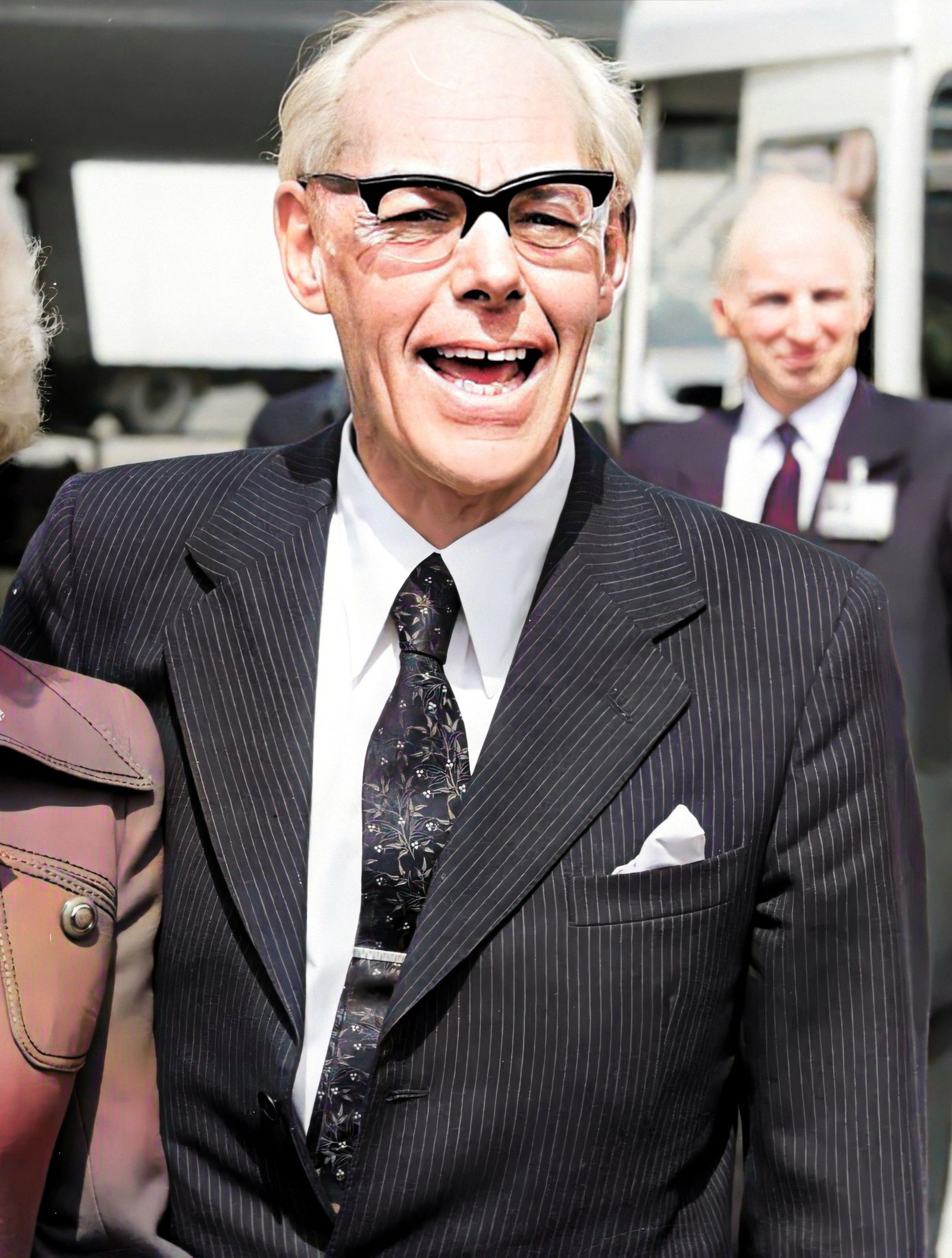
| 8 Quotes | |
| Occup. | Businessman |
| From | United Kingdom |
| Born | May 10, 1915 London, England |
| Died | June 26, 2003 London, England |
| Aged | 88 years |
| Cite | |
Citation Formats
APA Style (7th ed.)
Denis thatcher biography, facts and quotes. (2026, February 11). FixQuotes. https://fixquotes.com/authors/denis-thatcher/
Chicago Style
"Denis Thatcher biography, facts and quotes." FixQuotes. February 11, 2026. https://fixquotes.com/authors/denis-thatcher/.
MLA Style (9th ed.)
"Denis Thatcher biography, facts and quotes." FixQuotes, 11 Feb. 2026, https://fixquotes.com/authors/denis-thatcher/. Accessed 28 Mar. 2026.
Early Life and Background
Denis Margaret Thatcher, nee Denis Thatcher, was born on May 10, 1915, in London, England, into the self-improving, trade-rooted world of interwar Britain. His father ran a small business, and Denis grew up with the assumptions of a lower-middle-class culture that prized steadiness, privacy, and competence over display. This social formation mattered: he would later become the most famous political spouse in modern British history while insisting on remaining, essentially, a private citizen.His youth was framed by the anxieties of the 1920s and 1930s and then decisively shaped by the Second World War, which re-sorted class, duty, and national confidence. The Britain he came of age in was a country moving from imperial certainty toward rationing, reconstruction, and the managerial state. In that shift, Denis developed a character that distrusted theatrics and valued the unglamorous mechanics of keeping institutions - businesses, households, and, indirectly, governments - running.
Education and Formative Influences
Thatcher was educated in London and trained for commerce rather than the professions, absorbing the practical disciplines of accounting, contracts, and industrial routine. The formative influence of his generation was wartime service: he served in the British Army during World War II and reached the rank of major, an experience that reinforced his preference for hierarchy without fuss and for humor as a solvent for strain. The war also made him, like many contemporaries, skeptical of ideological purity and attentive to logistics, morale, and the human costs behind public decisions.Career, Major Works, and Turning Points
After the war Thatcher built his career in business, most notably with Atlas Preservatives, a paint and chemicals firm that operated inside the restrained, regulated economy of postwar Britain and then through the freer, more competitive landscape that emerged later. His pivotal life turning point was personal rather than corporate: in 1951 he married Margaret Roberts, a rising Conservative figure, and their partnership became the axis around which his public significance turned. When she became Prime Minister in 1979, he effectively invented - by refusal as much as by performance - a new British role: the political spouse as behind-the-scenes stabilizer, fundraiser, and shield against an increasingly intrusive press culture.Philosophy, Style, and Themes
Denis Thatcher's public philosophy was communicated through understatement, tactical silence, and a private loyalty that could be steely. He believed that politics was consuming and that a leader needed protected space in which to think and recover, so he cultivated a domestic perimeter: a life of routines, dinners, travel, and a small circle of trusted friends. Asked what the marriage meant to him, he reduced a world-historic partnership to its human essentials: “What it meant to me: a happy life, of course, companionship, of course. A common objective, I think”. The sentence is revealing in its psychology - affection framed as practicality, intimacy expressed as joint work.His style relied on self-deprecation and the comic deflation of grandeur, which doubled as a defense mechanism against becoming an appendage of power. Even his jokes point to an internal rule: never appear hungry for attention. His wry anxiety about being out of his depth in a national crisis - “I wasn't absolutely too sure where the Falklands was, and I didn't want to make a bloody fool of myself”. - signals a temperament wary of performative certainty. Likewise, his awareness of press optics around alcohol - “And certainly don't get caught by the press having too much to drink, you now, that sort of thing”. - shows a man who understood that modern politics punishes the ordinary human release that older political cultures tolerated. Beneath the quips was a consistent ethic: protect the mission, protect the person doing it, and do not hand opponents an easy story.
Legacy and Influence
Denis Thatcher died on June 26, 2003, in London, having outlived the premiership that made him a household name and having largely succeeded on his own terms: to be consequential without being consumed by fame. His legacy rests less in boardroom achievements than in the template he set for political partnership - a spouse who provided ballast, privacy, and blunt counsel while refusing to compete with the elected figure. In an era when politics became ever more intimate and televised, Denis Thatcher represented an older British virtue: discretion as strength, humor as armor, and loyalty as a form of work.Our collection contains 8 quotes written by Denis, under the main topics: Witty One-Liners - Sarcastic - Marriage - Decision-Making - Betrayal.
Source / external links