
Denis Waitley Biography Quotes 54 Report mistakes
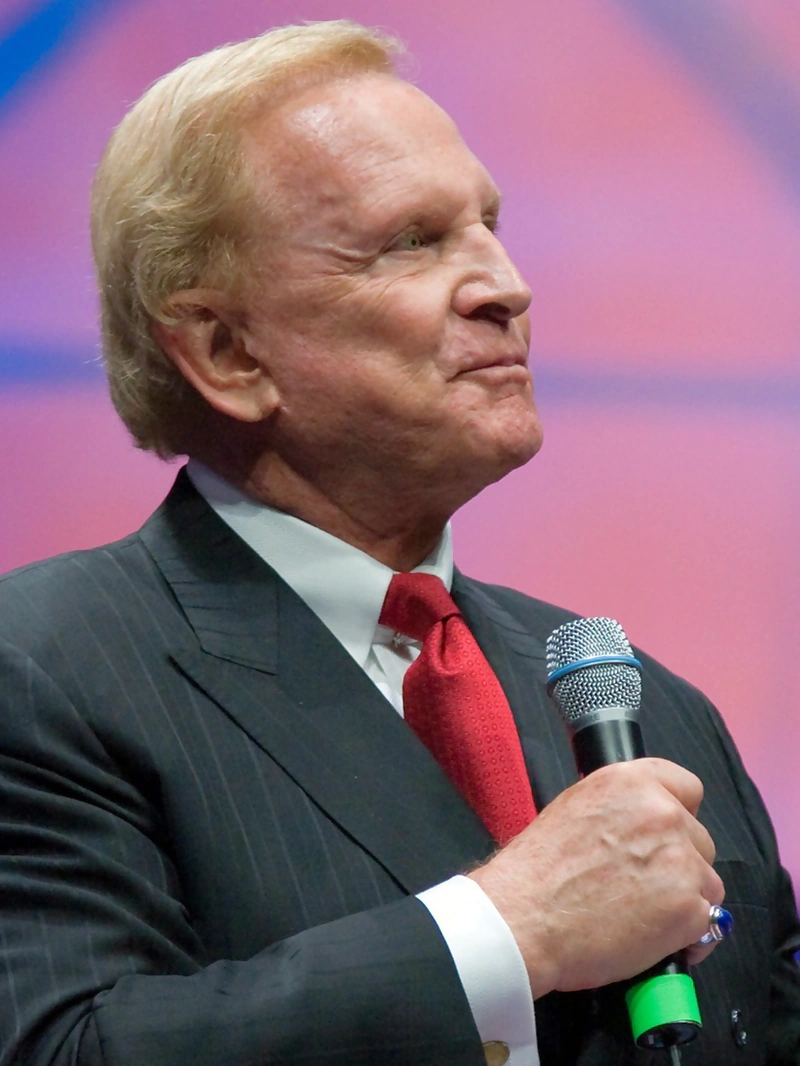
Attr: Listal
| 54 Quotes | |
| Occup. | Writer |
| From | USA |
| Born | May 28, 1933 San Diego, California, United States |
| Age | 92 years |
| Cite | |
Citation Formats
APA Style (7th ed.)
Denis waitley biography, facts and quotes. (2026, February 11). FixQuotes. https://fixquotes.com/authors/denis-waitley/
Chicago Style
"Denis Waitley biography, facts and quotes." FixQuotes. February 11, 2026. https://fixquotes.com/authors/denis-waitley/.
MLA Style (9th ed.)
"Denis Waitley biography, facts and quotes." FixQuotes, 11 Feb. 2026, https://fixquotes.com/authors/denis-waitley/. Accessed 31 Mar. 2026.
Early Life and Background
Denis E. Waitley was born on May 28, 1933, in the United States, coming of age in the long shadow of the Great Depression and World War II, when thrift, duty, and civic optimism were national habits rather than slogans. That backdrop mattered: his later insistence on earned self-respect and disciplined hope reads like a postwar creed sharpened into personal practice - a way of translating collective recovery into individual agency.He was drawn early to the mechanics of performance - why some people rose to pressure while others folded - and to the moral question beneath it: what kind of person deserves success. Even before he became a public voice in motivation and leadership, his work carried a characteristic American tension between self-making and social responsibility, a belief that excellence is real but never a license for contempt.
Education and Formative Influences
Waitley pursued a path that joined leadership training with a psychologist's curiosity about habit, belief, and behavior, and he was shaped by mid-20th century currents that prized measurable improvement: military readiness, aerospace-era systems thinking, and the rising human-potential movement. In an age infatuated with expertise, he learned to speak in frameworks and drills rather than reveries - translating inner life into repeatable practice while keeping a moral vocabulary of character, gratitude, and service close at hand.Career, Major Works, and Turning Points
He became widely known as a writer and speaker in the American self-development boom of the 1970s and 1980s, when cassette programs, corporate seminars, and best-selling paperbacks created a national classroom for ambition. His signature work, The Psychology of Winning (1978), made his name by arguing that winning is less a trophy than a trained identity - a set of images, self-talk patterns, and daily behaviors that can be learned and sustained. Over time he expanded into leadership and personal responsibility themes, writing additional books and developing coaching-style materials aimed at executives, athletes, and everyday strivers, positioning himself as a practical ethicist of performance rather than a mere cheerleader for success.Philosophy, Style, and Themes
Waitley's core philosophy is that behavior follows belief, and belief can be coached into sturdier forms. His prose and talk are engineered for application: short declarative sentences, memorable contrasts, and a steady insistence on practice. He treats effort as an ethical choice as much as a tactical one, encapsulated by his claim, “The results you achieve will be in direct proportion to the effort you apply”. Psychologically, this is not simple bootstrap mythology; it is an anti-helplessness strategy, a way to relocate the self from victimhood to agency by insisting that what you can control is enough to begin.Yet his work is equally a warning against paralysis disguised as prudence. He frames risk as the admission price of a meaningful life, writing, “Life is inherently risky. There is only one big risk you should avoid at all costs, and that is the risk of doing nothing”. The line reveals his inner preoccupation: stagnation as a spiritual failure. For Waitley, procrastination is not laziness so much as fear wearing a reasonable face, and courage is the daily refusal to let imagined outcomes veto real action. At the same time, he rejects elitism and entitlement with a moral boundary: “You must be worthy of the best, but not more worthy than the rest”. That sentence points to the conscience inside his achievement ethic - an insistence that excellence should deepen humility, not inflate superiority.
Legacy and Influence
Waitley helped define the language of late-20th century American motivation: performance psychology made accessible, ambition tethered to character, and success described as trainable rather than fated. The Psychology of Winning remained a long-running staple in personal development circles, and his broader body of writing reinforced a cultural shift toward intentional living - goal-setting, self-talk, visualization, and responsibility as everyday tools. His enduring influence lies in how he fused aspiration with restraint, urging people to strive hard without turning achievement into a moral ranking of human worth.Our collection contains 54 quotes written by Denis, under the main topics: Motivational - Wisdom - Life - Learning - Meaning of Life.
Denis Waitley Famous Works
- 1979 The Psychology of Winning (Book)