
Dennis Banks Biography Quotes 18 Report mistakes
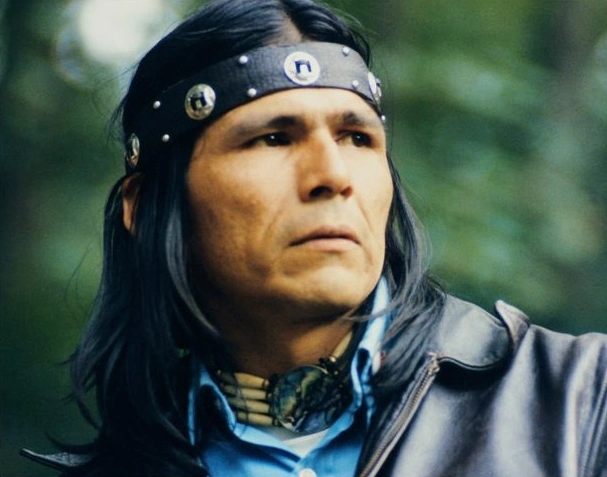
| 18 Quotes | |
| Known as | Nowa Cumig |
| Occup. | Educator |
| From | USA |
| Born | April 12, 1937 Minnesota |
| Age | 88 years |
| Cite | |
Citation Formats
APA Style (7th ed.)
Dennis banks biography, facts and quotes. (2026, February 11). FixQuotes. https://fixquotes.com/authors/dennis-banks/
Chicago Style
"Dennis Banks biography, facts and quotes." FixQuotes. February 11, 2026. https://fixquotes.com/authors/dennis-banks/.
MLA Style (9th ed.)
"Dennis Banks biography, facts and quotes." FixQuotes, 11 Feb. 2026, https://fixquotes.com/authors/dennis-banks/. Accessed 24 Mar. 2026.
Early Life and Background
Dennis James Banks was born on April 12, 1937, in northern Minnesota, an Ojibwe (Anishinaabe) child shaped early by dislocation and the hard arithmetic of U.S. Indian policy. He spent formative years in federal boarding schools, including at Pipestone, where the daily regimen of discipline, English-only rules, and isolation from family pressed Native identity into something to be hidden or fought for. That experience left him with a lifelong sensitivity to how institutions train young people not only to read and write, but to doubt their own worth.As a young man he cycled through marginal jobs and the criminal justice system, a trajectory he later reframed as a symptom of a larger social design rather than private failure. In prison he encountered sustained reading, political discussion, and a new idea of responsibility - not as obedience, but as repair. That personal pivot mattered because Banks would become known publicly as an activist, yet he consistently treated activism as education: a way of teaching communities, courts, and the press to see what had been made invisible.
Education and Formative Influences
Banks did not emerge from elite universities; his education was assembled from boarding-school survival, street-level experience, prison study, and the oral and ceremonial teachings of Anishinaabe elders. The mid-1960s climate - civil rights organizing, antiwar protest, and the rise of Red Power - gave him a political vocabulary, but Native tradition gave him a moral one. The blend produced a teacher-organizer who could speak to journalists and senators while insisting that spiritual obligation, not ideology, was the deepest curriculum.Career, Major Works, and Turning Points
In 1968, in Minneapolis, Banks co-founded the American Indian Movement (AIM) with Clyde Bellecourt, George Mitchell, and others, initially to monitor police harassment and defend Native people in the city. AIM quickly became national: the 1969-71 occupation of Alcatraz helped ignite the era; in 1972 Banks helped lead the Trail of Broken Treaties caravan to Washington, D.C., and the occupation of the Bureau of Indian Affairs; and in 1973 he was a principal figure in the Wounded Knee occupation at Pine Ridge, a confrontation that crystallized both the movement's appeal and the state's resolve to prosecute. The following years brought trials, factional violence around Pine Ridge, and legal jeopardy - including a later conviction related to the 1976 "Custer" courthouse disturbance in South Dakota and periods of going underground. As the 1980s and 1990s unfolded, Banks increasingly turned outward from crisis politics toward long-distance spiritual runs and youth-oriented programs, carrying an educator's intent into public ritual and international solidarity.Philosophy, Style, and Themes
Banks' inner life was driven by a stubborn, almost pedagogical hope that wounded communities could relearn dignity. He argued that poverty was not only economic but spiritual, and that a person grounded in ceremony could refuse the shame that poverty tries to install: “When you have a spiritual foundation, you look at poverty differently then”. This was not escapism. It was a theory of resilience, a way to teach people - including non-Natives - that suffering can be named without becoming destiny.His style mixed direct action with symbolic instruction. The runs he helped organize were mobile classrooms, making the body itself a message about responsibility to land and future generations: “Even the people who come our way look upon us in amazement, that we run only for the healing of Mother Earth”. Banks framed spirituality as a practical compass rather than a private feeling - a seedbed for moral choice and collective direction: “Most importantly, the meaning of spirituality lays the seeds for our destiny and the path we must follow”. Psychologically, those formulations reveal a man who sought order after institutional chaos, turning endurance into a language of care, and turning protest into a ceremony that could hold grief without surrendering to it.
Legacy and Influence
Banks remains a defining figure of late-20th-century Indigenous self-determination, emblematic of the era when Native people forced treaty rights, police violence, and sovereignty onto the national agenda. His legacy is contested in the way consequential lives often are - shaped by movement infighting, intense state surveillance, and the costs of confrontation - yet his enduring influence lies in the educational model he embodied: activism as a form of public teaching, spirituality as civic ethics, and youth empowerment as the long game of sovereignty. Through AIM's imprint and the later healing runs that carried Indigenous messages across borders, he helped widen the vocabulary of American democracy to include Native nationhood, responsibility to land, and the right to be heard on one's own terms.Our collection contains 18 quotes written by Dennis, under the main topics: Faith - Training & Practice - Gratitude - Father - Native American Sayings.
Source / external links