
Dennis Conner Biography Quotes 9 Report mistakes
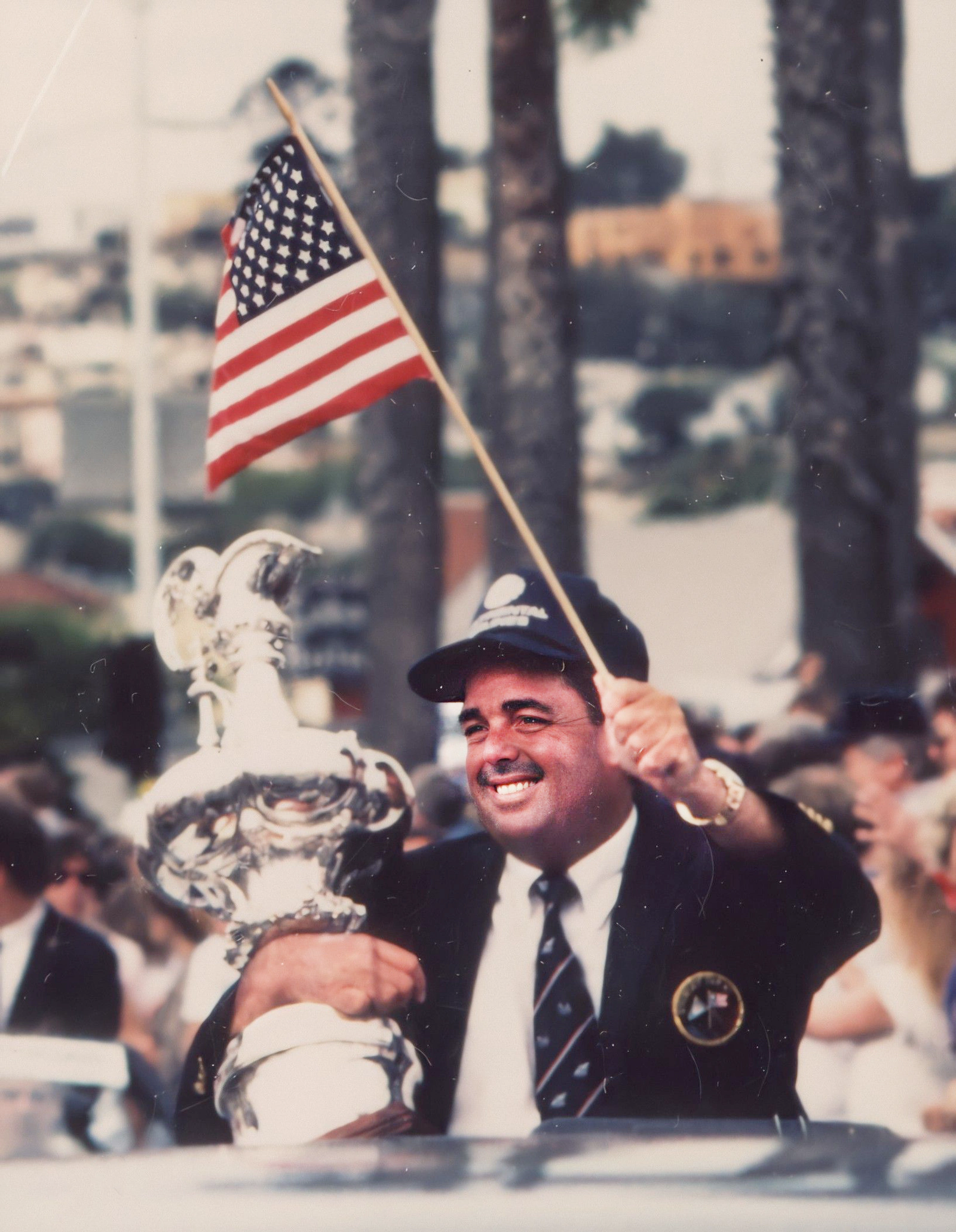
| 9 Quotes | |
| Occup. | Athlete |
| From | USA |
| Born | September 16, 1942 San Diego, California, USA |
| Age | 83 years |
| Cite | |
Citation Formats
APA Style (7th ed.)
Dennis conner biography, facts and quotes. (2026, February 11). FixQuotes. https://fixquotes.com/authors/dennis-conner/
Chicago Style
"Dennis Conner biography, facts and quotes." FixQuotes. February 11, 2026. https://fixquotes.com/authors/dennis-conner/.
MLA Style (9th ed.)
"Dennis Conner biography, facts and quotes." FixQuotes, 11 Feb. 2026, https://fixquotes.com/authors/dennis-conner/. Accessed 26 Mar. 2026.
Early Life and Background
Dennis Conner was born on September 16, 1942, in San Diego, California, a Navy town where the boundary between waterfront work, military discipline, and weekend sport often blurred. He grew up in a postwar America that treated technology as destiny and competition as character-building, and he absorbed both assumptions early. The Pacific, always present in San Diego, offered a visible measure of competence: weather could not be argued with, only read.From the beginning, Conner seemed drawn less to the romance of boats than to the hard arithmetic of making them go faster. Friends and rivals would later describe an edge - a need to test himself publicly and repeatedly - that fit the era's rising professionalization of sport. In Southern California's sailing culture, where amateur tradition still dominated, he was already oriented toward results, systems, and the cold calm required when wind shifts rewrite plans.
Education and Formative Influences
Conner studied at the University of California, San Diego, where he sailed competitively and refined a style built on relentless practice and granular analysis of conditions. UCSD's proximity to serious racing and oceanography helped normalize a scientific approach to performance: tuning, sail shape, and crew choreography were not mystical arts but variables to be managed. Mentors and top crews around San Diego also exposed him to the social architecture of elite yachting - sponsors, yacht clubs, and the quiet politics behind which boats get built and which skippers get backed.Career, Major Works, and Turning Points
Conner rose to prominence through Olympic-class and big-boat racing before becoming synonymous with the America's Cup, first winning as skipper of Courageous in 1974 and repeating with Freedom in 1980, both for the New York Yacht Club. His defining turning point came in 1983, when Australia II and skipper John Bertrand ended the NYYC's 132-year winning streak - a loss that made Conner, in American eyes, the face of a national upset. He rebuilt from that defeat with an intensity that changed the tone of Cup preparation, organizing Team America with year-round training, fitness, and corporate sponsorship, and in 1987 he won the Cup back in Fremantle, Australia aboard Stars & Stripes. Later campaigns were marked by the accelerating arms race of design and budgets; he won the controversial 1988 "big boat vs. catamaran" match and continued in subsequent Cups through the 1990s, emblematic of the sport's transition from gentlemanly challenge to highly engineered professional spectacle.Philosophy, Style, and Themes
Conner's inner life, as suggested by his public statements and career choices, circles around control in an environment that resists it. He framed the sea as an adversary that must be understood rather than romanticized: “The sea is a mysterious and powerful force, and those who venture out onto it must respect its unpredictable nature”. That respect was not passive; it was a prompt to prepare harder than rivals, to turn uncertainty into repeatable procedures. His training culture - fitness, drills, and a near-obsessive attention to tuning and starts - reads like a personality that found reassurance in rigor, especially after the 1983 loss made failure a public identity.He also treated top-level sailing as applied strategy, not leisure, which shaped both his on-water style and his impatience with complacency. “Sailing is a sport that requires not only physical strength, but mental agility and strategic thinking as well”. In Conner's best years, the boat was an extension of a tactical mind: pressure management on the course, time-distance calculations at the line, and a willingness to force opponents into bad air even at personal risk. Yet he never pretended the Cup was a solitary drama. “Winning the America's Cup is the ultimate goal in sailing, and it takes a combination of skill, teamwork, and determination to achieve it”. That sentence doubles as confession: he needed a crew and shore team disciplined enough to match his drive, and he built organizations that could carry the weight of his ambition.
Legacy and Influence
Dennis Conner's enduring influence lies in how he helped remake the America's Cup skipper into a modern high-performance leader - part athlete, part manager, part technologist, part psychologist. To admirers, he is the template for professional preparation and competitive resilience, the man who turned humiliation into a program and a program into a comeback. To critics, he symbolizes the Cup's drift toward money, machinery, and corporate messaging. Either way, his career tracks the late 20th century's larger story: sport becoming industry, instinct becoming data, and tradition surviving only by evolving.Our collection contains 9 quotes written by Dennis, under the main topics: Sports - Teamwork - Self-Improvement - Fear - Ocean & Sea.
Other people related to Dennis: Ben Lexcen (Celebrity)
Source / external links