
Devon Aoki Biography Quotes 7 Report mistakes
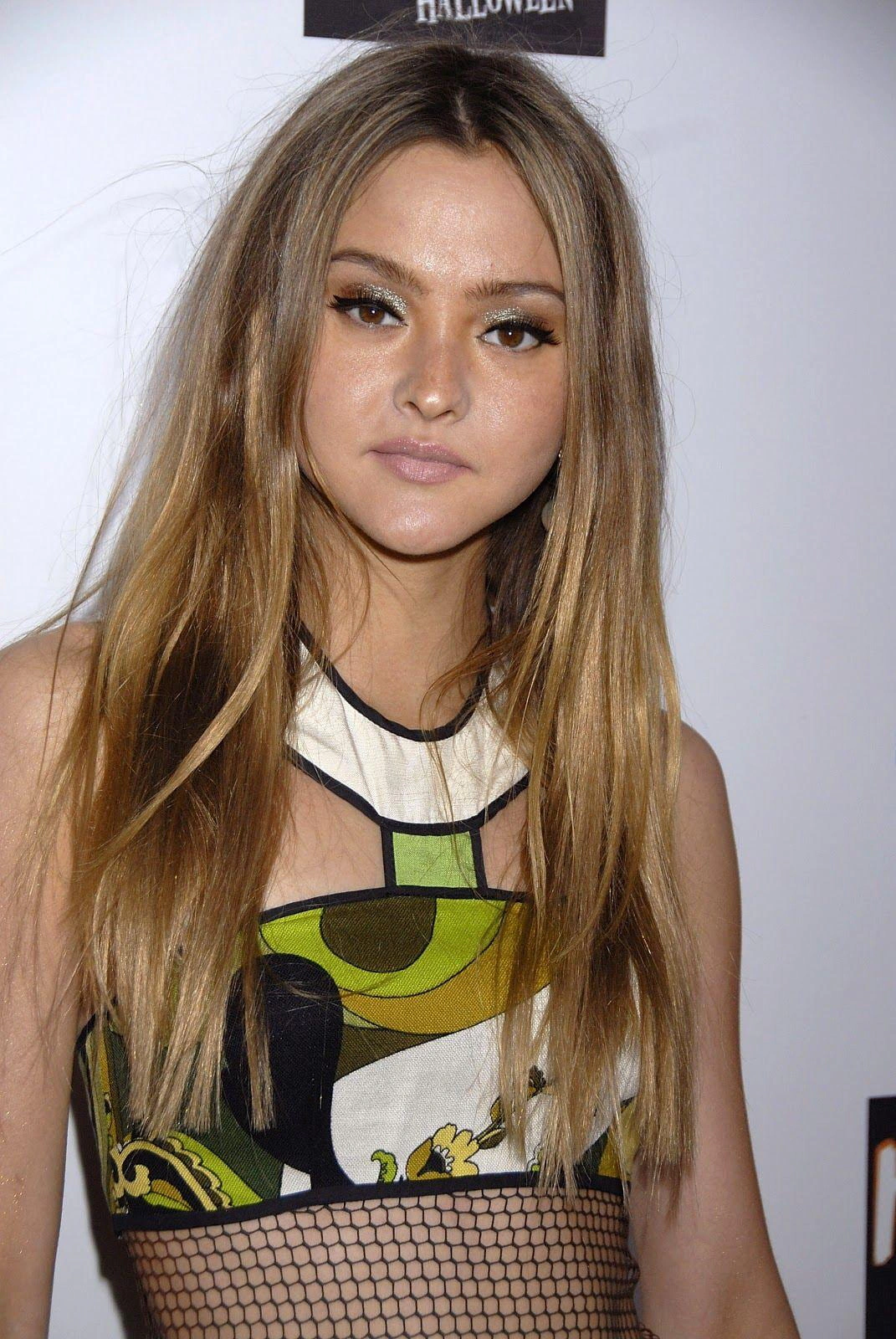
| 7 Quotes | |
| Born as | Devon Edwenna Aoki |
| Occup. | Model |
| From | USA |
| Spouse | James Bailey (2015) |
| Born | August 10, 1982 New York City, New York, USA |
| Age | 43 years |
| Cite | |
Citation Formats
APA Style (7th ed.)
Devon aoki biography, facts and quotes. (2026, March 18). FixQuotes. https://fixquotes.com/authors/devon-aoki/
Chicago Style
"Devon Aoki biography, facts and quotes." FixQuotes. March 18, 2026. https://fixquotes.com/authors/devon-aoki/.
MLA Style (9th ed.)
"Devon Aoki biography, facts and quotes." FixQuotes, 18 Mar. 2026, https://fixquotes.com/authors/devon-aoki/. Accessed 5 Apr. 2026.
Early Life and Background
Devon Edwenna Aoki was born on August 10, 1982, in New York City into a family where glamour, commerce, and cross-cultural identity were already entangled. She was the daughter of Hiroaki "Rocky" Aoki, the flamboyant Japanese American founder of the Benihana restaurant empire and a former Olympic wrestler, and Pamela Hilburger, a jewelry designer of German and English ancestry. Her family history gave her a complicated inheritance: Japanese and European roots, wealth and instability, celebrity and scrutiny. She was also the half-sister of Steve Aoki, who would later become a globally known musician. From the beginning, her life unfolded inside overlapping worlds - immigrant ambition, downtown style, and upper-tier privilege - yet none of these fully settled the question of where she fit.
That ambiguity became central to her image and to her inner life. Aoki's slight height by runway standards, unconventional proportions, and mixed-race features set her apart in an industry that still favored a narrow, often aggressively uniform ideal in the 1990s. She spent significant years in London as well as in the United States, growing up with a transatlantic sensibility that sharpened her awareness of performance, belonging, and difference. What made her memorable later as a model was present early: an alert, self-possessed face that could read as innocent, aloof, futuristic, or faintly rebellious depending on the styling. She emerged from a family accustomed to spectacle, but her own persona would be quieter - more enigmatic than flamboyant, more watchful than confessional.
Education and Formative Influences
Aoki was educated across elite and cosmopolitan settings, including years spent in London, and her formation came less from formal academic notoriety than from immersion in visual culture. She entered modeling as a teenager after being noticed by industry figures connected to the late-1990s fashion vanguard, a moment when editorial taste was shifting away from the Amazonian supermodel toward more eclectic, youth-coded, sometimes deliberately "off" beauty. London and New York both mattered: London gave her a feel for street style, club culture, and British fashion's appetite for subversion, while New York offered the commercial and editorial machinery that could transform unusual presence into iconography. Designers and image-makers of the era were looking for faces that suggested global hybridity, and Aoki's look - delicate, sharp, and unmistakably nonstandard - arrived at exactly the historical moment when difference could become market force.
Career, Major Works, and Turning Points
Aoki's ascent was swift. Still in her teens, she replaced Naomi Campbell as the face of Versace, a symbolic passing of visibility from one era-defining outsider to another. She walked for Chanel, Fendi, Yves Saint Laurent, Christian Dior, and Jean Paul Gaultier, and appeared in campaigns and editorials that made her one of fashion's defining faces around the turn of the millennium. She became especially associated with the industry's move toward ethnically diverse, gamine, highly stylized models who could carry both luxury and edge. Her film career extended that image into popular culture: she appeared in 2 Fast 2 Furious, Sin City, DOA: Dead or Alive, and War, often cast less as a naturalist actress than as a sleek, high-impact visual presence. By the late 2000s she stepped back from constant public work, married financier James Bailey, and turned toward family life, making her career feel unusually compressed - a brief but potent reign that crystallized a fashion transition.
Philosophy, Style, and Themes
Aoki's public remarks reveal a person acutely aware of how the fashion gaze manufactures strangeness, then monetizes it. “I'm really not that weird. I'm a combination of a lot of different things. Maybe it's just easier to make me look weird than another model who is specifically Caucasian!” That sentence is more than self-defense; it is a concise diagnosis of how race and styling interact in image culture. She understood that her face could be coded as exotic, futuristic, or alien not because it was inherently so, but because fashion needed visual departures from whiteness to signify novelty. At the same time, she was never simply a victim of projection. “I think it's important that there is a change, especially in fashion. I'm pleased to be part of a 'new breed' of models who perhaps don't exactly fit the status quo”. The phrase "new breed" captures both the industry's appetite for reinvention and her own tactical embrace of being a threshold figure.
Her style combined fragility and force. She was often photographed as a porcelain rebel - tiny, composed, and almost doll-like, yet carrying a stare that resisted passivity. That tension mirrored her comments about beauty and self-scrutiny. “Everyone has their own insecurities, regardless of how you look or how people perceive you, but sometimes people give their insecurities too much power. Defining beauty is simply a matter of opinion. For me, real beauty has very little to do with the structure of someone's face or body”. The statement suggests a psychology shaped by objectification but not wholly governed by it. Aoki's appeal lay partly in this contradiction: she became an emblem of surface while speaking, however briefly, against surface as destiny. Even her transition into film preserved that quality - she was less interested in confessional celebrity than in controlled transformation, in becoming image without surrendering all privacy.
Legacy and Influence
Devon Aoki's legacy far exceeds the length of her peak career. She helped normalize a broader idea of high-fashion beauty at a time when diversity was still often treated as exception rather than principle. For later generations of Asian, mixed-race, and otherwise nonconforming models, her success offered proof that editorial and luxury fashion could be reshaped by faces outside the old template. She also belongs to a specific historical turn in late-1990s and early-2000s style, when fashion sought youth, globalism, and visual singularity after the supermodel era's monumental polish. Her image remains durable because it condensed several cultural shifts at once: the rise of multicultural branding, the fetish and promise of "difference", and the possibility that a model could be both intensely stylized and quietly self-aware. In that sense, Aoki was not only a famous face of her moment but one of the figures who changed what that moment could see.
Our collection contains 7 quotes written by Devon, under the main topics: Learning - Equality - Embrace Change - Confidence - Self-Love.
Source / external links