
DeWitt Clinton Biography Quotes 5 Report mistakes
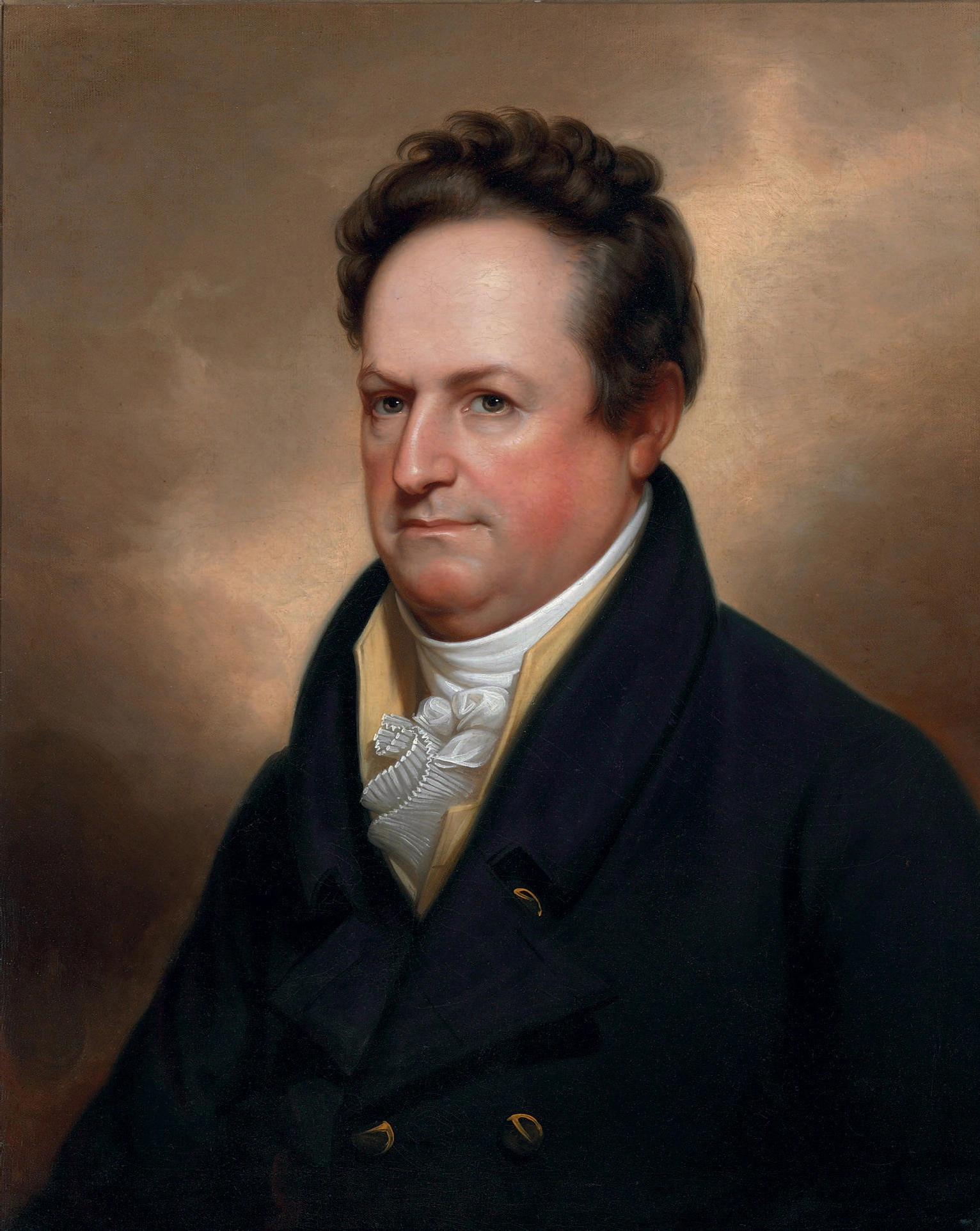
| 5 Quotes | |
| Occup. | Politician |
| From | USA |
| Born | March 2, 1769 Little Britain, Province of New York |
| Died | February 11, 1828 Albany, New York |
| Cause | Natural causes |
| Aged | 58 years |
| Cite | |
Citation Formats
APA Style (7th ed.)
Dewitt clinton biography, facts and quotes. (2026, February 14). FixQuotes. https://fixquotes.com/authors/dewitt-clinton/
Chicago Style
"DeWitt Clinton biography, facts and quotes." FixQuotes. February 14, 2026. https://fixquotes.com/authors/dewitt-clinton/.
MLA Style (9th ed.)
"DeWitt Clinton biography, facts and quotes." FixQuotes, 14 Feb. 2026, https://fixquotes.com/authors/dewitt-clinton/. Accessed 5 Mar. 2026.
Early Life and Background
DeWitt Clinton was born on March 2, 1769, in Little Britain, Orange County, New York, into a family already wired into the revolutionary generation. His father, James Clinton, became a Continental Army brigadier general; his mother, Mary DeWitt, linked him to the old Hudson Valley Dutch networks that shaped New York politics as much as ideology did. The most decisive family presence, however, was his uncle George Clinton - wartime governor, Anti-Federalist stalwart, and later vice president - whose rise made public service feel less like a calling than an inheritance to be earned.
Clinton came of age as New York City and the Hudson corridor were transforming from colonial entrepot to commercial hinge of a new republic. The state was a battleground between competing visions: mercantile Federalism centered in the city, and agrarian-leaning republicanism rooted in the interior. This was also the age of patronage, newspapers as political weapons, and public works as the most tangible proof of governance. Clinton absorbed the lesson that power in New York meant mastering institutions - the council, the courts, the legislature - and, increasingly, the city itself.
Education and Formative Influences
He studied at King's College (renamed Columbia), graduating in 1786, and trained in law, but his real education unfolded as a secretary and aide within the Clinton political machine. Enlightenment habits of classification and improvement fed his interest in science, botany, and civic associations, while the practical art of coalition-building taught him how ideals survived only when soldered to votes and appointments. The early republic rewarded men who could speak the language of virtue while counting the arithmetic of factions; Clinton learned to do both, and to treat information - surveys, maps, statistics, committee reports - as a form of leverage.
Career, Major Works, and Turning Points
Clinton built a career through New York City governance and state politics: U.S. senator (1802-1803), mayor of New York City in multiple terms (1803-1807, 1808-1810, 1811-1815), and governor of New York (1817-1822, 1825-1828). His central work was not a book but a system: the Erie Canal, authorized under his governorship and opened in 1825, linking the Hudson River to Lake Erie and reorienting the continent's trade through New York. The canal began as a ridiculed ambition - "Clinton's Ditch" - yet it was also a turning point in American statecraft, proving that a state could marshal finance, engineering, and administration at scale. Defeat also shaped him: after running for president in 1812 as a dissident Republican with Federalist support and losing to James Madison, he returned to New York politics hardened, more transactional, and more determined to anchor his legitimacy in visible achievement. He died in office on February 11, 1828, in Albany, with the canal already remaking the state he had gambled his reputation upon.
Philosophy, Style, and Themes
Clinton's politics fused moral improvement with infrastructural realism. He believed governments should elevate citizens, but he measured elevation in libraries, schools, streets, and waterways rather than sermons. In his mind, knowledge was the true currency of republican durability: “Pleasure is a shadow, wealth is vanity, and power a pageant; but knowledge is ecstatic in enjoyment, perennial in frame, unlimited in space and indefinite in duration”. That sentence captures his inner life - a temperament inclined to calculation, record-keeping, and long horizons, and a refusal to treat office as mere theater. He cultivated scientific societies and civic projects not as ornament, but as the mental infrastructure that made material infrastructure possible.
His style was patrician, sometimes imperious, and he could be ruthless in factional struggle, yet he also understood the psychology of public trust. The canal campaign required a public to imagine what it could not yet see, and his rhetoric repeatedly moved from hardship to destiny: “Change starts with a single step, but it takes a visionary to see the destination”. The line fits Clinton's governing method - accumulate small institutional steps (commissions, surveys, bond mechanisms) until an idea becomes inevitable. He also treated adversity as a political test, not an excuse, reflecting the bruising realities of New York's press wars and patronage battles: “In the face of adversity, true character is revealed”. For Clinton, character meant persistence under ridicule, mastery of detail, and the ability to turn opponents into financiers of the very project they mocked.
Legacy and Influence
Clinton's enduring influence is structural: the Erie Canal accelerated New York City's rise as the nation's commercial capital, opened the Great Lakes interior to intensified settlement and trade, and helped set the template for American internal improvements long before federal consensus existed. He also left a model of the politician as civic engineer - a leader who uses office to build systems that outlive elections. If his career showed the costs of ambition in an era of ferocious partisanship, it also proved that imagination plus administrative discipline could permanently alter geography, economics, and the scale of American possibility.
Our collection contains 5 quotes written by DeWitt, under the main topics: Knowledge - Success - Faith - Honesty & Integrity - Vision & Strategy.
Other people related to DeWitt: Emma Willard (Activist), James Kent (Judge), Philip Hone (Politician), Peter Porter (Soldier), Joseph Lancaster (Educator)
Source / external links