
Dianne Feinstein Biography Quotes 14 Report mistakes
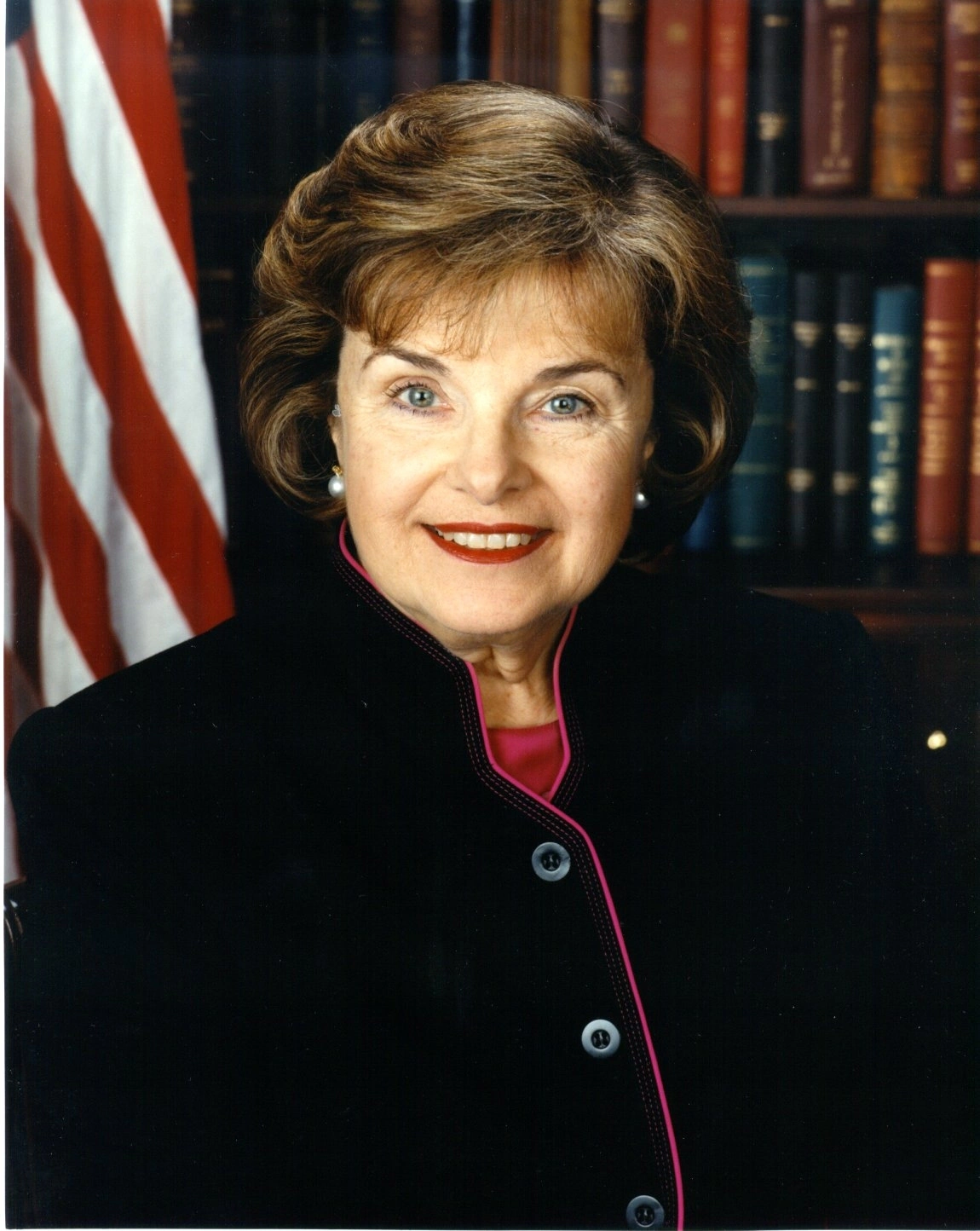
| 14 Quotes | |
| Occup. | Politician |
| From | USA |
| Born | June 22, 1933 |
| Age | 92 years |
| Cite | |
Citation Formats
APA Style (7th ed.)
Dianne feinstein biography, facts and quotes. (2026, February 11). FixQuotes. https://fixquotes.com/authors/dianne-feinstein/
Chicago Style
"Dianne Feinstein biography, facts and quotes." FixQuotes. February 11, 2026. https://fixquotes.com/authors/dianne-feinstein/.
MLA Style (9th ed.)
"Dianne Feinstein biography, facts and quotes." FixQuotes, 11 Feb. 2026, https://fixquotes.com/authors/dianne-feinstein/. Accessed 28 Mar. 2026.
Early Life and Background
Dianne Emiel Feinstein was born June 22, 1933, in San Francisco, California, into a city where money, ports, and machine politics mixed with civic boosterism. Her father, Leon Goldman, a surgeon, and her mother, Betty Rosenburg Goldman, a onetime model, gave her an upbringing marked by both social ease and private strain. She was raised in the Russian Hill area and grew up Roman Catholic, a detail that later sat alongside an unusually pragmatic, non-ideological public style.Early responsibility came fast. Feinstein has described difficult family dynamics and the long, quiet work of managing the needs of others, a rehearsal for the steady, procedural temperament that became her trademark. That temperament hardened into public steel after she entered city politics, then endured the violence that repeatedly visited San Francisco public life in the late 1970s, a period when civic optimism and political brutality coexisted in the same corridors.
Education and Formative Influences
She attended the Convent of the Sacred Heart High School in San Francisco and graduated from Stanford University in 1955 with a BA in history. Stanford trained her in institutional thinking - how systems evolve, who controls levers, and how to read power without romanticism - while Cold War anxieties and postwar urban growth framed her early sense that government was, at best, a set of tools that had to be mastered rather than merely advocated.Career, Major Works, and Turning Points
Feinstein began in local civic service, joining the San Francisco County Board of Supervisors in 1969 and becoming its president in 1978. The defining turning point came on November 27, 1978, when Mayor George Moscone and Supervisor Harvey Milk were assassinated by former supervisor Dan White; Feinstein, as board president, became acting mayor and publicly announced the deaths, an event that fused her image to crisis management. Elected mayor in 1979 and re-elected in 1983, she pursued downtown development, expanded convention and tourism infrastructure, and navigated the AIDS epidemic amid shifting public fears. In 1992 - the "Year of the Woman" in national politics - she won a US Senate seat from California and served from 1992 to 2023, chairing the Senate Select Committee on Intelligence (2009-2015) and the Judiciary Committee (2017-2019), and becoming a central figure on gun regulation (including the 1994 federal assault weapons ban), national security oversight after 9/11, and California-centric priorities like water, wildfire, and infrastructure. Her long tenure also brought controversy - including debates over surveillance, interrogation policy, and late-career questions about age and capacity - but she remained, to the end, a creature of institutions who believed endurance itself could be a governing asset.Philosophy, Style, and Themes
Feinstein's inner life, as it emerges from her public record, is a blend of vigilance and rule-bound ambition. She was neither a theatrical populist nor a pure movement politician; she worked as if politics were a craft, learned through repetition and protected by procedure. “You have to learn the rules of the game. And then you have to play it better than anyone else”. That sentence captures her psychology: a belief that competence is moral, that mastery is a form of survival, and that the quickest route to impact is through committees, coalitions, and incremental votes rather than grandstanding.Her themes were safety, continuity, and the belief that government can reduce risk - from bullets, from terrorism, from medical fraud, from nuclear miscalculation. On guns she framed regulation as civic shelter rather than cultural conquest: “Banning guns addresses a fundamental right of all Americans to feel safe”. On national security she often sounded like a municipal executive scaling up to the global stage, wary of vulnerabilities others dismissed: “Ports are the gaping hole in America's homeland security”. Even her gender politics came through a door-opening ethic more than ideological rhetoric, rooted in the sense that representation is cumulative and that one woman's access changes the map for the rest.
Legacy and Influence
Feinstein's legacy rests on durability and the transformation of a local crisis manager into a national legislative powerbroker. She helped define late-20th-century Democratic governance as managerial, security-conscious, and institution-centered; she shaped gun policy debates for decades, normalized robust congressional intelligence oversight while also embodying its tensions, and modeled a pathway for women in executive and Senate leadership. Admired for discipline and criticized for caution, she nonetheless left a clear imprint: politics as an arena where personal steadiness, procedural fluency, and the stubborn pursuit of public safety can outlast scandals, electoral cycles, and even the era that first forged them.Our collection contains 14 quotes written by Dianne, under the main topics: Motivational - Leadership - Victory - Resilience - Equality.
Other people related to Dianne: Barbara Boxer (Politician), Sam Farr (Politician), Barbara Lee (Politician), Pete Wilson (Politician), Patty Murray (Politician)
Source / external links