
Dick Cavett Biography Quotes 15 Report mistakes
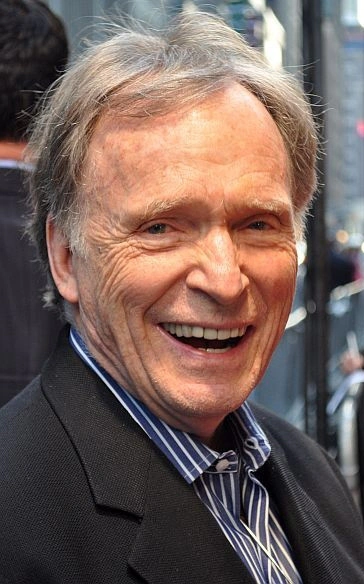
| 15 Quotes | |
| Occup. | Entertainer |
| From | USA |
| Born | November 19, 1936 |
| Age | 89 years |
| Cite | |
Citation Formats
APA Style (7th ed.)
Dick cavett biography, facts and quotes. (2026, February 15). FixQuotes. https://fixquotes.com/authors/dick-cavett/
Chicago Style
"Dick Cavett biography, facts and quotes." FixQuotes. February 15, 2026. https://fixquotes.com/authors/dick-cavett/.
MLA Style (9th ed.)
"Dick Cavett biography, facts and quotes." FixQuotes, 15 Feb. 2026, https://fixquotes.com/authors/dick-cavett/. Accessed 26 Mar. 2026.
Early Life and Background
Richard Alva "Dick" Cavett was born on November 19, 1936, in Gibbon, Nebraska, and grew up largely in Lincoln, a Midwestern setting whose quiet routines sharpened his ear for talk - the cadences of teachers, preachers, salesmen, and radio voices. His father, an educator, and his mother, also a teacher, gave him the household version of show business: language mattered, and curiosity was a virtue. Long before late-night studios, Cavett practiced a private craft of attention - noting how a person revealed themselves not only in what they said but in what they refused to say.That early sensitivity met a boyhood appetite for performance. Cavett gravitated to stage magic, comedy records, and the rhythm of broadcast conversation, treating talk as a form of theater with moral stakes. The era around him was changing fast - postwar confidence shading into Cold War anxiety - and his temperament formed in that tension: genial on the surface, skeptical underneath, drawn to the comedy of manners but alert to power and pretense.
Education and Formative Influences
Cavett attended Yale University, where he wrote, acted, and learned the discipline behind spontaneity, absorbing traditions of American humor that ran from collegiate satire to the more literate strain of New York conversation. He studied drama, steeped himself in Broadway and the Great American Songbook, and admired performers who could be both polished and vulnerable; the campus sharpened his sense that wit worked best when it was precise, and that an interview - like a scene - depended on timing, listening, and the courage to let silence do work.Career, Major Works, and Turning Points
After Yale, Cavett moved into television writing, building credentials in the 1960s writing for major variety shows before stepping into the larger risk of becoming the on-camera mind. His breakthrough came with The Dick Cavett Show, first on ABC (late 1960s) and then more famously on PBS and later networks, where he cultivated a tone distinct from both the vaudeville loudness of earlier talk and the purely promotional circuits that came later. The program became a crossroads of American culture during a volatile decade and its aftermath, with Cavett as a host who could handle artists, politicians, and eccentrics without flattening them into punch lines; he treated the interview as literature in real time. A defining test arrived when the show booked controversial figures and did not always reassure the authorities. Cavett later recalled the pressure of that climate, and the experience reinforced a career-long instinct: to ask better questions than the moment wanted, and to keep the room open even when the country felt shut.Philosophy, Style, and Themes
Cavett's style rested on a paradox: he made intelligence feel casual, and made casual talk feel consequential. The persona was bookish without being priggish, curious without being fawning - a Midwestern politeness used as a key to unlock sharper truths. He understood that audiences were not a single organism but a volatile mood, and he built his pacing around that uncertainty: “I don't think anyone ever gets over the surprise of how differently one audience's reaction is from another”. That line captures his inner life as a performer - always measuring the invisible room, never quite trusting applause as proof of understanding, and treating each broadcast as a new social experiment.His humor, meanwhile, carried a moral edge aimed at the soft corruption of public taste. Cavett could deliver a joke like a parable, then pivot into critique of the system that rewards banality: “As long as people will accept crap, it will be financially profitable to dispense it”. The remark is less elitism than anxiety - a fear that culture can be trained downward, and that a host's duty is to resist the easy laugh that empties conversation. That resistance also shaped his interviewing: he prized candor but recognized how rarely people seek it. “It's a rare person who wants to hear what he doesn't want to hear”. In Cavett's hands, the talk show became a stage for that human reflex - the dodge, the charm, the self-myth - and his best episodes let viewers watch the negotiation between ego and truth.
Legacy and Influence
Cavett endures as a template for the literate American interviewer - a bridge between the high-culture conversations of earlier broadcasting and the celebrity economy that followed. His best work demonstrated that a host could be funny without cruelty, sophisticated without smugness, and probing without turning the guest into a defendant. In an era when television increasingly chased speed, he insisted on pace; when politics demanded loyalty tests, he practiced curiosity; when the market rewarded the lowest common denominator, he bet that an audience could be invited upward. The result is a body of interviews and essays that continues to teach a quiet lesson: that entertainment can be an act of attention, and attention can be a form of integrity.Our collection contains 15 quotes written by Dick, under the main topics: Witty One-Liners - Funny - Truth - Art - Writing.
Other people related to Dick: Jack Paar (Entertainer)
Source / external links