
Dick Cavett Biography Quotes 15 Report mistakes
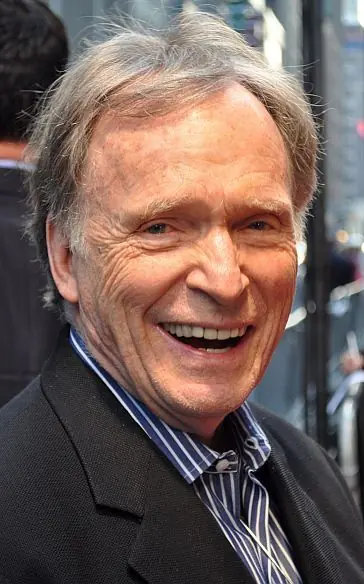
| 15 Quotes | |
| Occup. | Entertainer |
| From | USA |
| Born | November 19, 1936 |
| Age | 89 years |
Richard Alva Dick Cavett was born on November 19, 1936, in Gibbon, Nebraska, and grew up in a Midwestern environment that prized books, language, and performance. As a boy he became fascinated with magic and comedy, an interest that sharpened his timing and taught him how to handle a room. He moved east to attend Yale University, where he studied the liberal arts and plunged into campus theater and writing. Yale exposed him to a wide circle of performers and writers and strengthened the mix of curiosity, scholarship, and showmanship that would later define his approach to conversation on national television.
Beginnings in Comedy and Television Writing
After college he gravitated to New York, working clubs as a stand-up and absorbing the rhythms of a city teeming with writers and comics. He developed a reputation for quick wit and a literate sensibility that set him apart. The breakthrough came when he began writing for television, first for Jack Paar during the final years of Paar's era on The Tonight Show and then for The Jack Paar Program. Writing for Paar, whose mercurial intelligence and taste for unpredictability made him the most daring host of his day, taught Cavett the value of candor and the art of letting a guest breathe. When Johnny Carson took over The Tonight Show, Cavett contributed material there as well, learning a different cadence of comedy and monologue writing. In clubs and greenrooms he met figures like Woody Allen and Groucho Marx, relationships that would later yield memorable on-air encounters.
The Dick Cavett Show
Cavett moved from the writers room to center stage with a short-lived morning program and then, more consequentially, The Dick Cavett Show in primetime and late night. Across several incarnations on network television, public television, and later cable, the program became synonymous with extended, unhurried conversation. Cavett's style was distinctive: urbane, curious, amused, and grounded in deep preparation. He favored pairing unlikely guests, eschewed the usual promotional chatter, and allowed argument and ambiguity to surface. The set was spare, the lighting often simple, and the emphasis always on talk. In a television landscape dominated by the high-polish variety hour and the swift joke, Cavett made room for complexity and for guests who were not often invited to explain themselves at length.
Notable Guests and Cultural Impact
The guest list reads like a cross-section of twentieth-century culture. Katharine Hepburn granted him a rare and searching television encounter that remains a landmark for its intimacy and frankness. John Lennon and Yoko Ono appeared multiple times, bringing music, politics, and countercultural theater into the studio; their conversations with Cavett captured the ferment of the early 1970s. Jimi Hendrix spoke with him fresh from epochal performances, treating viewers to a musician's perspective rather than just a spectacle. Janis Joplin brought candor and humor; Muhammad Ali sparred with ideas as deftly as he did in the ring. Writers and intellectuals were central: Gore Vidal and Norman Mailer staged a notorious clash that Cavett moderated with a cool eye, and the presence of New Yorker critic Janet Flanner added a third, elegant point of view. The program hosted James Baldwin in a searing exchange with philosopher Paul Weiss, giving national airtime to a conversation about race that still resonates. Politicians and public figures appeared, including Governor Lester Maddox, whose walk-off became a lesson in the uses and limits of televised debate. Throughout, Cavett's calm demeanor and precise language created space for conflict without collapse, revealing the artistry of listening.
Later Career and Writing
After the network years, Cavett continued to host versions of his show on public television and later on cable, adapting the same long-form approach to new settings. He also became a prolific writer and essayist, reflecting on show business, language, and the oddities of fame. His New York Times columns and blog entries, written in a voice by turns playful and elegiac, yielded portraits of friends and guests such as Groucho Marx and Woody Allen, recollections of Katharine Hepburn's exacting standards, and fresh angles on moments like the Mailer-Vidal storm. He published books, including the memoir Cavett and later collections that gathered favorite encounters and backstage revelations. In these pages he set down a history of television conversation from the inside, turning his eye for detail on the art of framing a good question and the discipline of knowing when not to speak.
Personal Life
Cavett married the actress Carrie Nye in 1964, a partnership that lasted until her death in 2006. Nye, an accomplished stage and screen performer with a sharp wit of her own, was both a creative ally and a grounding presence during the turbulence of network schedules and public scrutiny. In 2010 he married author Martha Rogers, known for her work in business strategy and customer relationships. Rogers's intellectual range and professional accomplishments complemented Cavett's own omnivorous interests, and their marriage placed him within a different world of ideas while preserving his signature curiosity about people and their work. Across decades, friends and colleagues from across the spectrum of arts and letters, from Groucho Marx to John Lennon and Yoko Ono to Muhammad Ali, remained touchstones in his stories, and he became for many younger interviewers a model of rigor coupled with warmth.
Advocacy, Health, and Public Voice
Cavett spoke publicly about depression, describing its isolating force and the practical regimen of treatment that helped him navigate it. This candor, rare among public figures of his generation, broadened his relevance beyond entertainment and encouraged frank conversation about mental health. In essays and public appearances he used the same tools that defined his talk shows: clarity of language, a refusal to sensationalize, and a wry sense of perspective. He also championed the preservation of television archives, understanding that the value of a conversation can grow with time as historical context changes. The release of curated collections from his shows introduced new generations to the way he handled John Lennon, Jimi Hendrix, Janis Joplin, Gore Vidal, Norman Mailer, James Baldwin, and Katharine Hepburn, making each episode a small seminar in listening.
Legacy
Dick Cavett's legacy rests on an idea that seems simple and is hard to do: take people seriously and let them talk. He made mainstream TV hospitable to literature, philosophy, and contentious argument without sacrificing humor or charm. In the space between Jack Paar's combustible intimacy and Johnny Carson's effortless showmanship, Cavett carved out a distinctive third path: the host as conversationalist, curious and unafraid of silence. His influence is visible wherever interviews run long and the questions are written with care. He proved that wit need not be cruel, that intelligence can be entertaining, and that the right 30 minutes with a guest like Katharine Hepburn or Muhammad Ali can last in the culture far longer than the headlines of the day. Through his marriages to Carrie Nye and Martha Rogers, his friendships with artists and writers, and his own essays and books, he built a life steeped in words and performance. More than a celebrity host, he became a steward of public conversation, a role he continues to embody in the ongoing dialogue his work invites.
Our collection contains 15 quotes who is written by Dick, under the main topics: Witty One-Liners - Truth - Funny - Writing - Freedom.
Other people realated to Dick: Mary McCarthy (Author)
Source / external links