
Dick Clark Biography Quotes 6 Report mistakes
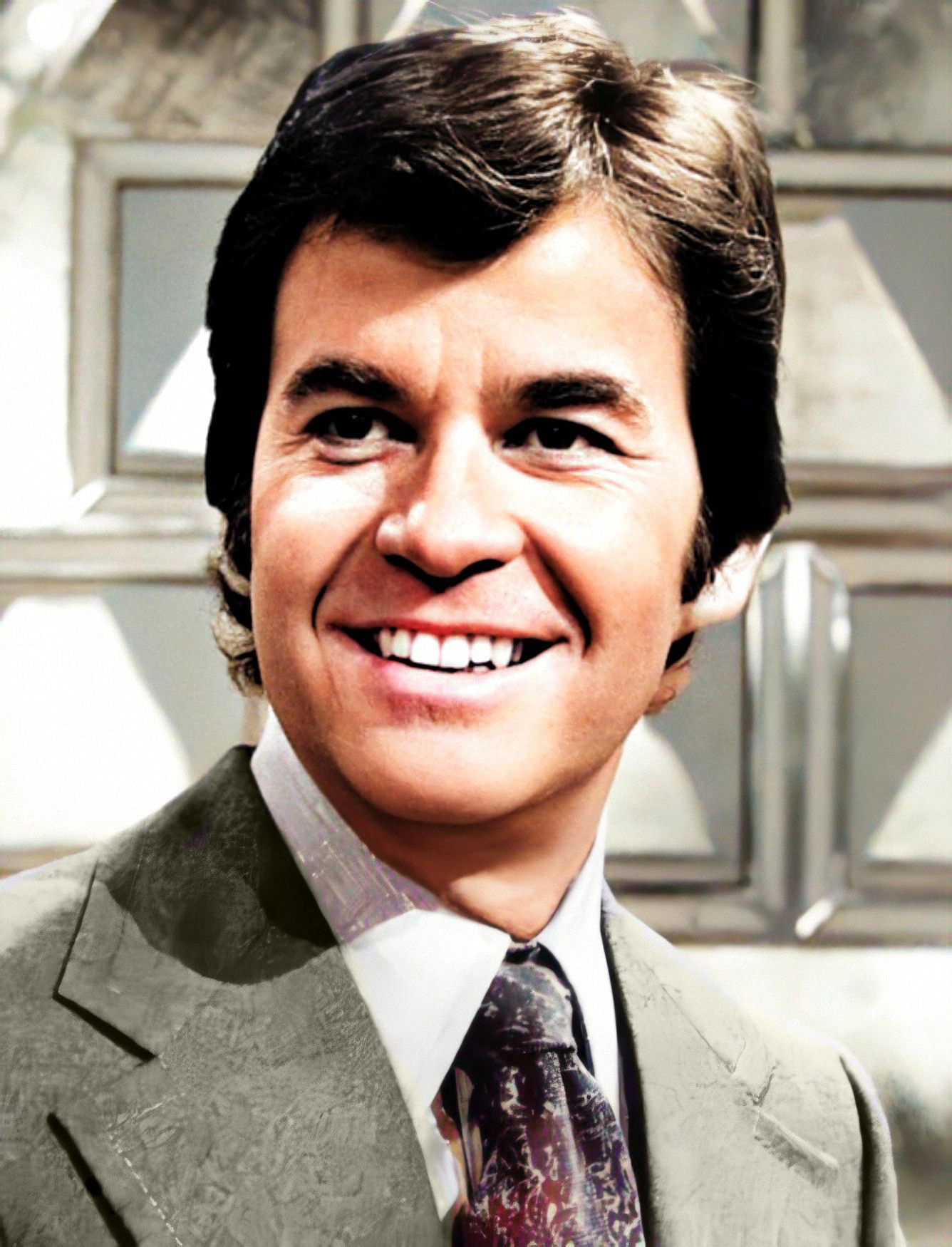
| 6 Quotes | |
| Born as | Richard Wagstaff Clark |
| Occup. | Entertainer |
| From | USA |
| Spouse | Barbara Mallery (1977–2012) |
| Born | November 20, 1929 Mount Vernon, New York, USA |
| Died | April 18, 2012 Santa Monica, California, USA |
| Cause | Stroke |
| Aged | 82 years |
| Cite | |
Citation Formats
APA Style (7th ed.)
Dick clark biography, facts and quotes. (2026, March 8). FixQuotes. https://fixquotes.com/authors/dick-clark/
Chicago Style
"Dick Clark biography, facts and quotes." FixQuotes. March 8, 2026. https://fixquotes.com/authors/dick-clark/.
MLA Style (9th ed.)
"Dick Clark biography, facts and quotes." FixQuotes, 8 Mar. 2026, https://fixquotes.com/authors/dick-clark/. Accessed 1 Apr. 2026.
Early Life and Background
Richard Wagstaff Clark was born on November 20, 1929, in Mount Vernon, New York, into a middle-class family shaped by radio's rise and the disciplined optimism of the interwar years. His father managed sales at a radio station, and the business of broadcasting - part showmanship, part technical routine, part intimate companionship with unseen listeners - entered Clark's imagination early. He grew up in nearby Bronxville with an older brother, Bradley, whose death in World War II marked the family permanently and gave the younger Clark an early education in grief, duty, and the fragility beneath American confidence. That emotional reserve, often mistaken later for pure slickness, was partly forged in that household: polished manners on the surface, stoicism underneath.
Clark came of age during the Depression's aftermath, the war years, and the birth of a national teen culture. He was neither a rebel nor a bohemian; his gift was to understand mass feeling without needing to dramatize himself. In an entertainment world often ruled by flamboyance, he developed another kind of charisma - clean-cut, reassuring, adaptive. His eventual image as "America's oldest teenager" was not an accident of looks alone. It rested on a deeper instinct: he knew how to make youth culture feel safe enough for parents, exciting enough for teenagers, and profitable enough for sponsors.
Education and Formative Influences
He attended A.B. Davis High School in Mount Vernon and then Syracuse University, where he studied advertising and broadcasting, graduating in 1951. Syracuse mattered because it trained him not as an artist in the romantic sense but as a professional communicator who understood format, audience, and timing. After college he worked in radio in Utica, New York, at WRUN, where his brother had once worked, and later moved through television jobs before landing in Philadelphia. There he inherited "Bandstand", a local dance program on WFIL-TV, in 1956 after Bob Horn's departure. The show became "American Bandstand" and went national on ABC in 1957, placing Clark at the fault line of race, commerce, and youth identity in the early rock-and-roll era. He presented Black and white performers to a mass audience at a time when television often lagged behind musical reality, and although his role was cautious rather than radical, his stage became one of the places where integration entered mainstream popular culture by repetition rather than manifesto.
Career, Major Works, and Turning Points
The national success of "American Bandstand" made Clark one of the most powerful brokers in popular entertainment. He introduced acts, interviewed stars with a deceptively light touch, and translated volatile teenage taste into television ritual. During the payola investigations of 1959-1960, he was scrutinized for music-business investments; he survived largely by divesting and by appearing more managerially prudent than openly manipulative, a turning point that pushed him toward producing as much as hosting. He built Dick Clark Productions into a durable company behind game shows, specials, and awards programming. If "Bandstand" made him a face, "New Year's Rockin' Eve", launched in 1972, made him a national calendar fixture, the host who mediated the country's transition from one year to the next. He also fronted "The $10, 000 Pyramid" and other game shows, proving his value was not tied to one format but to trust itself. A severe stroke in 2004 altered his speech and mobility, yet he returned to television, visibly changed but professionally unretired, preserving public continuity even as age and illness stripped away the myth of effortless cool. He died on April 18, 2012, in Santa Monica, California, after a heart attack following a medical procedure, but by then he had already become less an individual host than a recurring civic presence.
Philosophy, Style, and Themes
Clark's governing talent was not invention but calibration. He once said, “I don't set trends. I just find out what they are and exploit them”. That line is unusually candid and reveals the central truth of his psychology: he was a reader of currents, not a prophet. Unlike impresarios who wanted to dominate culture, Clark wanted to stand at the switchboard, identifying what the public already desired and packaging it without threatening its comfort. This made him seem conservative, but it also made him historically effective. He grasped that mass media rewards the person who can make change look familiar. His genius was to domesticate novelty - rock and roll, youth slang, celebrity confession, countdown television - so that America could consume it as routine.
Yet Clark was not merely cynical. “Music is the soundtrack of your life”. The sentence explains why his best work never felt wholly mechanical: he understood pop music as social memory, a way people locate themselves in time. His famously ageless persona was half joke, half professional strategy, captured in “If you want to stay young-looking, pick your parents very carefully”. The humor is self-protective, but it also signals his lifelong refusal to posture as deep, tragic, or tortured. He preferred buoyancy, rhythm, and continuity. Even after his stroke, that instinct remained. He did not build an art of confession; he built an art of presence - a reassuring public self that let viewers imagine the culture, and perhaps their own lives, as ongoing and survivable.
Legacy and Influence
Dick Clark's legacy lies in how thoroughly he helped define the grammar of modern American entertainment. He did not create rock and roll, youth culture, countdown shows, celebrity interviews, or holiday spectacle, but he standardized their television forms and made them repeatable across decades. Hosts from Ryan Seacrest to countless VJs, game-show emcees, and red-carpet personalities work in a framework Clark normalized: affable authority, quick transitions, a studied spontaneity that is actually rigorous production. His career also charts the transformation of entertainment from local broadcasting to national branding and multimedia production. To some critics he represented the smoothing, commodifying side of pop culture; to others he was its great democratic translator. Both judgments contain truth. His special achievement was to make mass culture feel shared, punctual, and perennial - a beat you could dance to, a countdown you could trust, a familiar face telling the country that the next song, and the next year, were already on the way.
Our collection contains 6 quotes written by Dick, under the main topics: Witty One-Liners - Music - Resilience - Marketing - New Year.
Other people related to Dick: Chubby Checker (Musician), Connie Francis (Musician), Danny Bonaduce (Actor), Jack Miller (Politician), Paul Anka (Musician), Ryan Seacrest (Entertainer), Ed McMahon (Entertainer)
Source / external links