
Didier Drogba Biography Quotes 9 Report mistakes
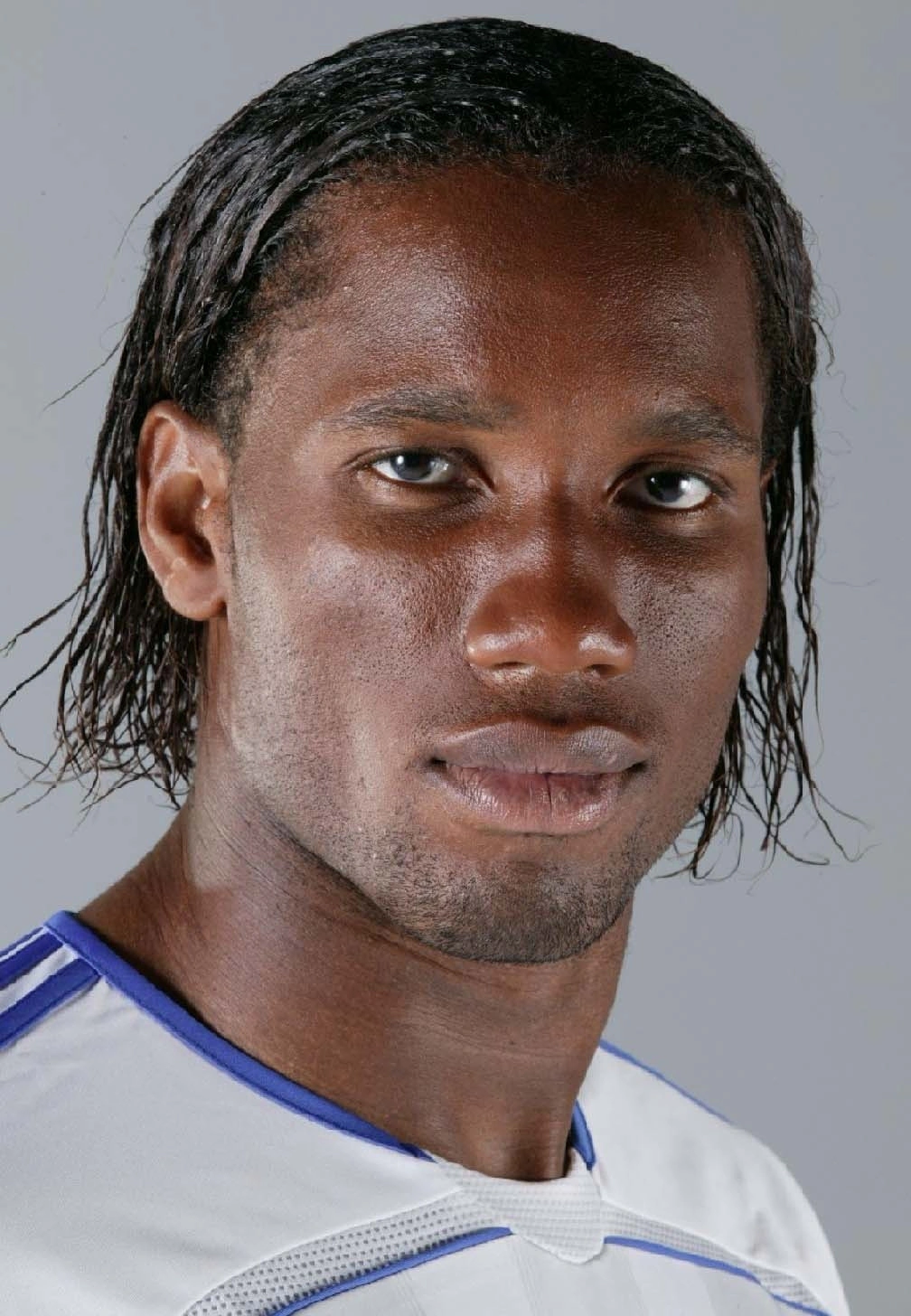
| 9 Quotes | |
| Occup. | Athlete |
| From | Ivory Coast |
| Born | March 11, 1978 |
| Age | 48 years |
| Cite | |
Citation Formats
APA Style (7th ed.)
Didier drogba biography, facts and quotes. (2026, February 11). FixQuotes. https://fixquotes.com/authors/didier-drogba/
Chicago Style
"Didier Drogba biography, facts and quotes." FixQuotes. February 11, 2026. https://fixquotes.com/authors/didier-drogba/.
MLA Style (9th ed.)
"Didier Drogba biography, facts and quotes." FixQuotes, 11 Feb. 2026, https://fixquotes.com/authors/didier-drogba/. Accessed 26 Mar. 2026.
Early Life and Background
Didier Yves Drogba Tebily was born on March 11, 1978, in Abidjan, Ivory Coast, into a country whose post-independence stability was beginning to fray into the political and economic stresses that would later explode into civil conflict. His childhood was marked by movement and separation: as a young boy he was sent to France to live with an uncle, a professional footballer, in a pattern common to West African families seeking educational and economic footholds in Europe. The early dislocation shaped a temperament that learned to adapt quickly, to read rooms and locker rooms, and to treat opportunity as fragile.He returned to Abidjan as a teenager, then went back to France again, a pendulum between continents that made identity both a refuge and a question. Those crossings sharpened his sense of responsibility to family and to nation, and they also forged his competitive edge: he was not a child prodigy cushioned by academy certainty, but a late-blooming forward who had to convert raw desire into a professional craft. The era around him - the 1990s European football boom, tightening immigration debates, and the increasing visibility of African stars - offered a stage but demanded resilience.
Education and Formative Influences
Drogba grew up in the French school-and-club ecosystem rather than a single famous academy, learning through repetition, setbacks, and incremental trust earned from coaches. He played youth football in France (including time at Levallois) and came of age in a culture that prized tactical discipline as much as flair, while his Ivorian roots kept his style emotionally direct - football as assertion, not ornament. The formative influence was less a single mentor than a lived lesson: progress could be slow and still be real, and physicality could become a language when words or belonging were uncertain.Career, Major Works, and Turning Points
After early professional steps at Le Mans, Drogba broke through at Guingamp and exploded at Marseille, where his 2003-04 season and Europa League run pushed him into the elite market. Chelsea signed him in 2004, and the transfer became the defining hinge of his career: he arrived in a Premier League built on pace and contact and turned himself into its most complete center forward, blending hold-up play, aerial power, and ruthless finishing. Across two Chelsea spells he won multiple league titles and domestic cups, and he authored the club's signature night in Munich in 2012 - a late equalizer and the decisive penalty to deliver Chelsea's first UEFA Champions League. He later won the Turkish league with Galatasaray, had stints in China and MLS, and remained a central figure for Ivory Coast, captaining the national team and helping secure the 2015 Africa Cup of Nations.Philosophy, Style, and Themes
Drogba's game was built on confrontation without chaos: he welcomed contact, protected the ball with a boxer's balance, and made defenses feel time running out. The psychological center was pride disciplined into service - the willingness to be targeted by center backs, referees, and expectation, yet keep returning to the same duels. His best performances read like endurance literature: not constant dominance, but a refusal to be edited out of the story. That stubbornness shows in his focus on outcomes over ornament: “My objective is to win the Champions League, not to be the best goalscorer in the competition. I want to win the trophy”. Even his individual brilliance was framed as a tool for a collective ending.Off the pitch, the theme broadened from trophies to repair. During Ivory Coast's civil war crisis in the mid-2000s, he used his platform to plead for peace, a rare moment when a footballer's voice cut through factional noise and suggested a shared national self. His inner life, as it appears through public statements, circles around earned hope rather than naive optimism: “The more difficult the victory, the greater the happiness in winning”. That logic - struggle as proof of meaning - also explains his leadership style, at once demanding and protective, and his insistence that effort is a moral choice: “If you're not prepared to work hard, let someone else do it. I'd rather be with someone who does a horrible job, but gives 110% than with someone who does a good job and gives 60%”. The subtext is personal history: a player who arrived late to certainty could not afford half-commitment.
Legacy and Influence
Drogba endures as one of Africa's defining footballers of the modern European era and as a template for the big-match striker - a forward whose value spikes when stakes peak. At Chelsea he became shorthand for decisive finals, for goals that change institutional history, and for a leadership model rooted in responsibility rather than brand. In Ivory Coast he helped expand what sporting fame could do: not merely represent the nation, but intervene in its emotional weather. His influence can be traced in the next generation of African forwards who combine power with technique and who speak about purpose beyond statistics, treating football as both craft and civic leverage.Our collection contains 9 quotes written by Didier, under the main topics: Motivational - Victory - Work Ethic - Perseverance - Confidence.
Source / external links