
Diego Maradona Biography Quotes 30 Report mistakes
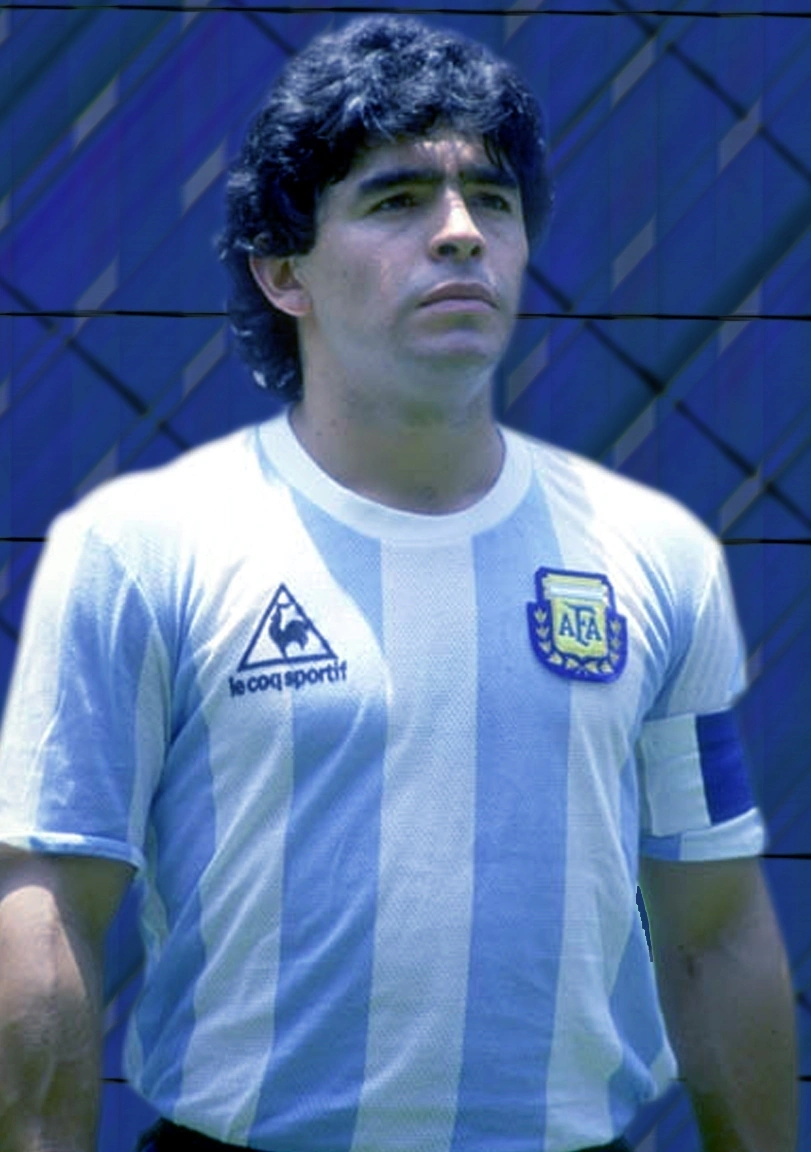
| 30 Quotes | |
| Occup. | Athlete |
| From | Argentina |
| Born | October 30, 1960 |
| Age | 65 years |
| Cite | |
Citation Formats
APA Style (7th ed.)
Diego maradona biography, facts and quotes. (2026, February 11). FixQuotes. https://fixquotes.com/authors/diego-maradona/
Chicago Style
"Diego Maradona biography, facts and quotes." FixQuotes. February 11, 2026. https://fixquotes.com/authors/diego-maradona/.
MLA Style (9th ed.)
"Diego Maradona biography, facts and quotes." FixQuotes, 11 Feb. 2026, https://fixquotes.com/authors/diego-maradona/. Accessed 26 Mar. 2026.
Early Life and Background
Diego Armando Maradona was born on October 30, 1960, in Lanus, Buenos Aires Province, and grew up in nearby Villa Fiorito, a working-class settlement on the capital's southern edge. He was the fifth of eight children in a family whose life was shaped by precarious work, crowded housing, and the loud, improvisational culture of Argentine street football. In that environment, a ball was both toy and passport: the fastest language out of poverty, and the earliest stage on which charisma could become destiny.Argentina in Maradona's childhood moved between mass politics, repression, and economic turbulence, and the barrio learned to distrust distant authorities while fiercely guarding local pride. Those conditions helped form his lifelong sense of allegiance to the overlooked - and his hair-trigger defiance toward elites, journalists, and administrators. The myth of Maradona as savior did not arrive later; it began in the neighborhood logic that a gifted kid could carry a whole block on his left foot.
Education and Formative Influences
Maradona's formal schooling was brief and often interrupted by training, but his education in football was rigorous and public: first as a boy in Argentinos Juniors youth sides, then as the face of "Los Cebollitas", the club's celebrated junior team. Coaches refined the qualities that already looked unnatural - low center of gravity, explosive change of direction, and an intuition for angles in tight spaces - while he absorbed the Argentine tradition that treated the dribble as both art and argument. He idolized creative forwards and learned that a crowd could be commanded not only by goals, but by humiliation of a marker, a pause, a feint - small acts that made spectators feel clever, too.Career, Major Works, and Turning Points
He debuted in Argentina's top flight with Argentinos Juniors in 1976, moved to Boca Juniors in 1981, and after the 1982 World Cup transferred to Barcelona, where flashes of genius collided with injury, illness, and conflict, culminating in the infamous 1984 Copa del Rey final melee. His defining club chapter began at Napoli in 1984, turning a historically marginalized southern city into champions of Italy: Serie A titles in 1986-87 and 1989-90, the 1989 UEFA Cup, and an enduring civic cult. The apex came with Argentina at the 1986 World Cup in Mexico - captain, conductor, and lightning rod - where the "Hand of God" and the slaloming goal against England fused brilliance and controversy into a single legend. Later years brought suspensions, addiction, and physical decline, including the 1991 cocaine ban in Italy and the 1994 World Cup expulsion after a positive test, before a long, uneven transition into media celebrity and coaching, including a turbulent stint as Argentina national team coach (2008-2010). He died on November 25, 2020, in Tigre, Buenos Aires Province, after years of serious health complications.Philosophy, Style, and Themes
Maradona's football was built on contradiction - grace married to confrontation. His dribbling was not merely evasive; it was confrontational theater, inviting contact, absorbing it, then punishing it with acceleration. He played as if the pitch were a crowded alleyway: protect the ball with the body, improvise under pressure, and turn the defender's certainty into embarrassment. That style made him a global icon, but it also mirrored an inner life that resisted moderation. “I am black or white, I'll never be grey in my life”. The sentence reads like a self-diagnosis: a temperament that converted affection into loyalty and criticism into war, leaving little room for negotiated identity.His public morality was similarly absolute. He could argue that beauty in football carried ethical weight - a refusal of cynicism - while living a private life marked by excess and relapse. Yet even in collapse, he narrated himself as a man wrestling for survival rather than surrendering to spectacle. “I'm alive and I want to keep living”. That insistence helps explain why his comebacks, however incomplete, held audiences: they were not only athletic attempts, but existential ones. At the same time, he framed achievement as discipline rather than destiny, even while the world treated him as a miracle. “When you win, you don't get carried away. But if you go step by step, with confidence, you can go far”. Coming from a player who often lived at emotional maximum, the advice suggests a man who knew the cost of extremes - and kept testing them anyway.
Legacy and Influence
Maradona endures as a benchmark for individual genius and for football's capacity to carry social meaning: Napoli's titles still read as a rebuke to northern Italian hierarchy, and Argentina's 1986 triumph remains a national parable about talent, will, and wounded pride. His influence is visible in the modern worship of the No. 10 as artist-leader - from Argentine heirs to global playmakers who model their game on close control, vertical daring, and responsibility for the narrative of a match. He also remains a cautionary emblem of fame's violence: how adoration can become entitlement, how scrutiny can harden defiance, and how the body that delivers joy can be consumed by the demands placed upon it. In the end, Maradona's biography is inseparable from the millions who saw themselves in him - not because he was flawless, but because he made struggle look incandescent.Our collection contains 30 quotes written by Diego, under the main topics: Motivational - Never Give Up - Sarcastic - Victory - Sports.
Other people related to Diego: Lionel Messi (Athlete), Peter Shilton (Athlete), Roger Milla (Athlete), Marek Hamšík (Athlete)
Source / external links