
Diego Maradona Biography Quotes 30 Report mistakes
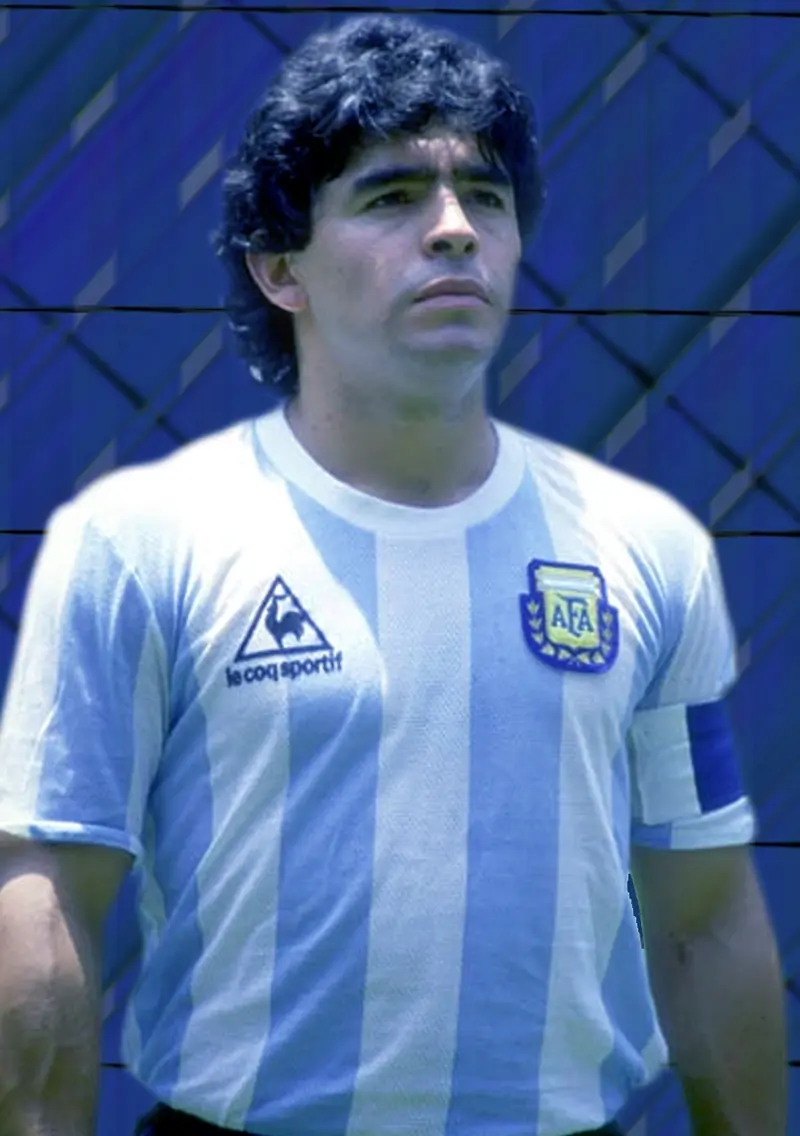
| 30 Quotes | |
| Occup. | Athlete |
| From | Argentina |
| Born | October 30, 1960 |
| Age | 65 years |
Diego Armando Maradona was born on October 30, 1960, in Lanus and grew up in the impoverished neighborhood of Villa Fiorito on the outskirts of Buenos Aires, Argentina. The fifth of eight children of Diego Maradona Sr., known as "Chitoro", and Dalma Salvadora Franco, known as "Dona Tota", he learned the game on dusty pitches where a ball at his feet felt like destiny. Gifted with balance, imagination, and an unerring left foot, he joined the youth system of Argentinos Juniors and rose to fame with their celebrated junior side, Los Cebollitas. As a teenager he became a national curiosity, a small magician who could keep the ball glued to his boot and dream beyond the limits of his surroundings. He debuted professionally at 15 for Argentinos Juniors, turning raw talent into spectacle and results.
Rise with Argentinos Juniors and Boca Juniors
Maradona scored prolifically for Argentinos Juniors before moving to Boca Juniors in 1981, fulfilling a childhood dream. Under coach Silvio Marzolini and alongside veterans like Miguel Brindisi, he lifted the 1981 Metropolitano title, forging a bond with Boca supporters that lasted a lifetime. His charisma attracted a growing circle of figures who would shape his career, including his future long-time agent Guillermo Coppola. Fame intensified quickly as he became Argentina's brightest star in an era that craved icons after the national team's 1978 World Cup triumph.
Barcelona: Brilliance and Turmoil
In 1982 Maradona joined FC Barcelona for a then world-record fee. He dazzled in Spain, winning domestic cups, but his time was turbulent. A bout of hepatitis and a brutal ankle-breaking tackle by Andoni Goikoetxea disrupted his momentum. The chaotic 1984 Copa del Rey final and conflicts with club leadership, including president Josep Lluis Nunez, preceded his departure. Across this period he worked under coaches Cesar Luis Menotti and later Terry Venables, but Spain never saw a sustained, injury-free version of his genius.
Napoli: The Making of an Idol
Napoli shattered the transfer record to sign him in 1984. In a city yearning for a hero, Maradona became a symbol of pride and defiance. Under coach Ottavio Bianchi and later Alberto Bigon, and alongside teammates such as Careca, Bruno Giordano, Ciro Ferrara, and Alemao, he led Napoli to unprecedented success: Serie A titles in 1987 and 1990, a Coppa Italia, a UEFA Cup in 1989, and the Italian Super Cup. Club president Corrado Ferlaino presided over a golden era in which Diego's artistry and competitive fury turned Napoli into a powerhouse that challenged northern dominance. The bond between city and player was total, but so were the pressures, temptations, and scrutiny that accompanied him.
Argentina: World Youth Champion and World Cup Glory
Maradona had already won the 1979 World Youth Championship alongside Ramon Diaz, signaling his international pedigree. Omitted from the 1978 World Cup by Menotti, he played in 1982 and learned hard lessons on football's grandest stage. Everything crystallized in 1986 under coach Carlos Bilardo. As captain, he led Argentina to the World Cup title in Mexico, defining the tournament with two immortal moments against England: the "Hand of God" goal and the "Goal of the Century", a slaloming run past defenders including Terry Butcher before beating goalkeeper Peter Shilton. He guided a team featuring Jorge Valdano, Jorge Burruchaga, Oscar Ruggeri, and Nery Pumpido, and supplied the pass for Burruchaga's winner in the final against West Germany. In 1990 he again carried Argentina to the final, playing through pain, before a narrow defeat to West Germany. In 1994, under coach Alfio Basile, he scored against Greece but was sent home after a positive test for a banned stimulant, a shocking coda to his World Cup story.
Setbacks, Suspensions, and Later Playing Years
Amid the triumphs in Naples emerged darker currents: mounting off-field pressures, allegations of links to local underworld figures, and addiction. In 1991 he received a suspension for a positive cocaine test, effectively ending his Napoli era. He returned with Sevilla in 1992, reuniting with coach Carlos Bilardo, and then briefly joined Newell's Old Boys in 1993. After the 1994 World Cup incident he mounted a final comeback at Boca Juniors from 1995 to 1997, playing sporadically before retiring. Even in these years, his magnetism drew massive crowds, and his circle included club presidents, coaches, and teammates who navigated his fluctuating form and public life.
Personal Life and Relationships
In 1989 he married Claudia Villafane, who became a central figure in his personal world, and they had two daughters, Dalma and Giannina. Giannina later had a relationship with striker Sergio Aguero, connecting two generations of Argentine football. Maradona also had a son, Diego Maradona Jr., in Italy, whom he publicly acknowledged years later, and later recognized Jana and Diego Fernando with Veronica Ojeda. In subsequent years he was linked with Rocio Oliva. Family remained a defining force, as did lifelong ties to siblings, including fellow footballers Lalo and Hugo. The memory of his parents, Dona Tota and Chitoro, guided his sentimentality; he often spoke of playing for them and for those in Villa Fiorito who first believed in him.
Coaching, Media, and Public Life
After retiring, he coached Deportivo Mandiyu and Racing Club in the mid-1990s with limited success. He later led the Argentina national team from 2008 to 2010, guiding a squad featuring Lionel Messi to the 2010 World Cup quarterfinals before defeat to Germany. Abroad he managed Al Wasl and Fujairah in the United Arab Emirates, Dorados de Sinaloa in Mexico, and returned to Argentina to coach Gimnasia y Esgrima La Plata. Away from the touchline he hosted the television program "La Noche del 10", revealing a playful, introspective side. Politically outspoken, he forged friendships with figures such as Fidel Castro and Hugo Chavez, and his image became intertwined with broader social and cultural debates in Latin America.
Health, Legal Battles, and Enduring Controversies
Maradona's life featured repeated health crises linked to addiction and weight. He was hospitalized multiple times and underwent gastric bypass surgery in 2005 as he sought stability. Legal struggles, especially a longstanding tax dispute in Italy, followed him for years. The contradictions of his persona were visible to the world: a genius of uncommon empathy for the poor and fiercely loyal to friends, yet prone to volatility and self-sabotage. Through it all, he remained in contact with many who shaped his journey, including former agent Guillermo Coppola and coaches like Bilardo, whose tactical rigor had once channeled Diego's free spirit.
Death and Legacy
In November 2020 Maradona underwent brain surgery and soon after died of cardiac arrest on November 25, 2020, in Argentina. The outpouring of grief was instantaneous, from Buenos Aires to Naples. Argentina held a wake at the Casa Rosada, and Napoli soon renamed their stadium Stadio Diego Armando Maradona, a testament to the bond between player and city. Tributes arrived from Pele, Lionel Messi, former teammates like Jorge Valdano and Jorge Burruchaga, and countless opponents who had felt his competitive fire. In 2000 FIFA named him co-winner of its Player of the Century award alongside Pele, reflecting how fans and experts alike struggled to separate artistry from myth. His legacy sits at the intersection of brilliance and imperfection: a child of Villa Fiorito who became a global emblem, a captain who lifted a nation in 1986, and a footballer whose name will forever evoke imagination, audacity, and the capacity of sport to carry the dreams of millions.
Our collection contains 30 quotes who is written by Diego, under the main topics: Motivational - Never Give Up - Mother - Victory - Sports.
Source / external links