
Dietrich Bonhoeffer Biography Quotes 16 Report mistakes
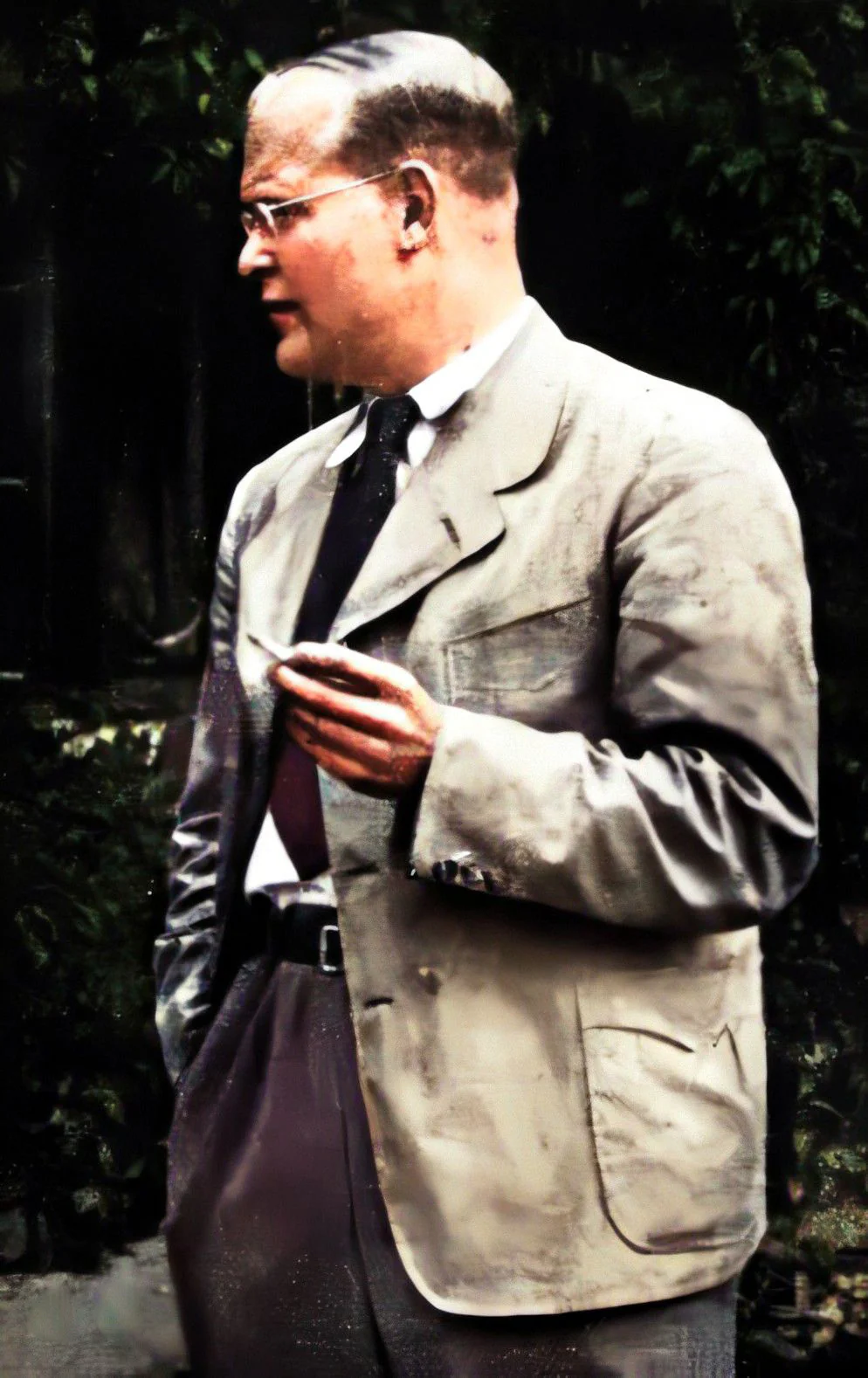
| 16 Quotes | |
| Occup. | Theologian |
| From | Germany |
| Born | February 4, 1906 Breslau, Germany |
| Died | April 9, 1945 Flossenbürg, Germany |
| Cause | Executed by the Nazis |
| Aged | 39 years |
| Cite | |
Citation Formats
APA Style (7th ed.)
Dietrich bonhoeffer biography, facts and quotes. (2026, February 11). FixQuotes. https://fixquotes.com/authors/dietrich-bonhoeffer/
Chicago Style
"Dietrich Bonhoeffer biography, facts and quotes." FixQuotes. February 11, 2026. https://fixquotes.com/authors/dietrich-bonhoeffer/.
MLA Style (9th ed.)
"Dietrich Bonhoeffer biography, facts and quotes." FixQuotes, 11 Feb. 2026, https://fixquotes.com/authors/dietrich-bonhoeffer/. Accessed 13 Feb. 2026.
Early Life and Background
Dietrich Bonhoeffer was born on February 4, 1906, in Breslau, Germany (then in the German Empire; now Wroclaw, Poland), into a cultivated, confident bourgeois household where intellect and public duty were expected. His father, Karl Bonhoeffer, was a leading psychiatrist and neurologist; his mother, Paula von Hase, came from a line of pastors and civil servants and educated her children with disciplined warmth. In 1912 the family moved to Berlin, where Bonhoeffer grew up amid the prestige and anxieties of a capital that would soon be shaken by war, revolution, and the contested birth of the Weimar Republic.The First World War marked him early: the family lost his older brother Walter in 1918, a grief that deepened the household's seriousness without turning it sentimental. Bonhoeffer, the quick-witted younger son in a large sibling set, developed a mixture of poise and inwardness - at once socially adept and spiritually intense. The contrast between private decency and public collapse in postwar Germany became a lifelong pressure point: he watched national humiliation, political street violence, and the lure of authoritarian certainty seep into ordinary life, and he began to suspect that Christian faith would be tested not primarily in ideas but in courage.
Education and Formative Influences
Bonhoeffer chose theology as a teenager, a decision his scientific-minded father initially doubted but could not dismiss as mere piety. He studied at the University of Tubingen and then the University of Berlin, completing a doctoral dissertation, Sanctorum Communio (1927), that treated the church as a concrete social reality rather than a vague spiritual ideal. After a year as a vicar in Barcelona (1928-1929), he studied at Union Theological Seminary in New York (1930-1931), where he encountered Reinhold Niebuhr and, just as decisively, the preaching and music of Harlem churches that impressed on him Christianity as lived solidarity. Returning to Berlin, he qualified to teach with Act and Being (1931), lectured on Christology and ethics, and moved in a world where academic brilliance and national crisis were converging.Career, Major Works, and Turning Points
Hitler's appointment as chancellor in January 1933 made Bonhoeffer's career inseparable from resistance. He warned early against the Fuhrer principle and the Nazification of the church, helped found the Confessing Church, and served illegal seminaries such as Finkenwalde, where communal discipline and prayer became a training ground for costly discipleship. His books The Cost of Discipleship (1937) and Life Together (1939) distilled this period, insisting that grace was not a religious escape hatch but obedience in history. In 1939 he returned from a brief, safer stay in the United States, convinced he must share Germany's fate. Through family and church networks he became linked to the Abwehr resistance circles, traveled as an ecumenical envoy, and worked in the moral shadowland of conspiracy against Hitler. Arrested in April 1943, he wrote Letters and Papers from Prison, including the unfinished Ethics, and after the failure of the July 20, 1944 plot he was moved through prisons and camps, finally hanged on April 9, 1945, at Flossenburg, weeks before the war ended.Philosophy, Style, and Themes
Bonhoeffer's theology grew out of a psychological refusal to let religion become a private consolation while the world burned. He distrusted spiritual shortcuts and demanded that truth take institutional and bodily form - in church discipline, in speech that risked consequences, and in decisions made under guilt. His prison writings show a mind stripping itself of protective language: he searched for a "religionless Christianity" not to dilute faith, but to locate Christ in responsibility for a world come of age. The ethical core is empathy sharpened into action: "We must learn to regard people less in light of what they do or omit to do, and more in the light of what they suffer". In a society training itself to despise the weak, he made attention to suffering a spiritual practice and a political alarm bell.Three tensions define his style and themes. First, his realism about misdirection: "If you board the wrong train, it is no use running along the corridor in the other direction". The line captures his sense that evil is not corrected by frantic gestures inside a corrupt system; repentance may require changing direction altogether, even at personal cost. Second, his resistance to coercive certainty in religion: "A god who let us prove his existence would be an idol". For Bonhoeffer, God is not an object for control but the living claim that disrupts self-justification. Across Discipleship, Ethics, and the prison letters, he wrote in compact, disciplined prose aimed at forming people who could withstand propaganda - Christians able to pray, think, and decide when "normal" morality had been hijacked.
Legacy and Influence
Bonhoeffer became one of the 20th century's most cited Christian witnesses because his life bound theology to the hardest questions of modern politics without romanticizing martyrdom. After 1945 his works traveled far beyond Germany, shaping Protestant ethics, ecumenical activism, and debates about civil resistance, with "costly grace" becoming shorthand for integrity under pressure. He remains controversial precisely where he is most useful: as a thinker who refused purity fantasies, accepted responsibility amid compromised choices, and insisted that the church is credible only when it protects the threatened and tells the truth in public.Our collection contains 16 quotes written by Dietrich, under the main topics: Ethics & Morality - Love - Kindness - Faith - Gratitude.
Source / external links