
Diogenes of Sinope Biography Quotes 37 Report mistakes
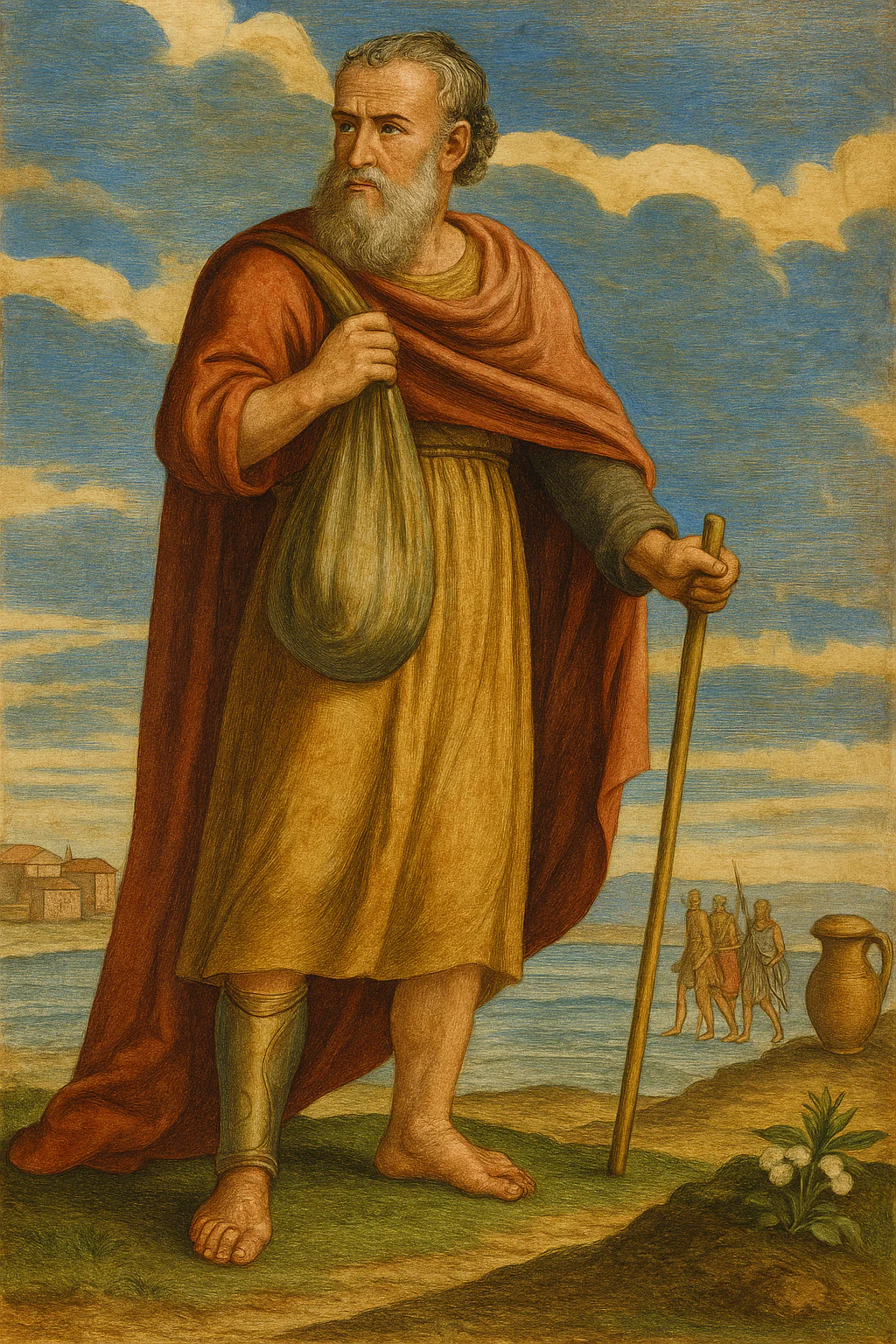
| 37 Quotes | |
| Known as | Diogenes the Cynic |
| Occup. | Philosopher |
| From | Greece |
| Born | 412 BC Sinope, Paphlagonia (modern-day Sinop, Turkey) |
| Died | 323 BC Corinth, Macedonian Empire |
| Cite | |
Citation Formats
APA Style (7th ed.)
Diogenes of sinope biography, facts and quotes. (2026, February 11). FixQuotes. https://fixquotes.com/authors/diogenes-of-sinope/
Chicago Style
"Diogenes of Sinope biography, facts and quotes." FixQuotes. February 11, 2026. https://fixquotes.com/authors/diogenes-of-sinope/.
MLA Style (9th ed.)
"Diogenes of Sinope biography, facts and quotes." FixQuotes, 11 Feb. 2026, https://fixquotes.com/authors/diogenes-of-sinope/. Accessed 25 Mar. 2026.
Early Life and Background
Diogenes was born around 412 BCE in Sinope, a Greek port on the Black Sea whose trade made it wealthy, cosmopolitan, and politically combustible. Later writers anchor his origin story in scandal: he and/or his father Hicesias, a banker or money-changer, were accused of "defacing the currency" (paracharattein to nomisma) and driven into exile. Whether the charge was literal counterfeiting or a metaphor for challenging the "currency" of social convention, the event became the biographical hinge through which his life would be read - a man who would spend decades putting the stamp of ridicule on honored institutions.Exile mattered because the classical polis was not merely a place to live but the framework of identity, protection, and honor. In the early fourth century BCE, Greek city-states were exhausted by war and rivalry; Sparta, Thebes, and then Macedonia competed for hegemony, while democratic Athens also marketed itself as the capital of culture. Diogenes arrived in this world as a displaced person, unusually free from local loyalties and unusually exposed to the precariousness of status. The later "Cynic" posture - voluntary poverty, public shamelessness, and refusal of titles - can be read as the reversal of his early dispossession into a chosen independence.
Education and Formative Influences
In Athens, Diogenes attached himself to Antisthenes, a hard-edged Socratic who preached virtue as self-sufficiency and mocked luxury; tradition says Antisthenes initially rebuffed him, even with blows, and Diogenes refused to leave. From Socratic inquiry he inherited the demand that life, not theory, be the proof of philosophy; from Antisthenes he sharpened it into training (askesis) and provocation. He also learned to use the city itself as his classroom: the Agora, gymnasia, and temples became stages on which he forced Athenians to notice the gap between what they praised and what they practiced.Career, Major Works, and Turning Points
Diogenes wrote dialogues and letters in antiquity, but none survive with secure authenticity; his "works" were performed arguments and aphorisms preserved by later doxographers. He cultivated the persona of the dog (kynos), living with minimal possessions - famously a cloak, a pouch, and a staff; later anecdotes add a tub-like pithos as shelter in the Metroon area - and staging confrontations with power and respectability. Stories cluster around his public acts: begging as training against shame, eating and relieving himself without deference to custom, and "looking for a human being" with a lamp in daylight as an attack on complacent virtue. Another turning point is his encounter with Macedonian authority: he was reportedly captured by pirates and sold, then lived in Corinth as tutor to Xeniades' sons, insisting that freedom is a condition of character, not legal status. By 323 BCE, the year Alexander died, Diogenes too was said to have died in Corinth, as if his life were bracketed by the rise of the new empire he refused to flatter.Philosophy, Style, and Themes
Diogenes' central claim was brutally simple: nature sets few needs, society multiplies them into dependency. Cynic ethics therefore aimed at autarkeia (self-sufficiency) and parrhesia (fearless speech), using shock as therapy. When Alexander asked what favor he could grant, Diogenes answered, “Stand a little less between me and the sun”. The line is not only insolence; it is psychological self-report. He sought a life in which the basic goods - light, air, food, movement - were not mediated by patrons, markets, or approval, because mediation invites fear. His poverty was less an ascetic romance than an engineering project: strip away what can be taken, and you cannot be coerced.His style fused comedy with moral diagnosis. He trained his shamelessness to expose the hidden shame of others, insisting that vice hides behind etiquette. “In a rich man's house there is no place to spit but his face”. The cruelty is deliberate: it maps contempt onto the architecture of luxury, suggesting that wealth produces not refinement but a claustrophobic moral stench. Yet the same temperament also became a cosmopolitan conscience. “I am not an Athenian or a Greek, but a citizen of the world”. In an era when belonging was civic and exclusion could be lethal, this is the creed of an exile turned universalist: if the polis is conditional, virtue must be portable.
Legacy and Influence
Diogenes became the emblem of Cynicism, shaping Crates of Thebes and, through him, the young Zeno of Citium, whose Stoicism absorbed Cynic toughness while tempering its abrasiveness. Later moralists, satirists, and Christian ascetics mined his life as a parable about freedom from possessions and status; Renaissance humanists and Enlightenment skeptics reused him as an antidote to courtly hypocrisy. The biographical uncertainty - a life known mostly through anecdotes - is part of his endurance: Diogenes survives as a test case for every age that suspects its comforts are also its chains, and his legend keeps asking whether courage is best proved by grand deeds or by the daily refusal to live by lies.Our collection contains 37 quotes written by Diogenes, under the main topics: Witty One-Liners - Ethics & Morality - Truth - Wisdom - Friendship.
Frequently Asked Questions
- Diogenes books: No writings survive; if he wrote, they’re lost. Most details come from later authors, especially Diogenes Laertius.
- Diogenes stories: The daylight lamp; living in a jar; mocking Plato with a plucked chicken; selling himself and tutoring Xeniades’ sons; flouting social norms in public.
- Diogenes died: Died c. 323 BCE in Corinth; accounts differ, holding his breath, illness from a dog bite, or eating raw octopus.
- Diogenes and Alexander: When Alexander asked what he could do, Diogenes said, “Stand out of my sunlight.” Alexander reportedly admired him for it.
- Diogenes of Sinope - life and legend: Born c. 412 BCE in Sinope; exiled; lived in Athens and Corinth; slept in a large jar; carried a lamp “seeking an honest man”; famed for sharp wit and austerity.
- Diogenes of Sinope Pronunciation: die-AH-juh-neez of SIN-oh-pee
- Diogenes of Sinope philosophy: Cynicism: live according to nature, prize virtue over wealth/status, practice radical self‑sufficiency and frank speech, reject social conventions.
Source / external links