
Dion Boucicault Biography Quotes 1 Report mistakes
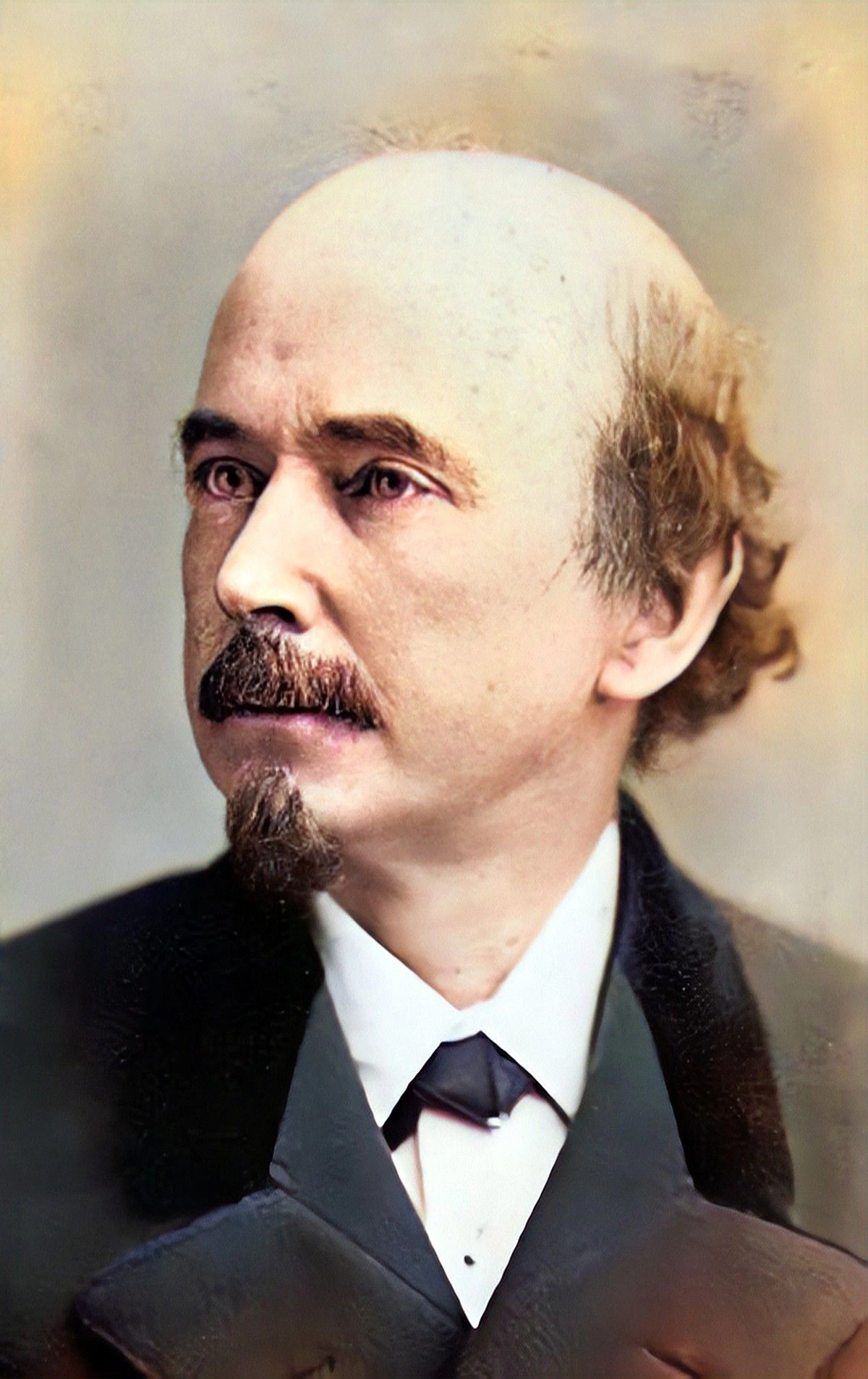
| 1 Quotes | |
| Born as | Dionysius Lardner Boucicault |
| Occup. | Dramatist |
| From | Ireland |
| Born | December 26, 1822 Dublin, Ireland |
| Died | September 18, 1890 New York City, New York, USA |
| Cause | Heart Attack |
| Aged | 67 years |
| Cite | |
Citation Formats
APA Style (7th ed.)
Dion boucicault biography, facts and quotes. (2026, March 5). FixQuotes. https://fixquotes.com/authors/dion-boucicault/
Chicago Style
"Dion Boucicault biography, facts and quotes." FixQuotes. March 5, 2026. https://fixquotes.com/authors/dion-boucicault/.
MLA Style (9th ed.)
"Dion Boucicault biography, facts and quotes." FixQuotes, 5 Mar. 2026, https://fixquotes.com/authors/dion-boucicault/. Accessed 28 Mar. 2026.
Early Life and Background
Dionysius Lardner Boucicault was born on December 26, 1822, in Dublin, Ireland, into a city still shaped by the aftershocks of the 1798 rebellion and the hardening realities of the Union with Britain. His parentage was complicated and much discussed even in his lifetime; he grew up amid talk of respectability, patronage, and the thin line between gentility and precarity. That early ambiguity - whether social, financial, or familial - would later reappear in his theater as an obsession with hidden identities, sudden reversals, and the moral theater of public reputation.
As a young man he was drawn to performance not simply as amusement but as a system for remaking oneself in front of an audience. Ireland in the 1830s and 1840s offered few stable routes for ambitious Catholic and Anglo-Irish strivers alike, and Boucicault learned early that charm, speed, and adaptation could substitute for inherited security. That instinct for self-invention - the dramatist as his own best character - became a lifelong strategy, enabling him to move between Dublin, London, and America with the confidence of someone who treated the stage as both workplace and passport.
Education and Formative Influences
He was educated partly in Ireland and later in England, absorbing both the rhetoric of the classroom and the rougher education of playhouses where melodrama, farce, and spectacle competed for crowded seats. London theatrical culture in the 1840s prized pace, novelty, and the ability to write to actors and managers under deadline, and Boucicault internalized those pressures as craft principles. He also lived close to the era's arguments about law, property, and authorship - questions sharpened by the expanding commercial theater - and he began to think like a professional dramatist: audience first, but with a shrewd eye on rights, contracts, and the economics that determined what could be staged.
Career, Major Works, and Turning Points
Boucicault broke through in London with quick, stage-wise writing and a talent for reworking existing material into crowd-pleasing forms; his early success with London Assurance (1841) announced a voice that could blend social satire with theatrical engine-room timing. He became one of the 19th century's most prolific and entrepreneurial dramatists, writing and adapting scores of plays and becoming a star performer in his own work. In the United States he helped define the popular melodrama and the sensation play, achieving landmark success with The Colleen Bawn (1860), The Octoroon (1859), and later The Shaughraun (1874), each a turning point in how he fused topical issues, Irish identity, and stage spectacle. He also fought for dramatists' control over their texts, arguing in practice - through touring, management, and relentless revision - that a play was both literature and a commercial product requiring legal protection in an era when piracy and unauthorized adaptations were common.
Philosophy, Style, and Themes
Boucicault wrote with the mind of a mechanic and the instincts of an actor. He engineered plots to keep audiences leaning forward, then released emotion in carefully staged waves: laughter as a valve, then peril, then recognition. He understood that the Victorian theater was where many people processed modernity - urbanization, migration, changing gender roles, and the violent contradictions of empire - not as abstract debate but as visible bodies in danger, lovers separated by law, and outsiders pleading to be seen. His famous Irish plays were not merely "national color" but a negotiation with stereotype: he sold audiences the charm of the comic Irishman while insisting, through suspense and pathos, on Irish dignity and grievance.
Underneath the showmanship was a persistent fatalism about time and consequence. “Men talk of killing time, while time quietly kills them”. That line captures the emotional motor of his melodramas: characters act as if there will always be another scene to explain, repent, or return, only to find that events and social judgment move faster than personal intention. Boucicault's sympathies tended toward the socially vulnerable - the woman trapped by scandal, the outsider marked by race or class, the displaced Irishman in England or America - yet his dramaturgy was rarely utopian. He believed in practical mercy, not perfect systems: the world might be cruel, but a well-timed revelation, a brave witness, or a sudden act of courage could still redirect fate in the final act.
Legacy and Influence
By the time of his death on September 18, 1890, Boucicault had helped professionalize modern playwriting as a craft defined by structure, pace, and audience psychology, and he had shaped transatlantic theater at a moment when Irish identity and American mass entertainment were both being renegotiated. His best plays remained staples because they taught later dramatists how to make social conflict legible through action - how to turn law, prejudice, and economic pressure into visible stakes onstage. Though some elements of his work carry the era's stereotypes, his influence persists in the grammar of popular drama: the cliffhanger, the morally charged reveal, the sympathetic outsider, and the conviction that theater can be both entertainment and a public argument.
Our collection contains 1 quotes written by Dion, under the main topics: Mortality.
Other people related to Dion: Joseph Jefferson (Artist), Gerald Griffin (Author)
Source / external links